Sea Holly
Eryngium planum
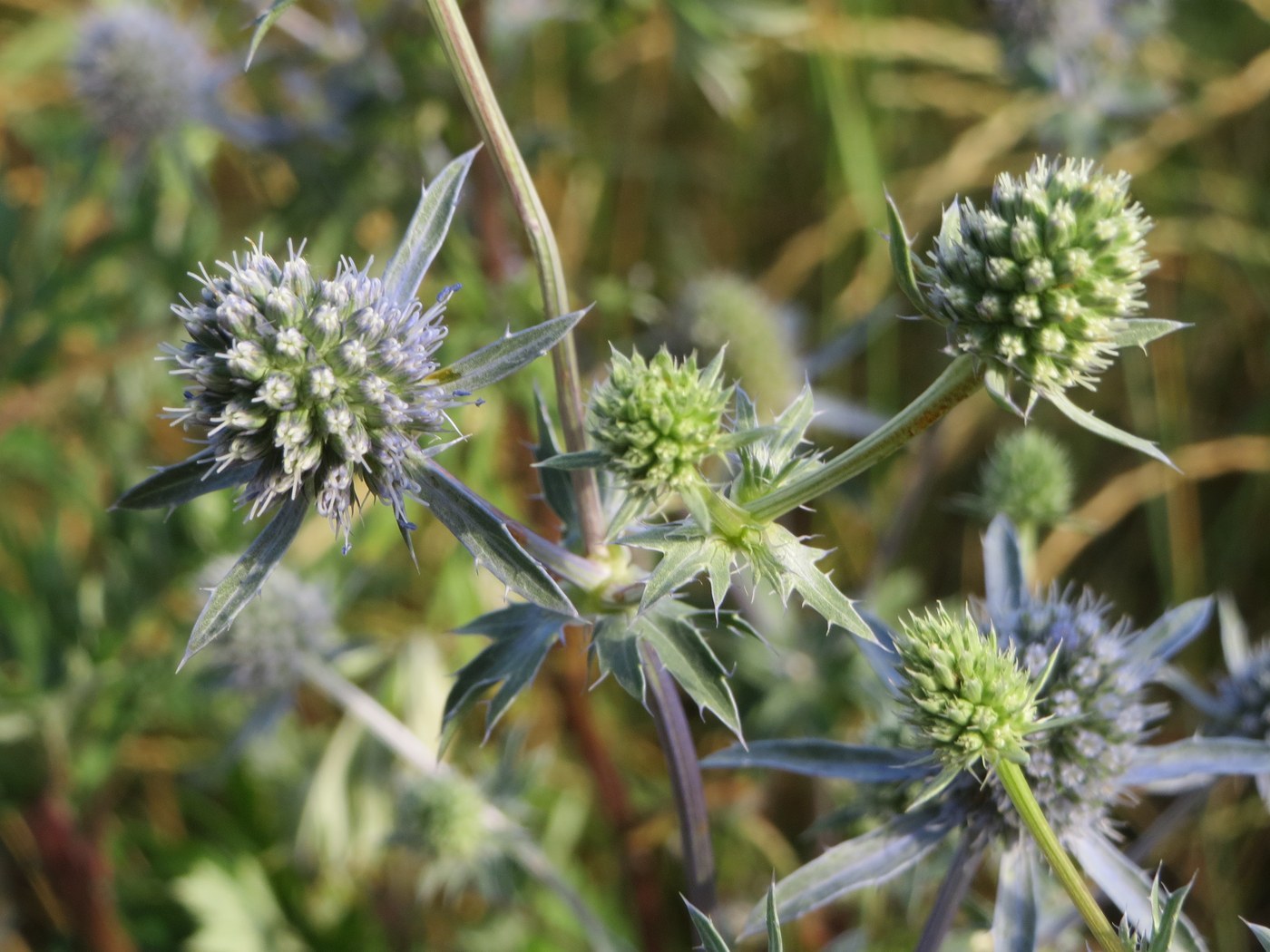
Sea holly is a striking, drought-tolerant perennial with spiny, thistle-like flower heads surrounded by metallic silver-blue bracts. It thrives in poor, dry soils and adds architectural texture and a long-lasting, otherworldly color to sunny borders.
- Light
- Full sun
- Water
- Low; drought-tolerant
- Difficulty
- Easy
Got a plant like this?
Identify any plant from a photo, free.
Overview
Sea holly (genus Eryngium) includes around 250 species, with Eryngium planum and Eryngium maritimum among the best known. Despite the name and look, it is not a true holly; it belongs to the carrot family.
It is prized for its almost metallic appearance, with cone-shaped flower heads ringed by stiff, spiny, silvery-blue bracts that hold their color and structure for weeks.
A tough plant of coastal and dry inland habitats, sea holly excels in challenging, well-drained sites where many other perennials fail.
How to identify it
Spiny, metallic-blue flower heads make it easy to spot.
- Flowers: Domed or cone-shaped flower heads surrounded by a collar of stiff, spiny, silver-blue to steel-blue bracts
- Leaves: Leathery, often spiny-edged and holly-like, gray-green to blue-green
- Stems: Branching, often flushed blue near the top
- Habit: Upright clumps typically 1.5-3 ft tall with a deep taproot
Care & growing
Thrives on neglect in hot, dry sites.
- Light: Full sun is essential for strong color and sturdy stems
- Water: Low; highly drought-tolerant once established and dislikes wet soil
- Soil: Lean, sandy, sharply drained soil; tolerates poor, salty ground
- Temperature: Hardiness varies by species, many to USDA zone 4-5
- Feeding: None needed; rich soil reduces flowering and weakens stems
- Propagation: Seed or root cuttings; the long taproot makes division difficult
- Tip: Avoid transplanting established plants because of the deep taproot
Habitat & origin
Sea holly species are native to Europe, Asia, North Africa, and the Americas. Eryngium maritimum grows on coastal sand dunes and shingle beaches, while Eryngium planum comes from dry grassland and steppe in central and southeastern Europe and Asia.
The plant is widely grown in gravel gardens, coastal gardens, and dry sunny borders around the world.
Frequently asked questions
Is sea holly really a holly?
No. Despite the spiny, holly-like leaves and name, it belongs to the carrot family (Apiaceae), not the holly family.
Why are my sea holly stems flopping?
Usually too much shade or overly rich, moist soil. Sea holly wants full sun and lean, dry ground to stay upright and intensely colored.
Can I move an established sea holly?
It's difficult. Sea holly forms a long taproot that resents disturbance, so it's best to plant it in its final spot from the start.
Does sea holly attract pollinators?
Yes, the nectar-rich flower heads are highly attractive to bees, butterflies, and beneficial insects.
Sea Holly guides
In-depth guides for identifying, growing, and caring for Sea Holly.
How to Care for Sea Holly
Grow Eryngium planum, a drought-tolerant perennial with steel-blue thistle-like flowers and spiny bracts for sunny, dry gardens.
Sea Holly Identification Guide
How to identify sea holly (Eryngium) by its spiny, holly-like bracts, steel-blue metallic coloring, and thistle-like cone-shaped flower heads — and why it is actually a carrot relative.