Solomon's Seal
Polygonatum biflorum
Solomon's seal is a graceful shade perennial with arching stems lined with paired leaves and dangling white bell flowers. It brings elegant structure to woodland gardens.
- Light
- Part to full shade
- Water
- Moderate; keep evenly moist
- Difficulty
- Easy
Got a plant like this?
Identify any plant from a photo, free.
Overview
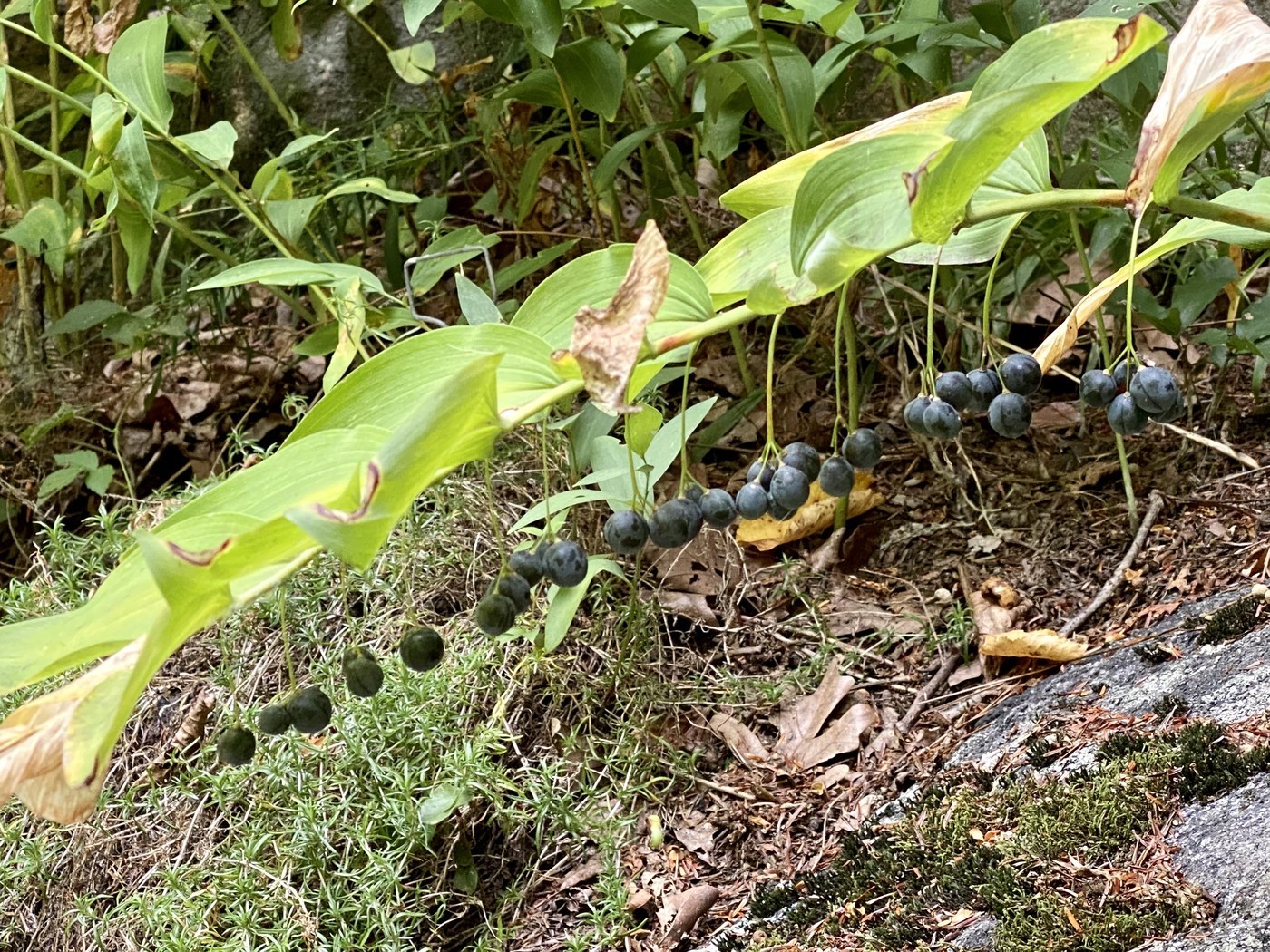
Solomon's seal (Polygonatum) is a rhizomatous perennial beloved for its arching, unbranched stems hung with pairs of small, greenish-white, bell-shaped flowers in spring, followed by blue-black berries.
The foliage turns clear gold in autumn, and the elegant, horizontal stems add a refined, architectural quality to shady borders and woodland gardens. The common name refers to round scars on the rhizome said to resemble an official seal.
It is a long-lived, low-maintenance plant that slowly forms handsome colonies in the shade.
How to identify it
- Stems: Arching, unbranched stems 1-3 ft long (taller in some species), gracefully horizontal
- Leaves: Oval, ribbed, alternate leaves arranged neatly along the stem; clean and pleated-looking
- Flowers: Small, tubular, greenish-white bells dangling in pairs from the leaf axils along the underside of the stem in spring
- Fruit: Blue-black berries in late summer
- Variegated forms: Some cultivars have cream-edged leaves
Care & growing
- Light: Part to full shade; it is a classic woodland shade plant
- Water: Keep evenly moist, especially in drier shade; tolerates short dry spells once established
- Soil: Rich, humusy, well-drained soil high in organic matter
- Temperature: Hardy roughly USDA zones 3-8
- Feeding: Topdress with leaf mold or compost; little else needed
- Propagation: Easiest by dividing the rhizomes in early spring or fall; also from seed (slow)
Habitat & origin
Solomon's seal species are native to woodlands across the Northern Hemisphere, including North America (Polygonatum biflorum), Europe, and Asia, growing in shaded forests, woodland edges, and along streams.
In gardens it is a staple of shade and woodland plantings, naturalizing slowly under trees and in north-facing borders.
Frequently asked questions
Will Solomon's seal grow in dry shade?
It prefers evenly moist, humus-rich soil but, once established, tolerates the dry shade beneath trees better than many perennials.
How do I propagate Solomon's seal?
Divide the creeping rhizomes in early spring or fall, making sure each piece has a bud (eye). It establishes slowly but reliably.
Why is it called Solomon's seal?
The rhizome bears round, depressed scars where old stems detached, said to resemble the wax seal of King Solomon.
What do the flowers look like?
Small, tubular, greenish-white bells dangle in pairs from the leaf axils along the underside of the arching stems in spring.
Solomon's Seal guides
In-depth guides for identifying, growing, and caring for Solomon's Seal.
How to Care for Solomon's Seal
Grow arching Solomon's Seal in shade with rich, evenly moist woodland soil for elegant nodding blooms and graceful foliage.
Solomon's Seal Identification Guide
How to identify Solomon's Seal (Polygonatum) by its gracefully arching unbranched stems, alternate ribbed leaves, and pairs of greenish-white bell flowers dangling beneath.