Southern Live Oak
Quercus virginiana
Southern Live Oak is a massive, spreading evergreen oak of the American Deep South, famous for its broad canopy draped in Spanish moss. It is among the longest-lived and most iconic trees of the region.
- Light
- Full sun
- Water
- Low once established; drought tolerant
- Difficulty
- Easy
Got a plant like this?
Identify any plant from a photo, free.
Overview
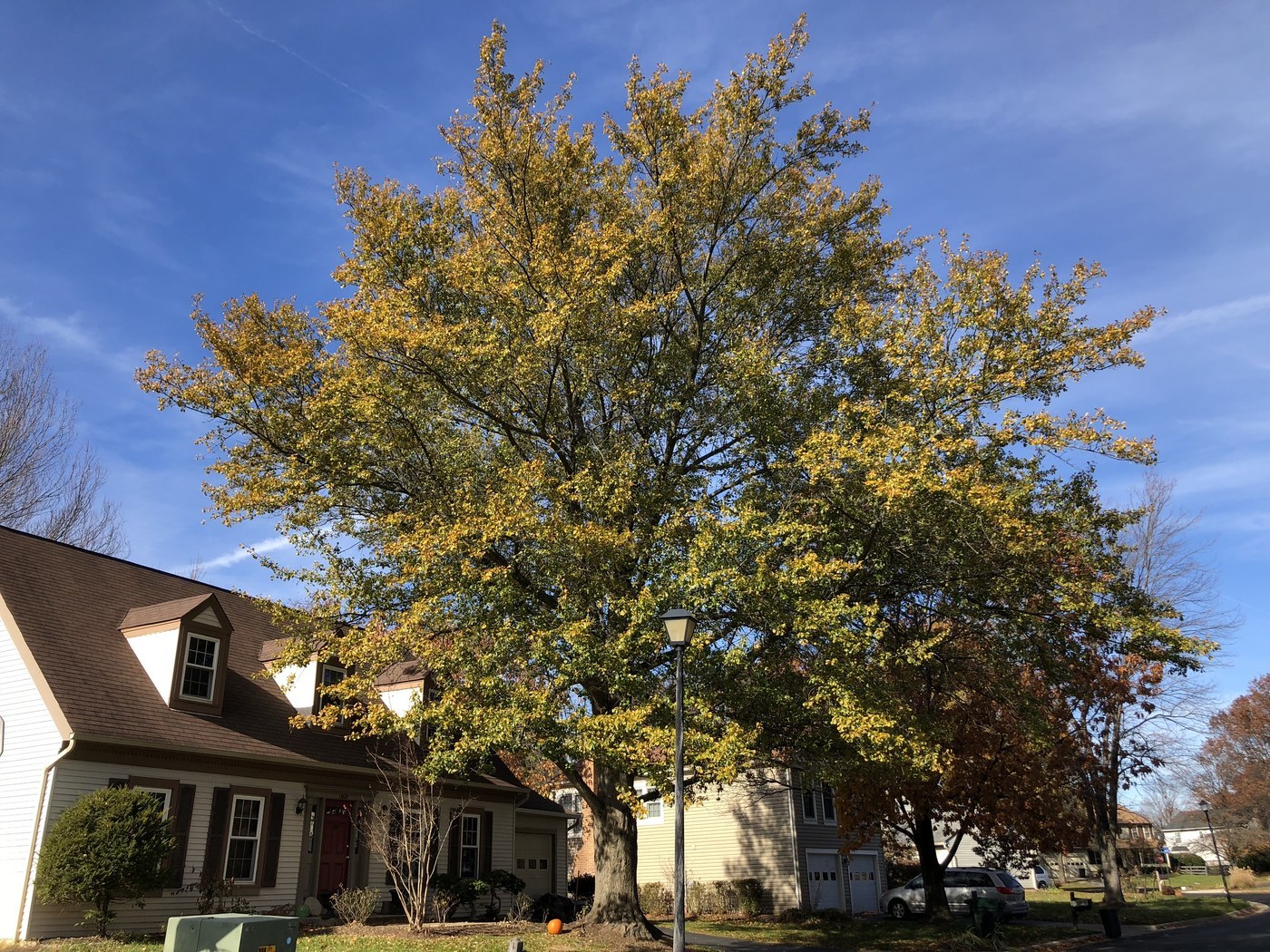
Southern Live Oak (Quercus virginiana) is a long-lived evergreen oak native to the southeastern coastal United States. Though rarely exceeding 60 to 80 feet in height, its enormous horizontal limbs can spread well over 100 feet, creating one of the widest canopies of any North American tree.
The word live refers to its evergreen habit; it holds leathery leaves through winter, shedding and replacing them in spring. Iconic avenues of moss-draped live oaks define the landscape of the Old South.
Mature specimens can live several centuries, and some famous trees are estimated at over a thousand years old.
How to identify it
- Leaves: Small, leathery, oblong evergreen leaves 2 to 5 inches long, dark glossy green above and pale fuzzy below, with smooth, slightly rolled edges
- Acorns: Slender, dark brown to black nuts about 1 inch long in shallow caps, often clustered
- Habit: Short, massive trunk with low, wide-spreading, often arching horizontal limbs
- Bark: Dark, furrowed, ridged gray-brown
- Canopy: Broad, dense, rounded crown frequently draped with Spanish moss and resurrection fern
Care & growing
An extremely tough, low-maintenance tree once established.
- Light: Full sun
- Water: Drought tolerant when mature; water young trees regularly to establish deep roots
- Soil: Adaptable to sandy, loamy, or clay soils; tolerates salt spray and occasional flooding
- Temperature: Hardy in USDA zones 8 to 10; tolerates coastal heat and wind
- Feeding: Generally needs none in decent soil
- Propagation: From fresh acorns sown in fall; seedlings establish quickly
Give it plenty of room; the spreading limbs need far more horizontal space than the modest height suggests.
Habitat & origin
Native to the coastal plain of the southeastern United States, from southeastern Virginia south through Florida and west along the Gulf Coast to Texas. It grows in sandy coastal soils, hammocks, and lowland forests, well adapted to hurricanes and salt air.
It is the state tree of Georgia and widely planted as a shade and avenue tree across the Deep South.
Frequently asked questions
Is Southern Live Oak evergreen or deciduous?
It is evergreen. It keeps its leathery leaves through winter and drops old leaves in spring as new ones emerge, so it is briefly bare for only a short time.
How wide does a live oak get?
Very wide. While usually only 60 to 80 feet tall, the canopy can spread over 100 feet, so it needs a large, open site.
How long do live oaks live?
They are extremely long-lived, commonly several hundred years, with some celebrated specimens estimated to exceed a thousand years old.
Does Spanish moss harm the tree?
No. Spanish moss is an epiphyte that only uses the branches for support and takes nothing from the tree; it is not a parasite.
Southern Live Oak guides
In-depth guides for identifying, growing, and caring for Southern Live Oak.
How to Care for Southern Live Oak
Grow the majestic Southern Live Oak (Quercus virginiana), a sprawling evergreen shade tree that is drought tolerant once established.
Southern Live Oak Identification Guide
Identify Southern Live Oak (Quercus virginiana) by its wide spreading crown, small leathery evergreen leaves, and dark furrowed bark.