Trout Lily
Erythronium americanum
A delicate spring ephemeral named for its mottled, trout-patterned leaves and nodding yellow lily flowers. It forms vast, slow-spreading woodland colonies that can be over a century old.
- Light
- Part shade to full shade
- Water
- Moderate; moist soil in spring
- Difficulty
- Moderate
Got a plant like this?
Identify any plant from a photo, free.
Overview
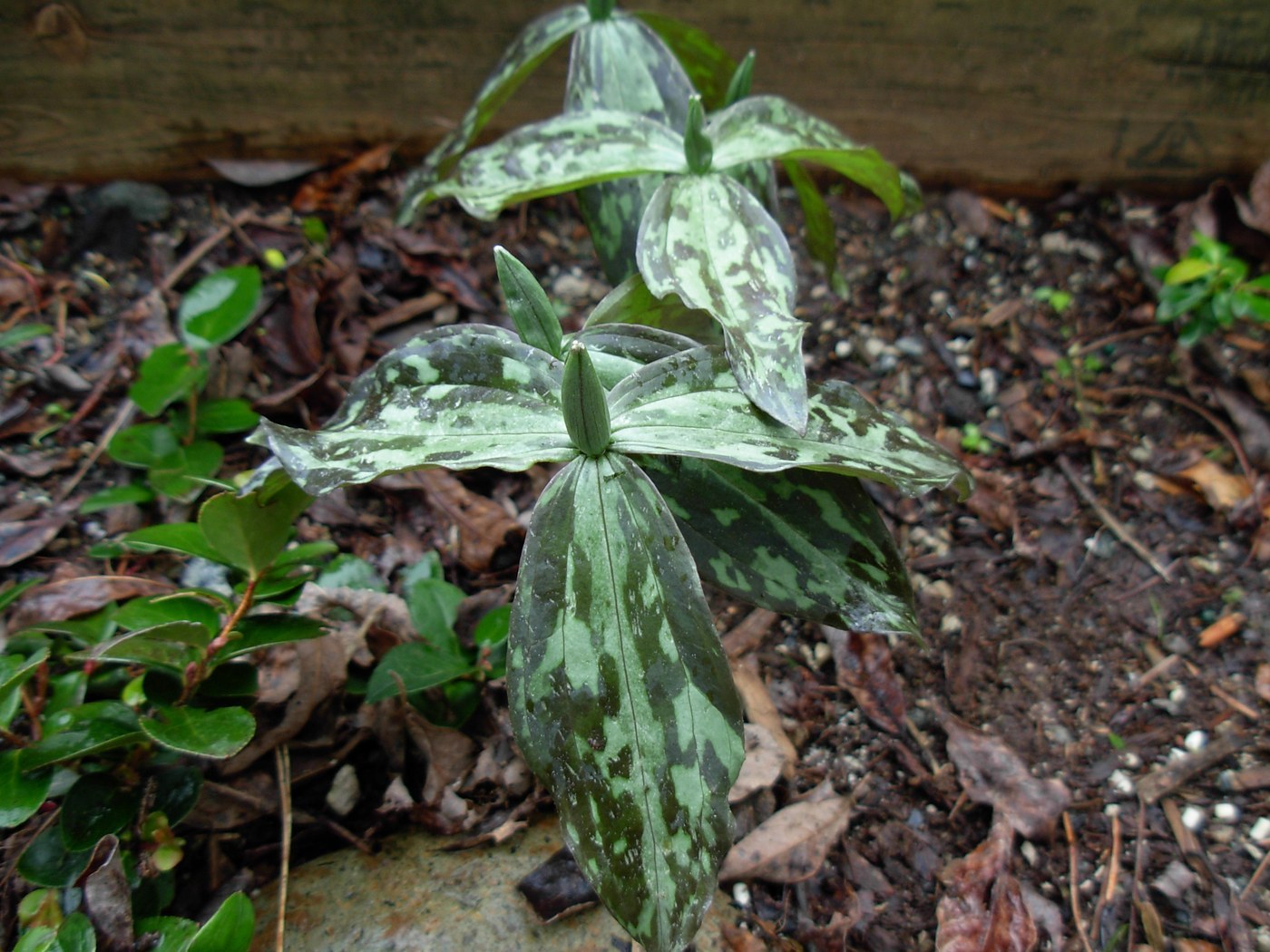
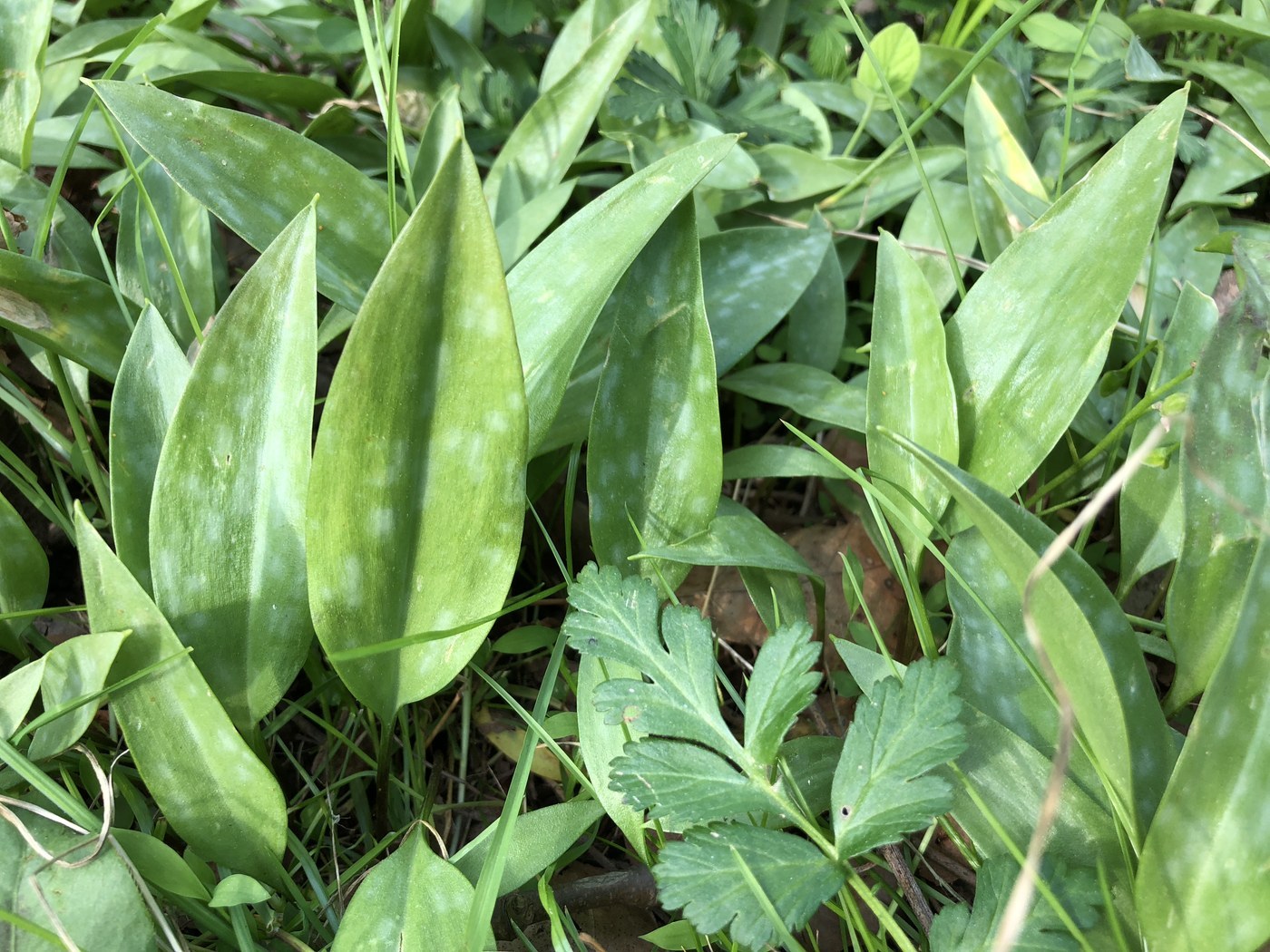
Trout lily (Erythronium americanum) is a charming spring ephemeral of eastern North American woodlands. Its common name comes from the brown-and-green mottled leaves that resemble the markings of a brook trout.
Each flowering plant bears two leaves and a single nodding, yellow, lily-like flower with petals that curve gracefully backward. Plants with only one leaf are immature and do not bloom.
Trout lilies spread mainly by underground runners, forming extensive colonies. Some of these clonal colonies are estimated to be hundreds of years old, even as individual flowering plants are sparse within them.
How to identify it
Look for low pairs of mottled leaves with a single nodding yellow flower in early spring.
- Flowers: Solitary, nodding, yellow, with six backward-curving tepals, often bronze-tinged outside
- Leaves: Elliptical, smooth, mottled green and brownish-purple like a trout's back
- Habit: Colony-forming via underground stolons; two leaves signal a blooming plant, one leaf an immature one
- Size: 4 to 10 inches (10 to 25 cm) tall
- Bloom time: Early spring
Care & growing
Trout lilies need patience and undisturbed woodland conditions.
- Light: Part to full shade beneath deciduous trees, blooming before the canopy leafs out
- Water: Keep moist in spring; tolerates summer dryness during dormancy
- Soil: Rich, humusy, well-drained woodland soil
- Temperature: Cold-hardy; requires winter chill
- Propagation: Slow from seed (ant-dispersed) or by offset bulblets; buy nursery-propagated stock
- Note: Plants go fully dormant by early summer
Habitat & origin
Trout lily is native to eastern North America, from Ontario and Nova Scotia south to Georgia and the eastern Great Plains.
It carpets rich, moist deciduous forest floors and is a classic component of the spring ephemeral flora, blooming before trees shade the ground.
It is grown in woodland and shade gardens but establishes slowly, requiring the rich, undisturbed soils it favors in the wild.
Frequently asked questions
Why is it called trout lily?
Its leaves are mottled with brown and green markings that resemble the speckled pattern on a brook trout.
Why do some plants not flower?
Only mature plants with two leaves bloom; single-leaved plants are immature and may take years before they produce a flower.
Why is it also called dogtooth violet?
The small, pointed white underground bulb resembles a dog's tooth, though the plant is a lily relative, not a violet.
Why does trout lily disappear by summer?
It is a spring ephemeral that completes its growth early, then dies back to its bulb and goes dormant once the tree canopy closes.
Trout Lily guides
In-depth guides for identifying, growing, and caring for Trout Lily.
How to Care for Trout Lily
Grow trout lily as a woodland spring ephemeral: shady, moist soil, cool conditions, and patient naturalizing.
Trout Lily Identification Guide
Identify Trout Lily (Erythronium) by its mottled brown-green leaves and nodding, reflexed yellow or white lily flowers. This guide covers its spring-ephemeral habit and colony growth.