Vinca
Catharanthus roseus
A heat- and drought-tolerant annual with glossy leaves and pinwheel flowers, annual vinca blooms nonstop through the hottest part of summer.
- Light
- Full sun
- Water
- Low; let soil dry between waterings
- Difficulty
- Easy
Got a plant like this?
Identify any plant from a photo, free.
Overview
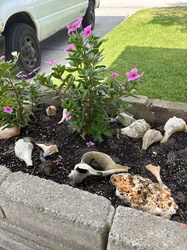
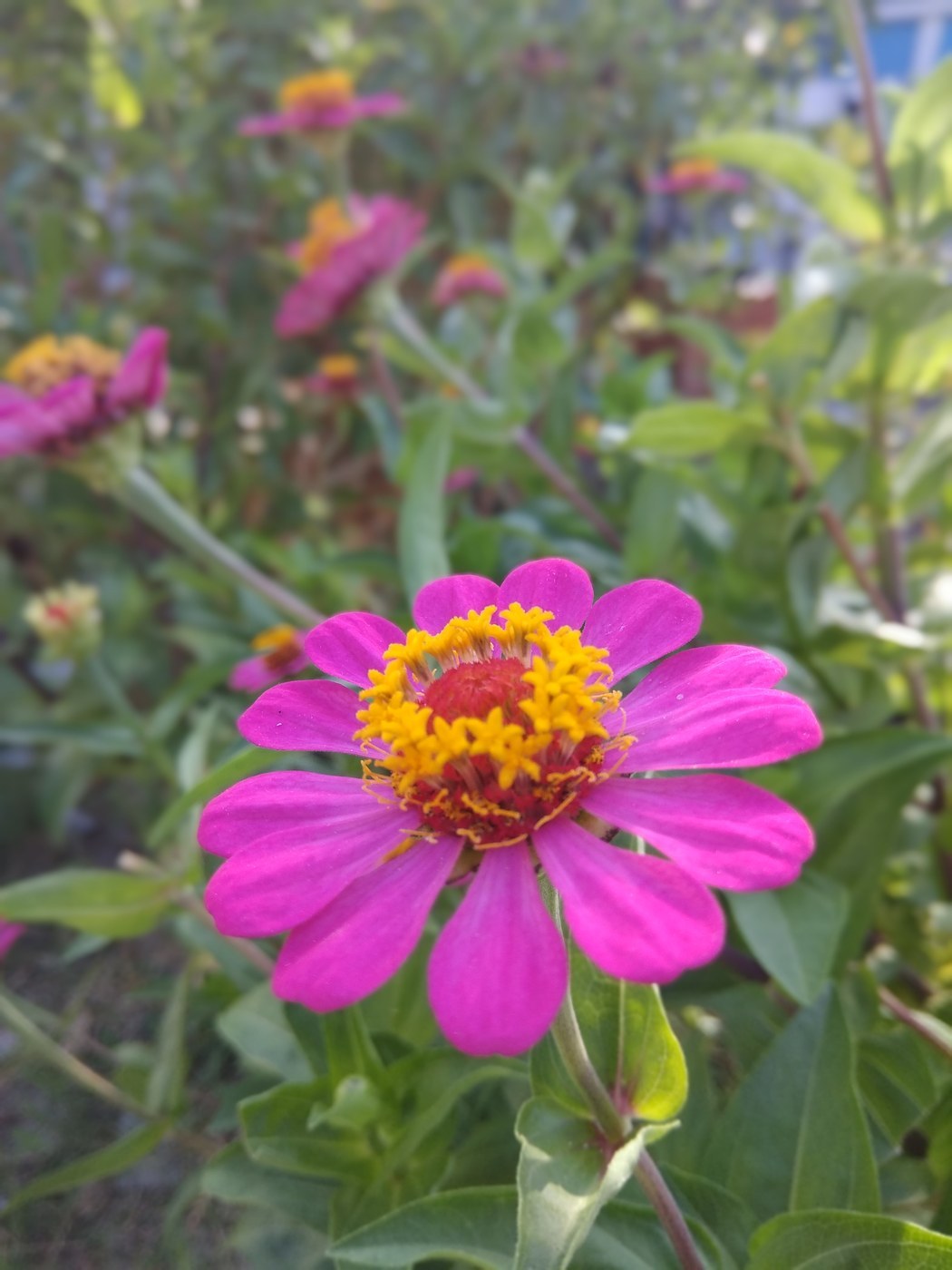
Annual vinca, more accurately the Madagascar periwinkle, is a tough, sun-loving bedding plant beloved for thriving where many flowers wilt. It produces a steady show of five-petaled blooms in white, pink, red, and lavender, often with a contrasting eye.
Note that the name vinca is shared with the trailing groundcovers Vinca minor and Vinca major; this entry covers the upright annual Catharanthus roseus, the most popular bedding vinca.
How to identify it
- Habit: Upright to mounding, 6-18 in tall
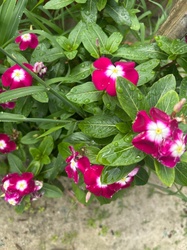
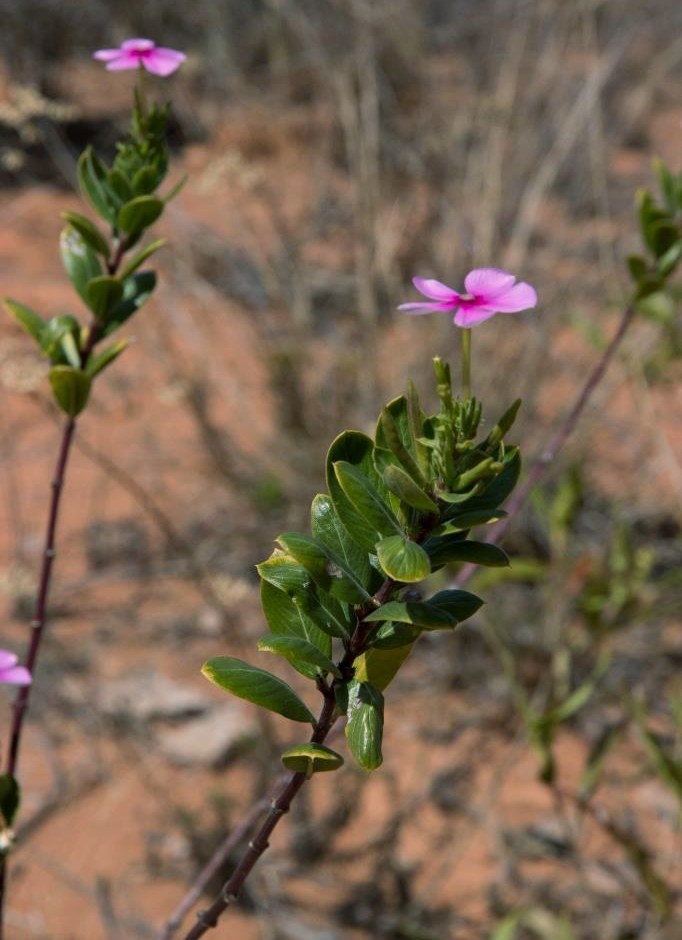
- Flowers: Flat, 5-petaled pinwheels about 1-2 in across, often with a darker central eye
- Leaves: Glossy, dark green, oval, with a pale midrib
- Bloom time: Early summer to frost, even in intense heat
- Colors: White, pink, magenta, red, lavender, often bicolored
Care & growing
Light: Full sun is essential for dense bloom.
Water: Drought-tolerant once established; let soil dry between waterings. Overwatering invites root and stem rot.
Soil: Light, very well-drained soil; avoid heavy, wet ground.
Temperature: Loves heat; do not plant out until soil is warm.
Feeding: Light feeding; it is not a heavy feeder.
Propagation: Usually grown from seed started early indoors with warmth, as it is slow to germinate.
Habitat & origin
Native to Madagascar, where it is now endangered in the wild, though widely naturalized throughout the tropics and subtropics.
It is grown worldwide as a heat-tolerant summer bedding and container plant, and as a perennial in frost-free regions where it can become weedy.
Frequently asked questions
Is annual vinca the same as the groundcover periwinkle?
No. Annual vinca is Catharanthus roseus, an upright heat-lover. The trailing evergreen groundcovers are Vinca minor and Vinca major, different plants in a related family.
Why are my vinca leaves yellowing and the stems collapsing?
This is usually overwatering or poor drainage leading to rot. Vinca needs to dry out between waterings and hates wet feet.
When should I plant vinca?
Wait until the soil is thoroughly warm in late spring; cold, wet conditions stunt it and encourage disease.
How do I get the most blooms?
Give it full sun, light well-drained soil, and avoid overwatering; in hot, sunny spots it flowers nonstop from early summer to frost.
Vinca guides
In-depth guides for identifying, growing, and caring for Vinca.
How to Care for Vinca
Vinca (Catharanthus roseus) is a heat-loving annual with glossy leaves and nonstop pinwheel blooms that thrives on sun and lean water.
Vinca Identification Guide
How to identify Vinca by its glossy paired leaves, five-petaled pinwheel flowers, and milky sap — covering both annual Madagascar periwinkle and trailing perennial periwinkle.
Vinca identified by the community
Real specimens identified with Plant Identifier.