Yellow Trumpet Tree
Handroanthus chrysotrichus
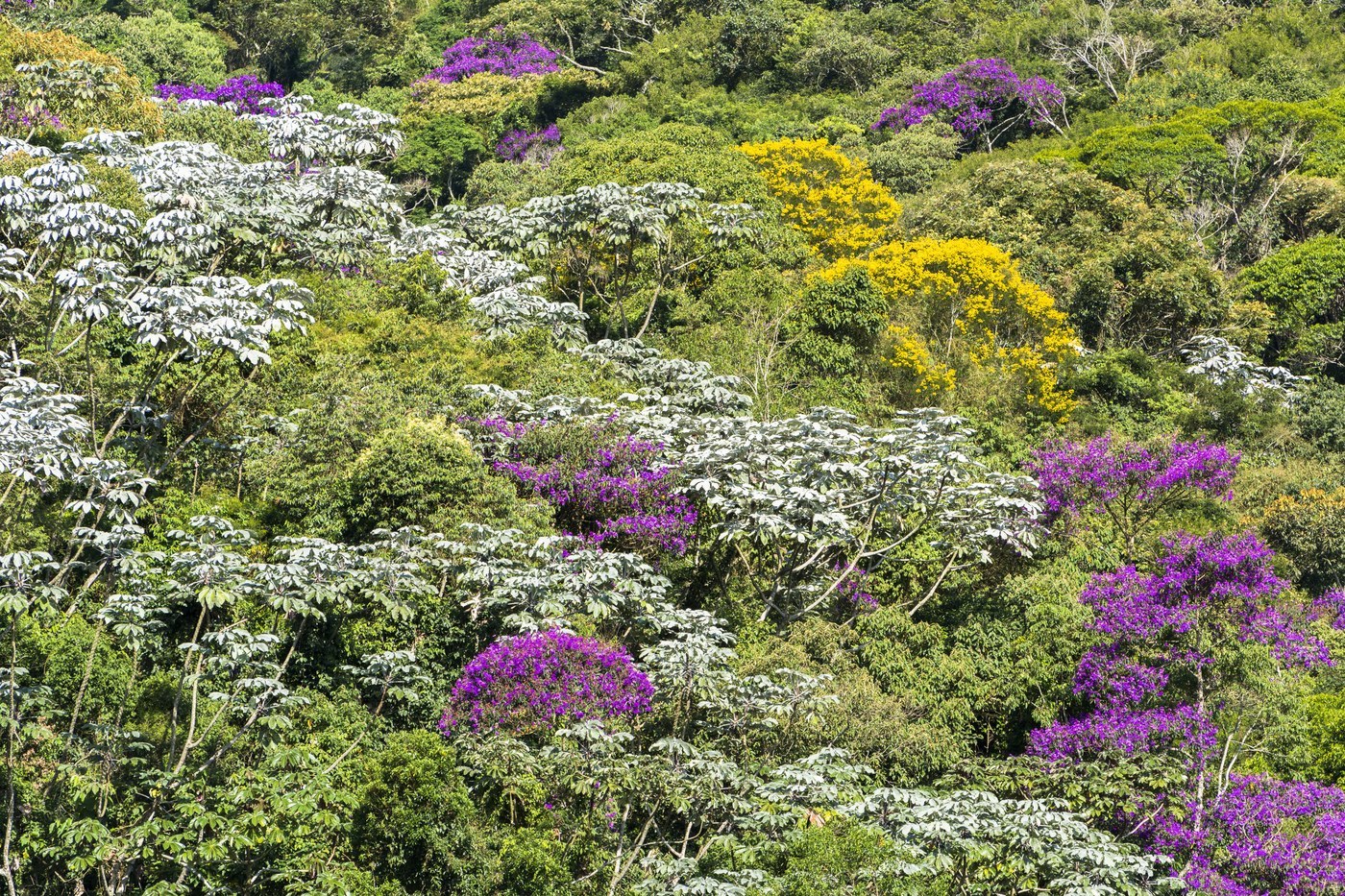
The yellow trumpet tree erupts in brilliant golden-yellow trumpet flowers in spring, usually while leafless, making it one of the most dazzling tropical flowering trees. It is the national tree of Brazil.
- Light
- Full sun
- Water
- Moderate; drought-tolerant once established
- Difficulty
- Easy
Got a plant like this?
Identify any plant from a photo, free.
Overview
Yellow or golden trumpet tree, Handroanthus chrysotrichus (formerly Tabebuia chrysotricha), is a small-to-medium deciduous tree that covers itself in masses of vivid golden-yellow trumpet-shaped flowers in spring, typically before the new leaves appear.
The closely related Handroanthus albus and Tabebuia aurea also go by the name; the yellow-flowered Handroanthus is celebrated as the ipê-amarelo, the national tree of Brazil.
Its brief but overwhelming bloom, drought tolerance and manageable size make it a favorite ornamental and street tree across warm climates.
How to identify it
- Flowers: showy, 2-3 in golden-yellow tubular trumpet flowers in dense clusters, often smothering a leafless tree
- Leaves: palmately compound with about 5 leaflets, the undersides often covered in fine golden hairs (in H. chrysotrichus)
- Fruit: long, slender, hairy bean-like capsules splitting to release papery winged seeds
- Size: small to medium tree, roughly 20-35 ft tall
- Habit: rounded to irregular crown, deciduous in the dry season
Care & growing
Light: full sun is required for heavy flowering.
Water: moderate while establishing; mature trees are drought-tolerant and bloom most heavily after a cool, dry spell.
Soil: well-drained soil of most types; avoid soggy ground.
Temperature: subtropical to tropical (USDA zones 9-11); young trees are frost-tender.
Feeding: little needed once established; feed young trees lightly.
Propagation: easily grown from seed, which germinates quickly; also from cuttings.
Habitat & origin
Handroanthus chrysotrichus is native to Brazil and neighboring parts of South America, growing in seasonal forests and on hillsides.
It is widely planted as an ornamental and avenue tree throughout warm regions, including the southern United States, Australia, southern Asia and Mediterranean climates, where its spring gold is highly valued.
Frequently asked questions
How long does the yellow trumpet tree stay in bloom?
The peak floral display is brief, often just one to two weeks, but it is intense, covering the whole tree in gold.
Why are the flowers appearing on bare branches?
The tree is deciduous and typically drops its leaves before flowering in spring, so the blooms appear on leafless branches for maximum impact.
Will it grow in a cooler climate?
It needs an essentially frost-free, warm climate (zones 9-11). In marginal areas it can be container-grown and protected in winter.
Is it the same as ipê?
Yes, the yellow trumpet trees are the ipê-amarelo of Brazil, and the genus Handroanthus is the source of the durable ipe timber.
Yellow Trumpet Tree guides
In-depth guides for identifying, growing, and caring for Yellow Trumpet Tree.
How to Care for Yellow Trumpet Tree
The yellow trumpet tree bursts into golden bloom in spring and is an easy, drought-tolerant ornamental for warm, sunny climates.
Yellow Trumpet Tree Identification Guide
Identify the yellow trumpet tree (Handroanthus / Tabebuia) by its golden flush of trumpet flowers on bare branches, palmate fuzzy leaves, and slender pods.