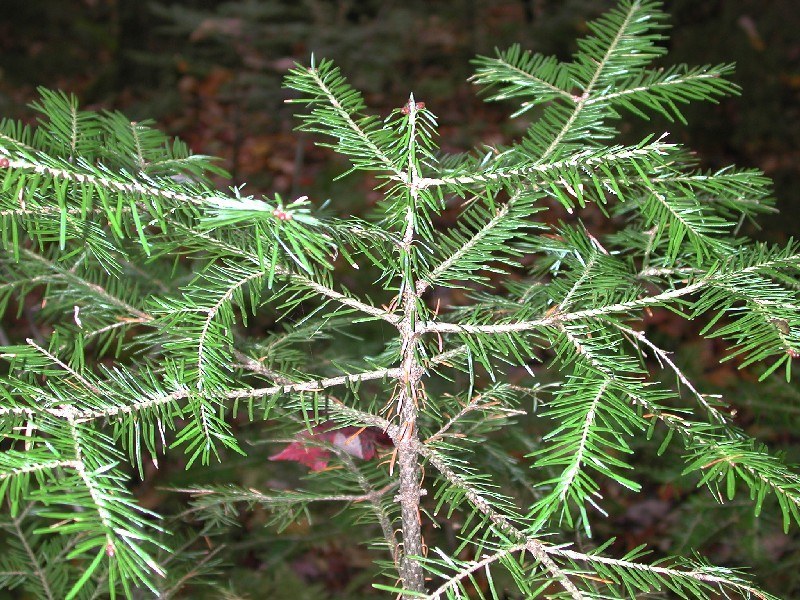
Balsam Fir
Abies balsamea
A fragrant northern evergreen with flat, soft needles and resin-blistered bark, beloved as a Christmas tree for its classic spire shape and lasting pine scent.
- Light
- Full sun to part shade
- Water
- Consistently moist, cool soil
- Difficulty
- Moderate
Got a plant like this?
Identify any plant from a photo, free.
Overview
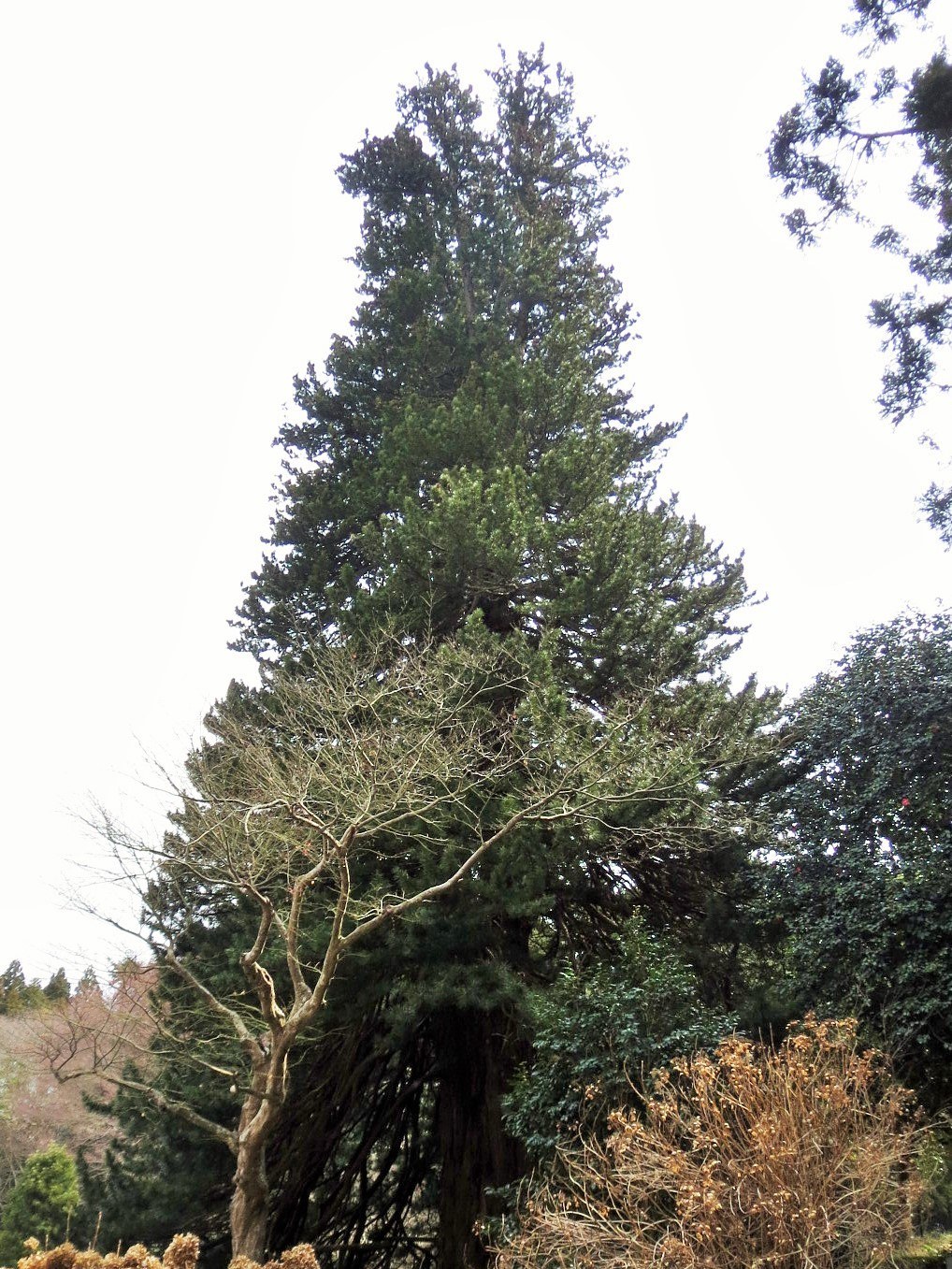
Balsam fir is the quintessential northern evergreen and one of the most popular Christmas trees, prized for its narrow, symmetrical spire and rich, long-lasting fragrance. It is a small-to-medium conifer of cold boreal and northern forests.
Its smooth gray bark is dotted with resin-filled blisters that exude aromatic 'Canada balsam,' historically used as an optical cement and adhesive. The tree is shallow-rooted and adapted to cool, moist, often swampy ground.
How to identify it
Flat needles and resin blisters are key:
- Needles flat, soft, 1/2-1 in long, dark green above with two whitish bands beneath, attached singly and leaving round flat scars when pulled
- Aroma strongly fragrant when crushed
- Bark smooth gray with raised resin blisters when young, becoming scaly with age
- Cones upright, purplish to gray-brown, 2-3 in, that disintegrate on the tree rather than falling whole
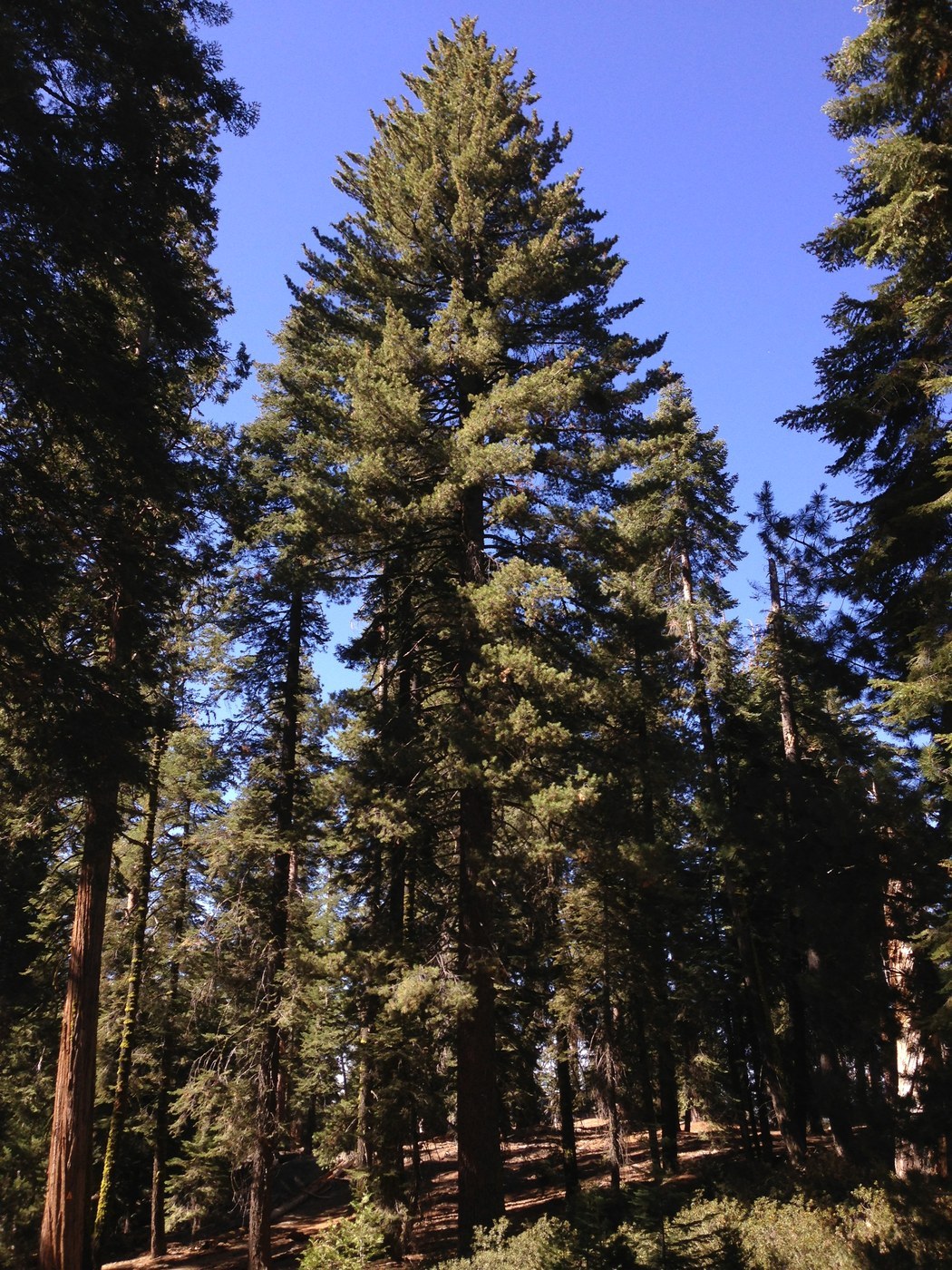
- Form narrow, dense, conical spire 40-60 ft tall
Care & growing
Best in cool climates with steady moisture.
- Light: Full sun to partial shade; quite shade-tolerant
- Water: Needs consistently moist, cool soil; intolerant of drought and heat
- Soil: Prefers moist, acidic, well-drained loam; tolerates wet sites
- Temperature: Hardy in USDA zones 3-5; poor in hot or dry regions
- Feeding: Rarely needed
- Propagation: From seed with cold stratification; slow but steady early growth
Habitat & origin
Native to northeastern North America, across most of Canada and the northern United States from the Maritimes and New England west to Alberta and Minnesota. It is a dominant species of the boreal forest.
It grows in cool, moist woods, swamps, and bog margins, often in pure stands or mixed with spruce.
Frequently asked questions
What makes it a good Christmas tree?
Its narrow spire, soft dark-green needles, strong lasting fragrance, and good needle retention after cutting.
How do I tell a fir from a spruce?
Fir needles are flat, soft, and leave smooth round scars; spruce needles are square, sharp, and leave peg-like bumps.
What are the bark blisters?
They are resin pockets containing 'Canada balsam,' a clear aromatic resin once used as optical cement and adhesive.
Can it grow in warm climates?
No — it is a cold-climate species that needs cool, moist conditions and declines in heat.
Balsam Fir guides
In-depth guides for identifying, growing, and caring for Balsam Fir.
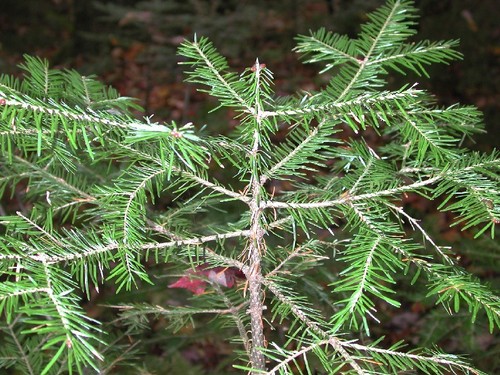
How to Care for Balsam Fir
Growing guide for balsam fir (Abies balsamea): cool moist soil, full sun to part shade, acidic ground, and patient, low-maintenance care.
Balsam Fir Identification Guide
Recognize balsam fir by its flat, soft, blunt needles, resin blisters on smooth gray bark, and upright purple cones. Covers needles, bark, cones, look-alikes, and habitat.