Burdock
Arctium lappa
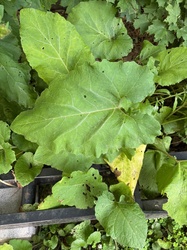
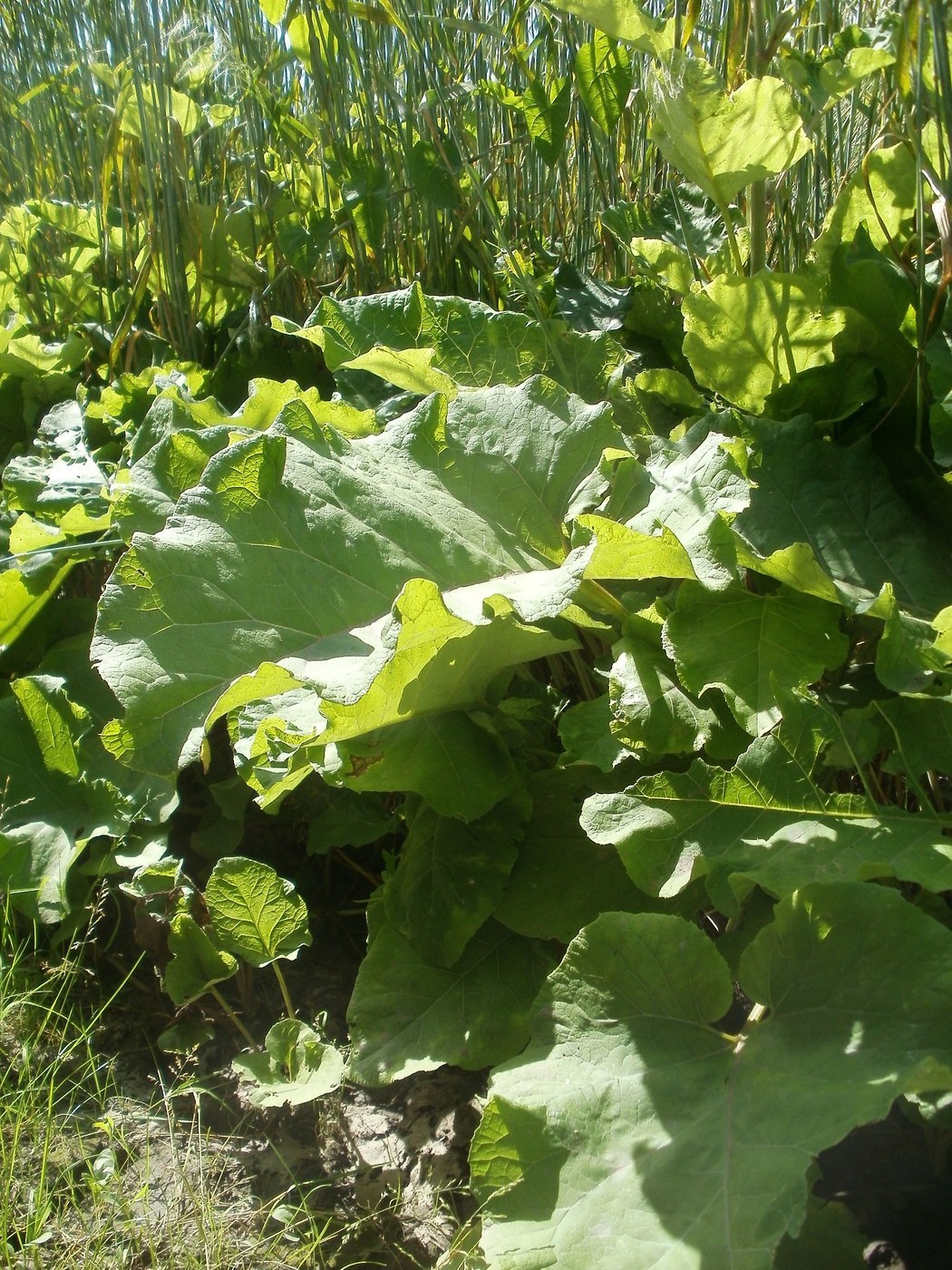
A large biennial famous for its bur-covered seed heads that cling to fur and clothing, the inspiration for Velcro. It has enormous rhubarb-like leaves and a thick, deep taproot.
- Light
- Full sun to part shade
- Water
- Average; tolerates moist soil
- Difficulty
- Easy
Got a plant like this?
Identify any plant from a photo, free.
Overview
Burdock (Arctium lappa, greater burdock; also Arctium minus, common burdock) is a robust biennial in the aster family. In its first year it forms a rosette of huge leaves and a deep taproot; in its second year it bolts into a tall, branching flower stalk.
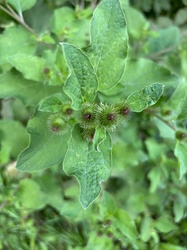
It is best known for its burs — round, hooked seed heads that famously inspired the invention of Velcro. Beyond its reputation as a weed, it is also grown as a cultivated root crop.
How to identify it
Spot burdock by its giant heart-shaped leaves and clinging round burs.
- First-year rosette of very large, wavy, heart-shaped leaves, woolly-gray beneath
- Second-year flowering stalks reaching 3-9 ft tall, heavily branched
- Purple, thistle-like flower heads surrounded by hooked bracts
- Dry, round burs covered in stiff hooks that grab fur and fabric
- Thick, deep, fleshy taproot
Care & growing
Burdock can be grown as a root crop or controlled as a weed.
- Light: Full sun to partial shade
- Water: Average to moist; tolerates a range of conditions
- Soil: Deep, loose, fertile soil produces the best roots
- Temperature: Cold-hardy biennial
- Feeding: Rich soil benefits cultivated root crops
- Propagation: By seed; often grown as an annual and lifted before it flowers
- Control: Dig out the taproot before it sets seed; remove burs to prevent spread
Habitat & origin
Native to Europe and Asia, burdock has naturalized across North America and other temperate regions.
It grows along roadsides, fence rows, ditches, pastures, vacant lots and disturbed ground, preferring fertile, moist soils in sun to light shade. It is also cultivated as a root crop in Japan and other parts of East Asia.
Frequently asked questions
How did burdock inspire Velcro?
After burdock burs stuck to his dog's fur on a walk, Swiss engineer George de Mestral examined their tiny hooks under a microscope and used the principle to invent the hook-and-loop fastener Velcro.
How do I get rid of burdock?
Dig out the deep taproot before the plant flowers in its second year, and remove any burs to stop seeds from spreading. Persistent digging over a couple of seasons clears it.
Is burdock the same as a thistle?
Burdock has thistle-like purple flowers and is in the same family, but it is a separate plant with much larger leaves and characteristic hooked burs rather than spiny stems.
Burdock guides
In-depth guides for identifying, growing, and caring for Burdock.
How to Care for Burdock
Burdock is a robust, easy biennial with huge bold leaves and burr-topped purple flowers; give it sun to part shade and deep, moist soil.
Burdock Identification Guide
Identify burdock by its huge rhubarb-like basal leaves, thistle-like purple flowers, and the hooked burs that cling to clothing and fur. Covers look-alikes and habitat.
Burdock identified by the community
Real specimens identified with Plant Identifier.