Dragon Tree
Dracaena marginata
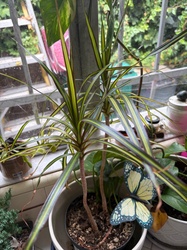
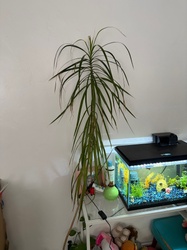
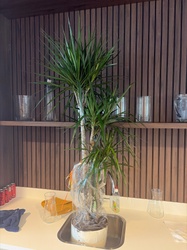
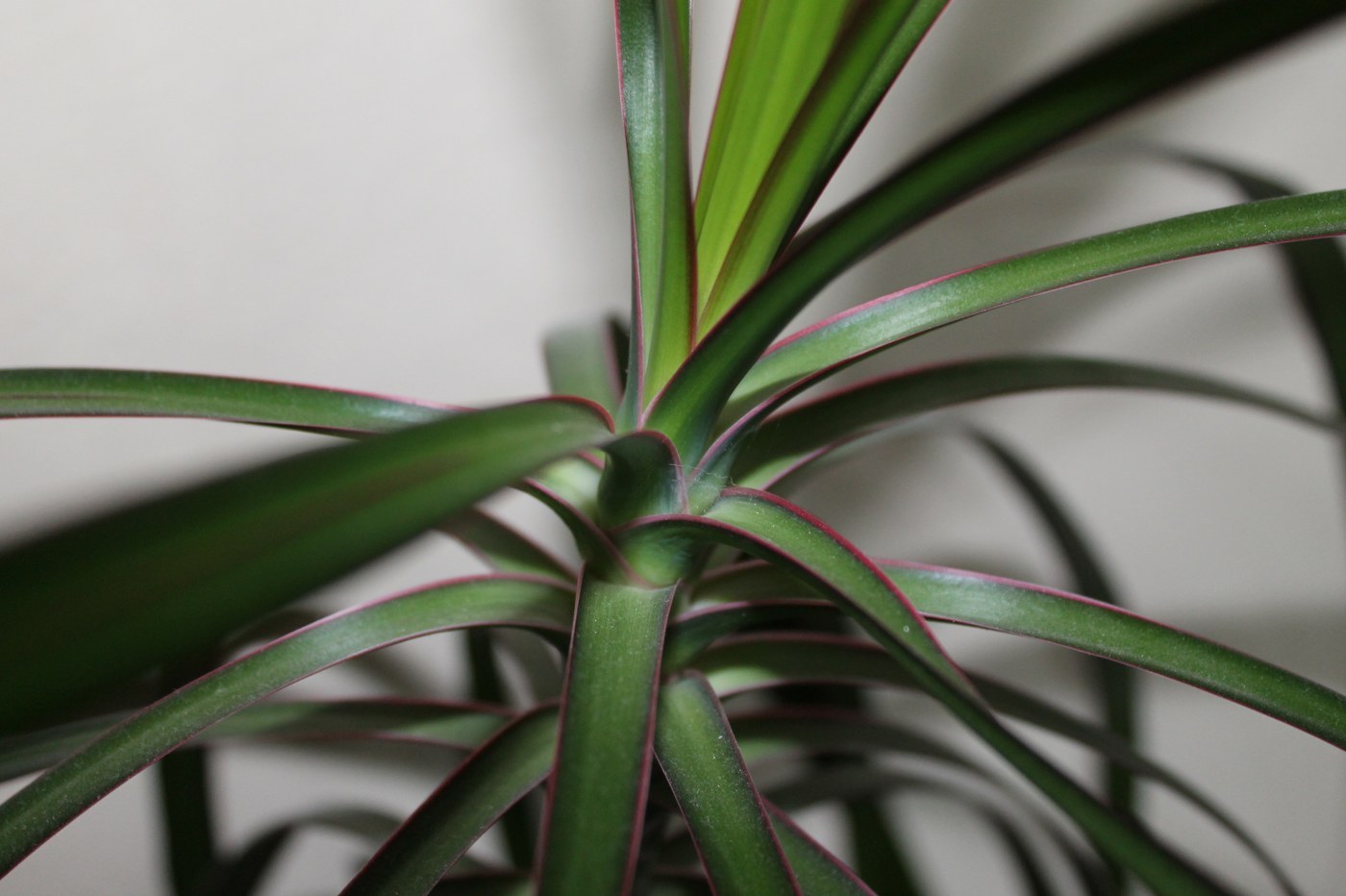
The dragon tree is an easy-care indoor tree with slender, arching stems topped by spiky rosettes of narrow, red-edged green leaves. It tolerates low light and infrequent watering.
- Light
- Bright indirect to medium light
- Water
- When top half of soil dries
- Difficulty
- Easy
Got a plant like this?
Identify any plant from a photo, free.
Overview
Dracaena marginata is a slow-growing, palm-like indoor tree from Madagascar, popular for its architectural form and tolerance of neglect. Thin, often curving canes are crowned with fountains of narrow, sword-shaped leaves edged in red or purple.
It is one of the most forgiving houseplants, handling low light, dry air, and erratic watering better than most. Over years it can reach ceiling height, and multiple canes can be staggered for a fuller look.
Cultivars such as Tricolor and Colorama add cream and pink stripes to the foliage.
How to identify it
Identify the dragon tree by:
- Stems: slender, woody, often curved or braided canes
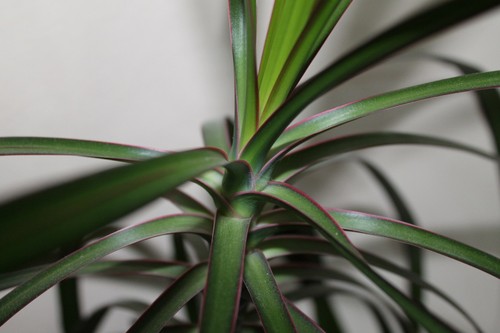
- Leaves: long, narrow, sword-shaped, arching in a rosette at the cane tips
- Leaf color: green with thin red or burgundy margins (some cultivars add cream or pink)
- Habit: upright, tree-like, palm-like silhouette
- Growth: slow, eventually reaching 6 ft or more indoors
Care & growing
- Light: bright, indirect light is best, but it tolerates medium and low light (growth slows and color fades)
- Water: let the top half of the soil dry before watering; it is sensitive to overwatering
- Water quality: sensitive to fluoride and salts; use filtered or distilled water if leaf tips brown
- Humidity: average indoor humidity is fine
- Soil: well-draining potting mix
- Temperature: 65-80 degrees F; avoid cold below 55 degrees F
- Feeding: light feeding in spring and summer
- Propagation: easy from stem or tip cuttings
Habitat & origin
The dragon tree is native to Madagascar and nearby islands such as Mauritius, where it grows as a small tree in warm, semi-arid scrub and forest.
Its drought tolerance reflects this habitat. It is grown around the world as one of the most common and durable indoor trees, and outdoors in frost-free tropical climates.
Frequently asked questions
Why are the leaf tips on my dragon tree turning brown?
Browning tips are often caused by fluoride and salts in tap water, underwatering, or dry air. Try watering with filtered or distilled water and keep watering consistent.
Can a dragon tree tolerate low light?
Yes. It survives in low to medium light, though growth slows and the red leaf margins are most vivid in bright, indirect light.
How do I make my dragon tree bushier?
Cut back the canes at the desired height. The plant will sprout new growth points just below the cut, creating a fuller, multi-headed shape.
Dragon Tree guides
In-depth guides for identifying, growing, and caring for Dragon Tree.
How to Care for Dragon Tree
Dragon tree (Dracaena marginata) is an easy, architectural houseplant tolerating medium light and infrequent watering.
Dragon Tree Identification Guide
Identify the Dragon Tree (Dracaena marginata) by its slender woody canes topped with spiky fountains of thin red-edged leaves.
Dragon Tree identified by the community
Real specimens identified with Plant Identifier.