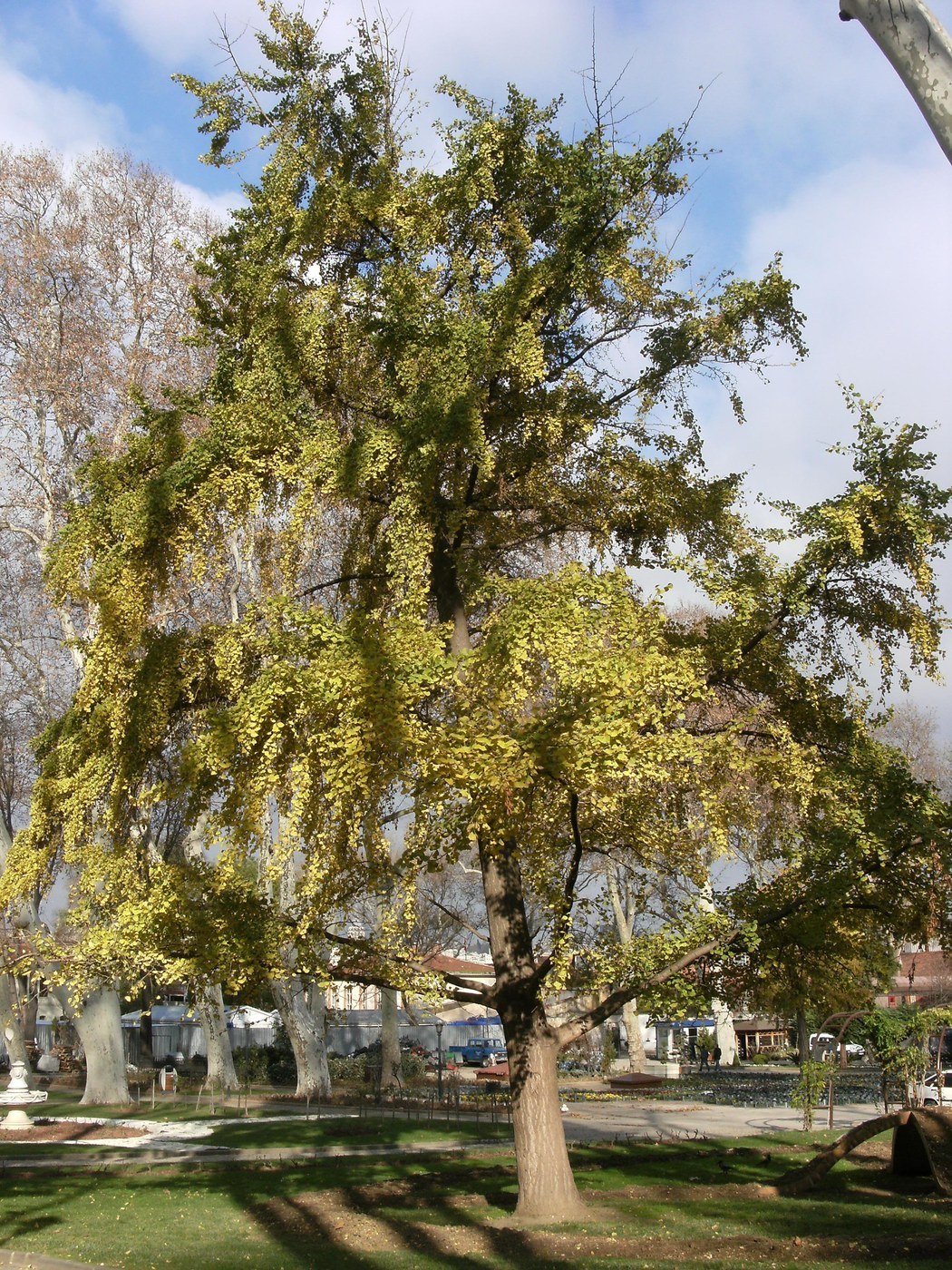
Ginkgo
Ginkgo biloba
An ancient 'living fossil' tree with unmistakable fan-shaped leaves that turn brilliant gold in autumn. Remarkably tough and pollution-resistant, it is unchanged for over 200 million years.
- Light
- Full sun
- Water
- Moderate; tolerates drought once established
- Difficulty
- Easy
Got a plant like this?
Identify any plant from a photo, free.
Overview
Ginkgo is the sole surviving species of an ancient lineage that flourished alongside the dinosaurs, earning it the nickname 'living fossil.' It is a deciduous tree with no close living relatives.
Extraordinarily resilient, ginkgo tolerates urban pollution, road salt, pests, and poor soils, making it a favorite street and park tree. Several specimens famously survived the Hiroshima atomic blast and still live today.
How to identify it
- Distinctive fan-shaped (bilobed) leaves with parallel veins, often notched at the tip
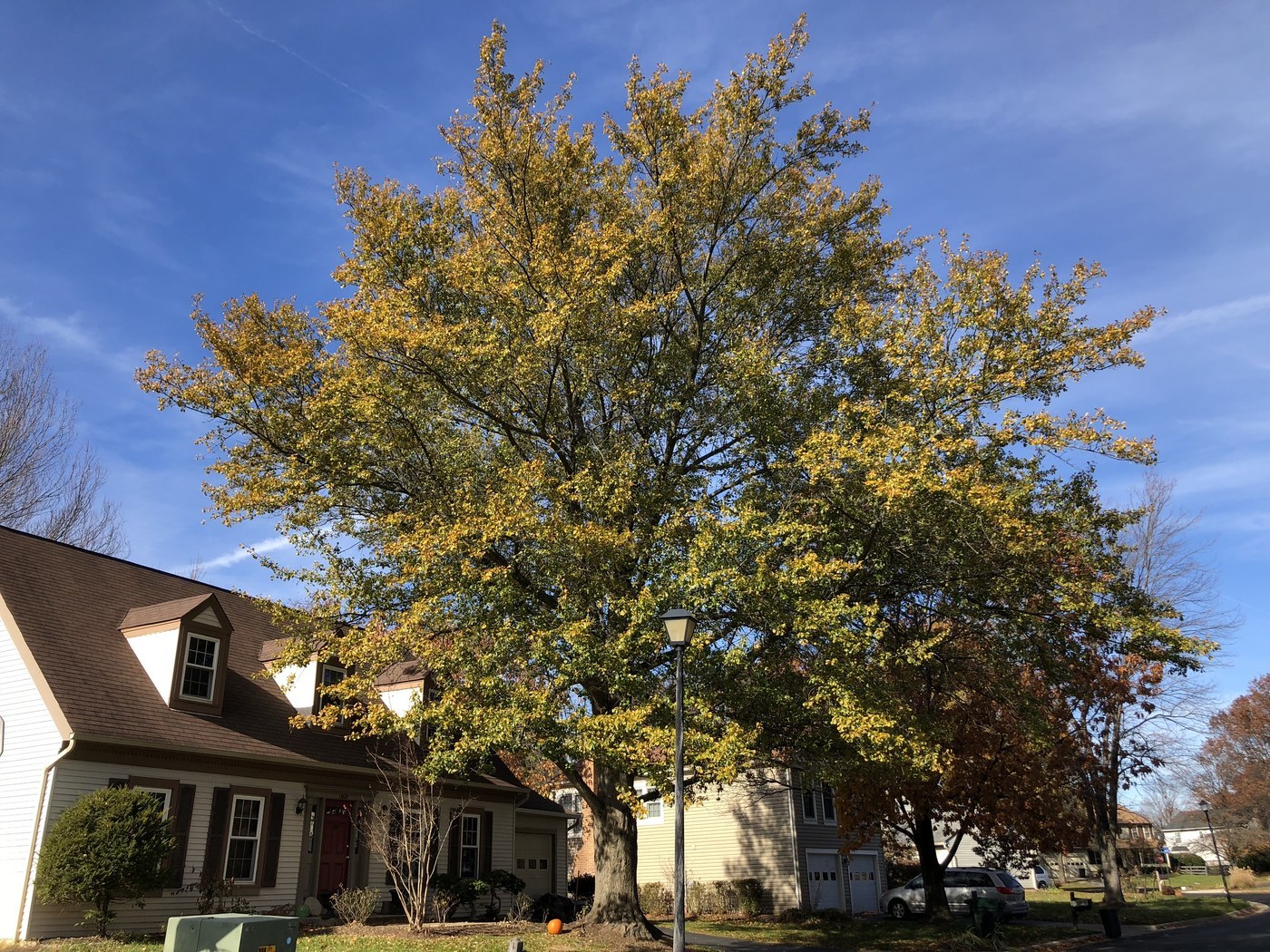
- Brilliant uniform golden-yellow fall color
- Mature trees reach 20-35 m (65-115 ft) with a broad, irregular crown
- Dioecious: separate male and female trees
- Female trees produce fleshy, plum-like seeds with a notoriously foul (rancid butter) smell when they fall
Care & growing
Once established, ginkgo is one of the easiest large trees to grow.
- Light: Full sun
- Water: Moderate; quite drought-tolerant once established
- Soil: Adaptable to most soils, even compacted urban ground; prefers good drainage
- Temperature: Very cold-hardy and heat-tolerant
- Feeding: Minimal; light feeding when young
- Propagation: Seed or cuttings; nurseries graft named male cultivars to avoid the smelly female seeds
Habitat & origin
Native to China, where a few wild populations survive in the Tianmu Mountains, ginkgo was preserved for centuries in Chinese, Korean, and Japanese temple gardens.
Today it is planted worldwide as an ornamental and street tree, prized for its toughness in cities from Tokyo to New York.
Frequently asked questions
Why do some ginkgo trees smell so bad?
Only female trees produce the fleshy seeds, whose pulp contains butyric acid and smells like rancid butter or vomit when it rots. Nurseries sell male cultivars to avoid this.
How fast does a ginkgo grow?
It is slow to moderate, typically adding 30-60 cm (1-2 ft) per year, but it is extremely long-lived, often surviving over 1,000 years.
Why is ginkgo called a living fossil?
It is the only survivor of an ancient plant order and is nearly identical to fossils over 200 million years old, with no close living relatives.
Ginkgo guides
In-depth guides for identifying, growing, and caring for Ginkgo.
How to Care for Ginkgo
The Ginkgo is a tough, long-lived shade tree with fan-shaped leaves and brilliant golden fall color; grow it in full sun with room to spread.
Ginkgo Identification Guide
How to identify the ginkgo (Ginkgo biloba) by its unmistakable fan-shaped leaves, distinctive branching, and strong-smelling fleshy seeds.