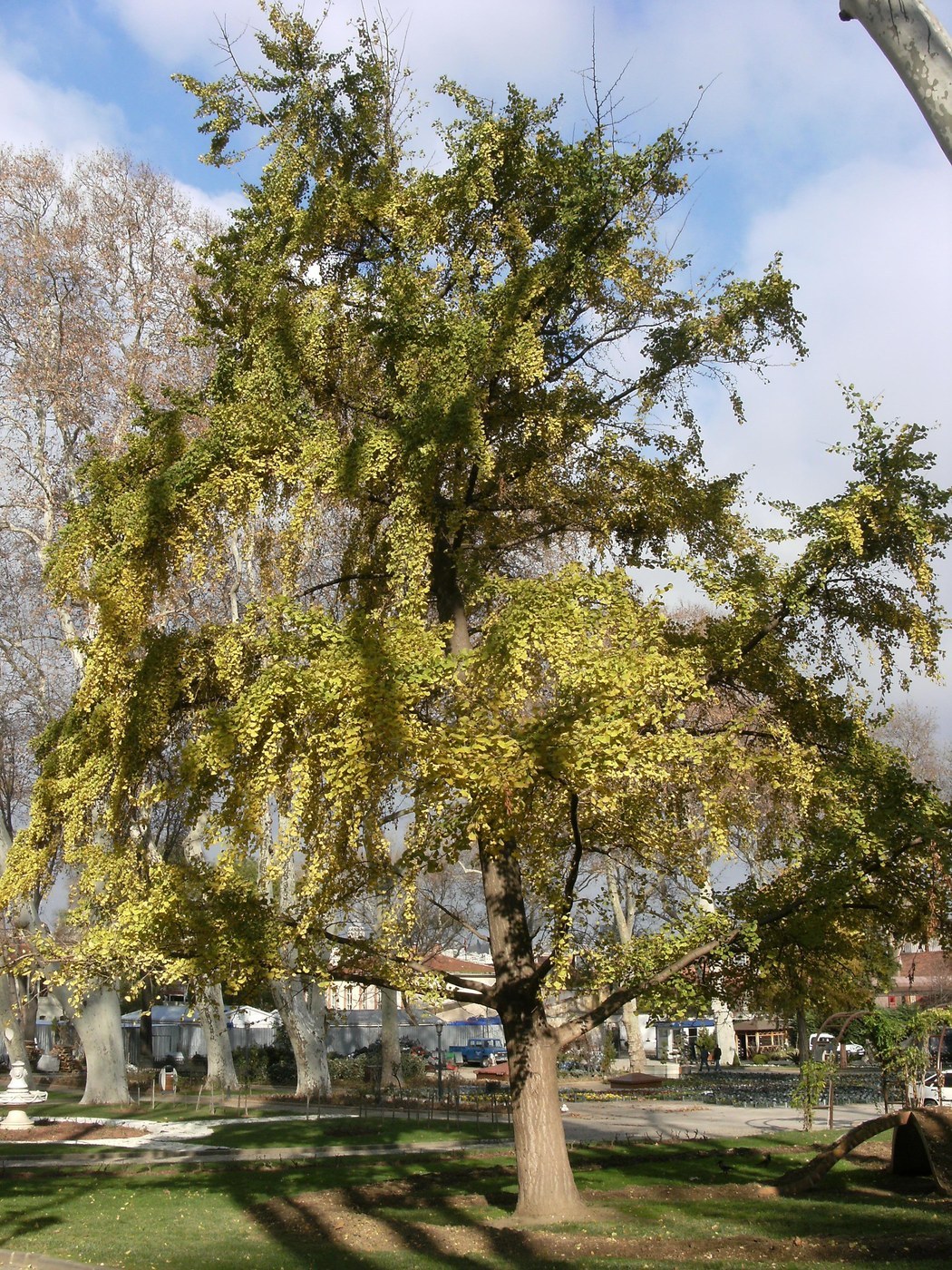
Ginkgo Biloba
Ginkgo biloba
Ginkgo biloba is a unique 'living fossil' tree with distinctive fan-shaped leaves that turn brilliant gold in autumn. Extremely tough and long-lived, it is widely planted as a resilient street tree.
- Light
- Full sun
- Water
- Moderate; drought tolerant once established
- Difficulty
- Easy
Got a plant like this?
Identify any plant from a photo, free.
Overview
Ginkgo biloba is an ancient deciduous tree, the sole surviving species of an entire lineage that dates back over 200 million years — a true "living fossil" with no close living relatives.
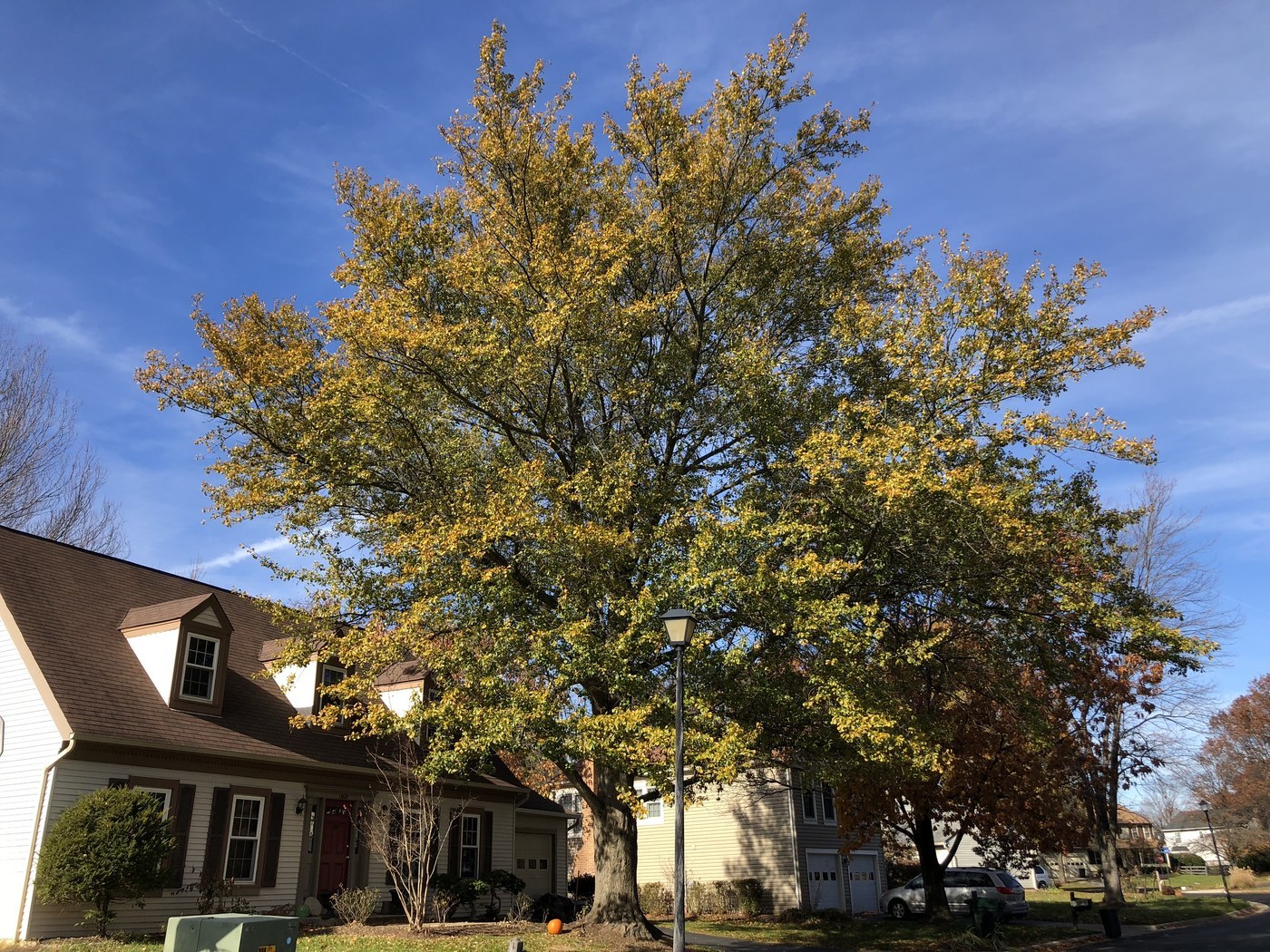
It is instantly recognized by its unique fan-shaped (bilobed) leaves, which turn a spectacular uniform golden-yellow in autumn before dropping, often all at once. It is neither a conifer nor a flowering plant but belongs to its own division, Ginkgophyta.
Remarkably tough, pest-resistant, pollution-tolerant, and long-lived (some trees exceed 1,000 years), ginkgo is one of the most reliable and popular urban street trees worldwide.
How to identify it
- Leaves: Unmistakable fan-shaped leaves with parallel veins radiating from the stalk, often notched into two lobes (biloba); bright green, turning brilliant gold in fall.
- Habit: Young trees are upright and somewhat sparse and irregular; mature trees become broad and spreading.
- Bark: Gray-brown, becoming deeply furrowed with age.
- Reproductive structures: Dioecious — separate male and female trees. Females produce fleshy, plum-like seeds with a notoriously foul-smelling outer pulp.
- Size: Commonly 50–80 ft tall.
Care & growing
Ginkgo thrives in full sun and tolerates a wide range of conditions, making it very easy to grow.
- Water: Water young trees regularly; established trees are notably drought tolerant.
- Soil: Adaptable to most soils; tolerates poor, compacted, and urban conditions and a range of pH.
- Temperature: Hardy in USDA zones 3–8.
- Feeding: Rarely necessary.
- Propagation: From seed, or by cuttings and grafting to ensure male (fruitless) trees — male cultivars are preferred to avoid the messy, smelly female seeds.
- Note: Slow-growing but extremely long-lived and resistant to pests, disease, and pollution.
Habitat & origin
Ginkgo is native to China, where it survives in the wild only in a few small relict populations; it has been cultivated for centuries around Chinese and Japanese temples, some specimens being many hundreds of years old.
Today it is planted across temperate cities worldwide as a hardy street, park, and specimen tree. Its toughness is legendary — several ginkgo trees survived and resprouted after the 1945 atomic bombing of Hiroshima.
Frequently asked questions
Why is ginkgo called a living fossil?
It is the only surviving member of an ancient plant lineage that flourished over 200 million years ago and has changed little since, with no close living relatives.
Why do people choose male ginkgo trees?
Female trees produce fleshy seeds whose outer pulp smells strongly unpleasant when it falls and rots, so fruitless male cultivars are planted instead.
When do ginkgo leaves turn gold?
In mid-to-late autumn the fan-shaped leaves turn a brilliant, uniform golden-yellow and often drop together over just a day or two.
Ginkgo Biloba guides
In-depth guides for identifying, growing, and caring for Ginkgo Biloba.
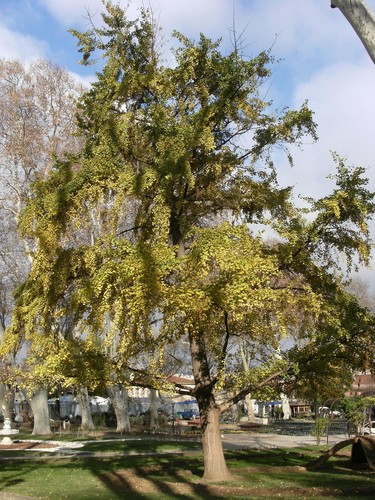
How to Care for Ginkgo Biloba
Grow the ancient maidenhair tree Ginkgo biloba in full sun with well-drained soil for fan-shaped leaves and brilliant golden autumn color.
Ginkgo Biloba Identification Guide
How to identify Ginkgo biloba (maidenhair tree) by its one-of-a-kind fan-shaped, often two-lobed leaves with forking parallel veins and its strong-smelling fleshy seeds.