Impatiens
Impatiens walleriana
Impatiens are shade-loving annuals that smother themselves in flat, colorful flowers all summer, thriving where few other bedding plants will bloom. Their name refers to seed pods that burst open at a touch.
- Light
- Part to full shade
- Water
- Keep consistently moist
- Difficulty
- Easy
Got a plant like this?
Identify any plant from a photo, free.
Overview
Impatiens are tender flowering plants in the family Balsaminaceae, beloved as one of the few annuals that flower profusely in shade. The classic busy Lizzie (Impatiens walleriana) and the more sun-tolerant New Guinea impatiens (Impatiens hawkeri) dominate summer bedding displays.
The genus name Impatiens (“impatient”) comes from the ripe seed capsules, which explosively split and fling their seeds at the slightest touch — hence the common name “touch-me-not.”
With their nonstop color and easygoing nature, impatiens are among the most popular bedding plants in the world, though I. walleriana has been affected by downy mildew disease in recent decades.
How to identify it
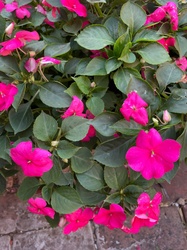
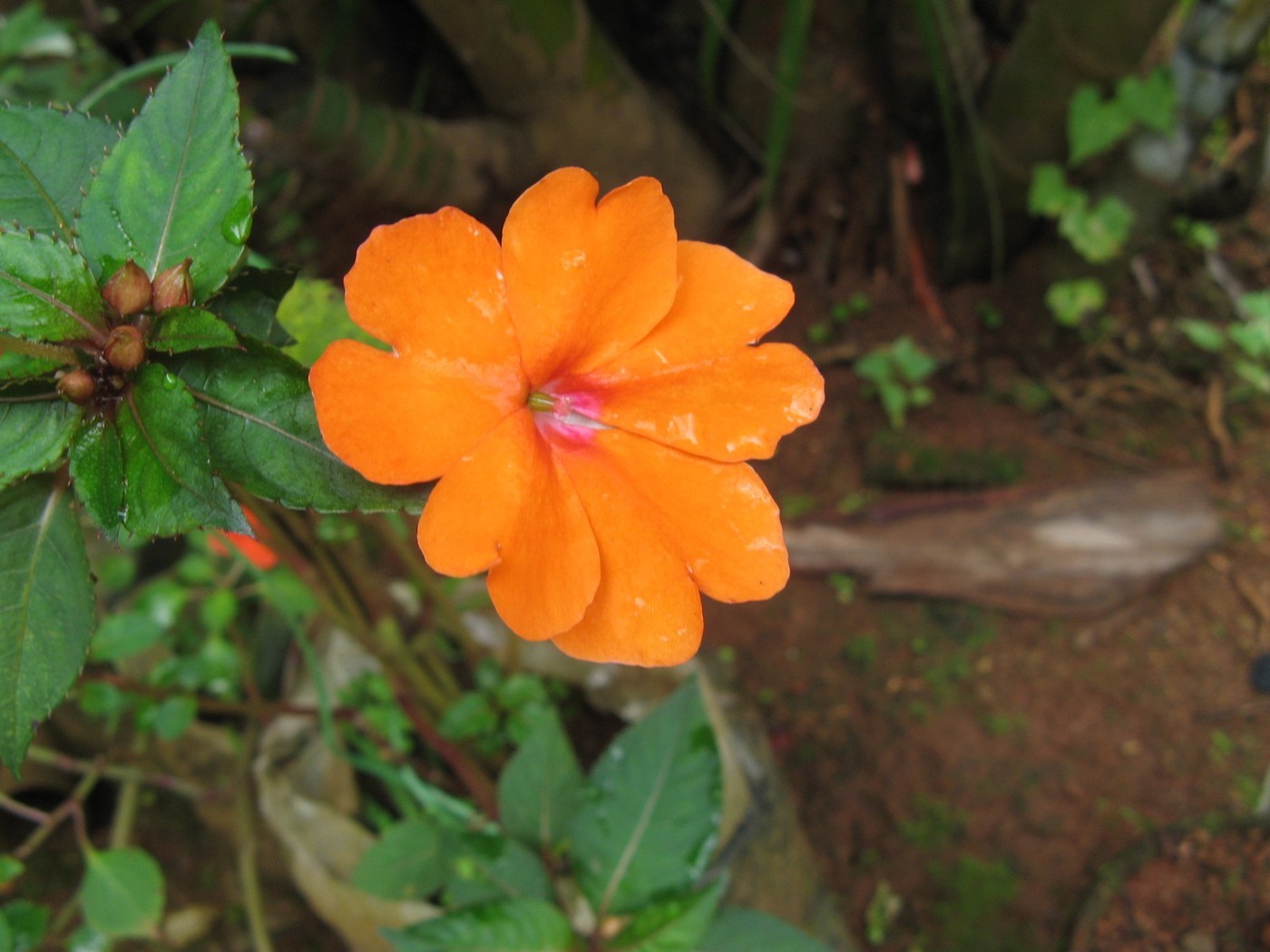
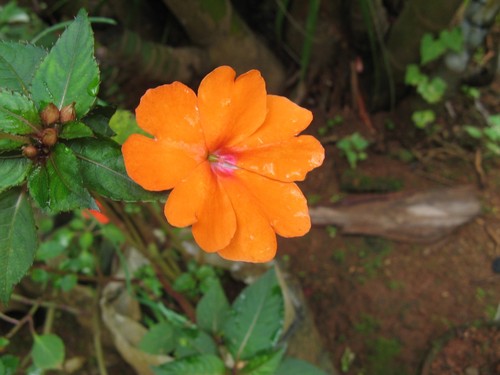
Impatiens form mounded plants covered in flat, spurred flowers.
- Flowers: Flat-faced, five-petaled blooms with a slender nectar spur behind; many colors including red, pink, orange, white, violet, and bicolors
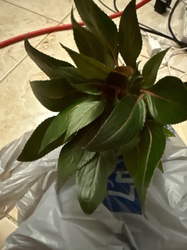
- Leaves: Oval to lance-shaped, often with toothed edges; glossy on New Guinea types
- Stems: Succulent, soft, and translucent, snapping easily
- Habit: Mounded and bushy, typically 6-24 in tall
- Seed pods: Swollen capsules that burst open when ripe and touched
Care & growing
Impatiens reward steady moisture and shelter from harsh sun.
- Light: Partial to full shade for I. walleriana; New Guinea types tolerate more sun with adequate water
- Water: Keep soil consistently moist; they wilt quickly when dry and recover when watered
- Soil: Rich, well-drained, moisture-retentive soil with plenty of organic matter
- Temperature: Tender; thrive in warmth and are killed by frost
- Feeding: Regular light feeding sustains continuous bloom, especially in containers
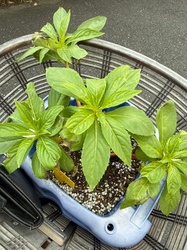
- Propagation: Very easy from stem cuttings, which root in water; also grown from seed
Avoid overhead watering late in the day to limit disease, and choose downy-mildew-resistant cultivars where I. walleriana mildew is a problem.
Habitat & origin
Impatiens walleriana is native to eastern Africa, while New Guinea impatiens originate from New Guinea and surrounding islands. In the wild, the genus favors moist, shaded forest understories, stream banks, and damp clearings.
The genus is large and found across the tropics and warm-temperate regions of Africa and Asia. Today impatiens are grown worldwide as warm-season bedding and container plants, treasured for color in shady gardens.
Frequently asked questions
Do impatiens need sun or shade?
Classic busy Lizzie impatiens prefer partial to full shade, while New Guinea impatiens can take more sun if kept well watered.
Why are my impatiens wilting?
They wilt fast when the soil dries out and usually perk back up after watering; persistent wilting with yellowing may indicate downy mildew disease.
Are impatiens annuals or perennials?
They are tender perennials grown as annuals in most climates because frost kills them, though cuttings can be overwintered indoors.
Can I grow impatiens from cuttings?
Yes, impatiens root very easily from stem cuttings placed in water or moist soil, making them simple to propagate.
Impatiens guides
In-depth guides for identifying, growing, and caring for Impatiens.
How to Care for Impatiens
Grow impatiens (Impatiens walleriana) in shade with steady moisture for months of nonstop color in beds, borders, and containers.
Impatiens Identification Guide
Identify impatiens by their flat five-petaled spurred flowers, succulent translucent stems, and seed pods that burst at a touch. Covers bedding impatiens, New Guinea types, and jewelweed.
Impatiens identified by the community
Real specimens identified with Plant Identifier.