Jabuticaba
Plinia cauliflora
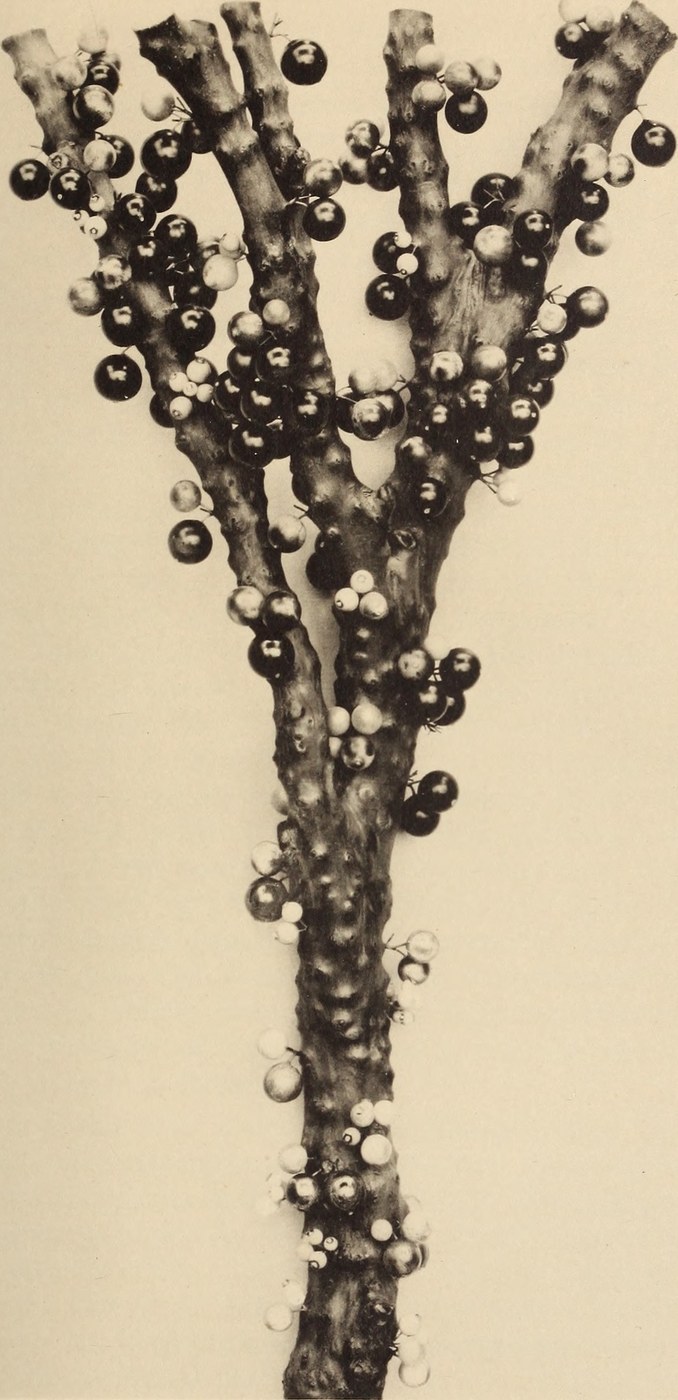
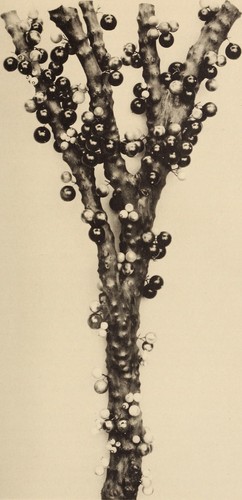
A slow-growing Brazilian tree remarkable for producing its grape-like purple-black fruit directly on the trunk and main branches (cauliflory).
- Light
- Full sun to partial shade
- Water
- Frequent; keep evenly moist
- Difficulty
- Moderate
Got a plant like this?
Identify any plant from a photo, free.
Overview
Jabuticaba is a Brazilian evergreen tree in the myrtle family, famous for the striking habit of fruiting directly on its trunk and woody branches rather than at the tips of new growth. A heavily laden tree looks as if it has been studded with dark grapes.
The tree is slow-growing but very long-lived and ornamental, with attractive flaky bark and flushes of salmon-colored new leaves.
How to identify it
- Slow-growing, densely branched evergreen, typically 10 to 25 ft (3 to 8 m)
- Smooth, mottled, flaking bark in shades of beige, gray, and reddish-brown
- Small, lance-shaped leaves; new growth emerges pinkish to salmon
- Masses of small white, fluffy flowers borne directly on the trunk and main branches (cauliflory)
- Round fruit 3 to 4 cm, dark purple to nearly black, with a thick skin and soft, whitish pulp containing 1 to 4 seeds
Care & growing
Light: Full sun to partial shade; tolerates more shade than many fruit trees.
Water: Prefers consistently moist soil and does not tolerate prolonged drought; mulch helps retain moisture.
Soil: Deep, well-drained, slightly acidic soil rich in organic matter; sensitive to salinity and alkalinity.
Temperature: Subtropical to tropical; mature trees tolerate a brief light frost, but young trees are frost-tender.
Feeding: Light, regular feeding with an acidic-formula fertilizer; avoid high pH.
Propagation: Usually from fresh seed (slow, often 6 to 10+ years to fruit); grafting can shorten time to fruiting but is less common.
Habitat & origin
Native to southeastern Brazil, especially the states of Minas Gerais, Goias, Rio de Janeiro, and Sao Paulo.
It grows in subtropical forest and is widely cultivated in Brazilian dooryards and orchards. It is also grown in other parts of South America, the Caribbean, the Philippines, and as a curiosity in frost-free regions of the United States such as Florida and California.
Frequently asked questions
Why does jabuticaba fruit grow on the trunk?
This trait, called cauliflory, lets the tree flower and fruit directly on old wood. It allows heavy, repeated fruiting on the trunk and main limbs rather than only on new shoots.
How long until a seed-grown jabuticaba fruits?
It is famously slow, often taking 6 to 10 years or more from seed, though grafted plants and good conditions can shorten this.
Does jabuticaba make a good container or bonsai plant?
Yes. Its slow growth, fine leaves, and beautiful flaking bark make it a popular bonsai and patio container subject in mild climates.
Jabuticaba guides
In-depth guides for identifying, growing, and caring for Jabuticaba.
How to Care for Jabuticaba
Grow jabuticaba (Plinia cauliflora), a slow-growing Brazilian tree prized for glossy foliage and blooms borne directly on its trunk.
Jabuticaba Identification Guide
Identify jabuticaba (Plinia cauliflora) by its peeling mottled bark, small glossy leaves, and the remarkable habit of producing grape-like purple-black fruit directly on the trunk and main branches.