Leyland Cypress
Cuprocyparis leylandii
Leyland cypress is an extremely fast-growing evergreen conifer hybrid widely planted for hedges and privacy screens. Dense and columnar, it offers quick cover but can quickly outgrow its space if not maintained.
- Light
- Full sun to partial shade
- Water
- Water young trees; moderately drought-tolerant once established
- Difficulty
- Easy
Got a plant like this?
Identify any plant from a photo, free.
Overview
Leyland cypress is a fast-growing evergreen conifer that arose as a hybrid between Monterey cypress (Cupressus macrocarpa) and Nootka cypress (Xanthocyparis nootkatensis), first recorded in Britain in 1888. It is sterile and propagated by cuttings.
Its most famous trait is rapid growth — often a meter (3 ft) or more per year — combined with dense, columnar evergreen foliage. This makes it one of the most popular plants for fast privacy hedges and screens in temperate gardens.
That same vigor is also its drawback: left untrimmed, Leyland cypress quickly becomes very tall and wide, and it has been the cause of many neighbor disputes over light and boundaries. Regular pruning is key to keeping it in bounds.
How to identify it
- Foliage: Flattened sprays of small, soft, scale-like leaves, dark green to grey-green, on slightly drooping branchlets
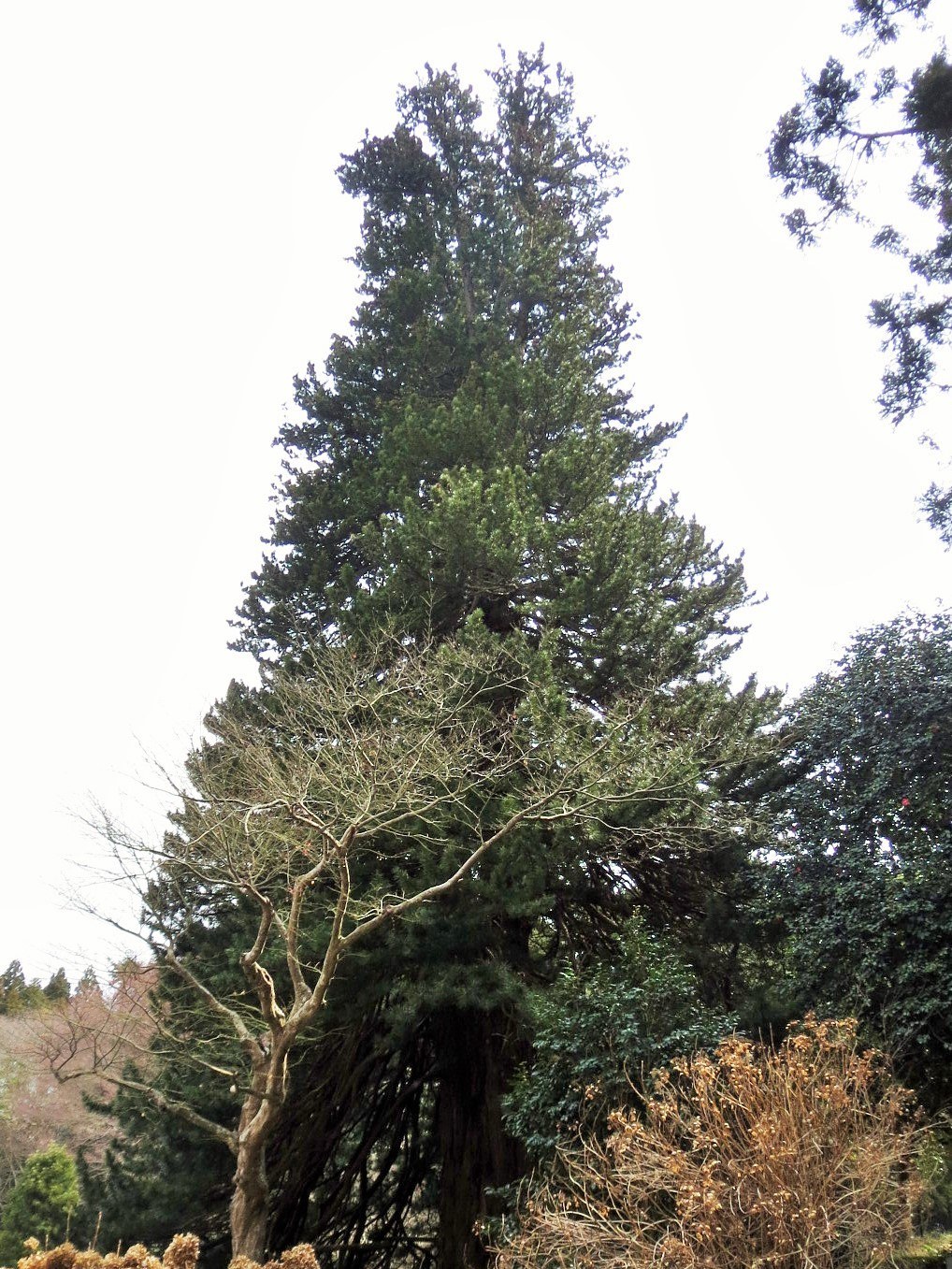
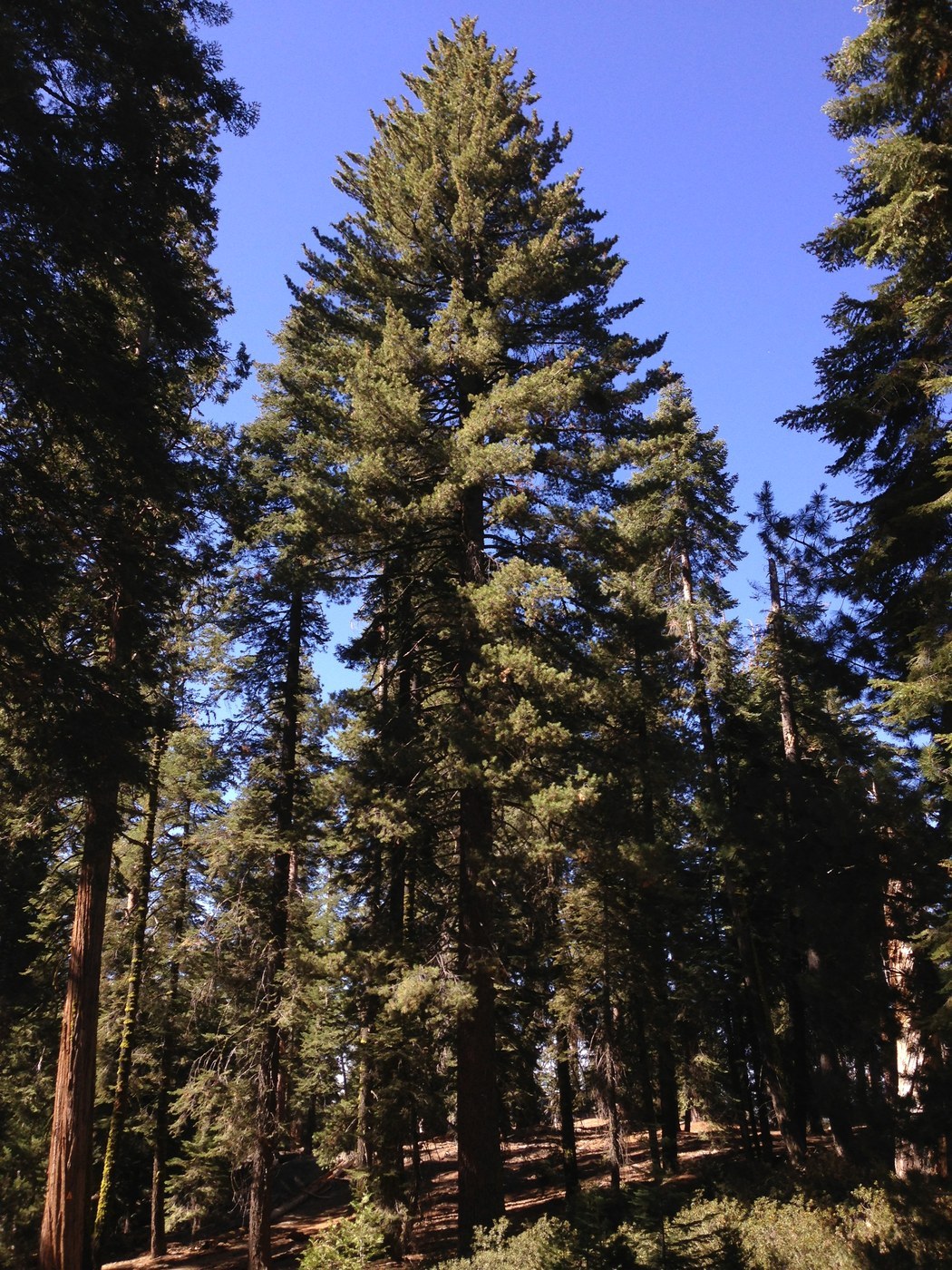
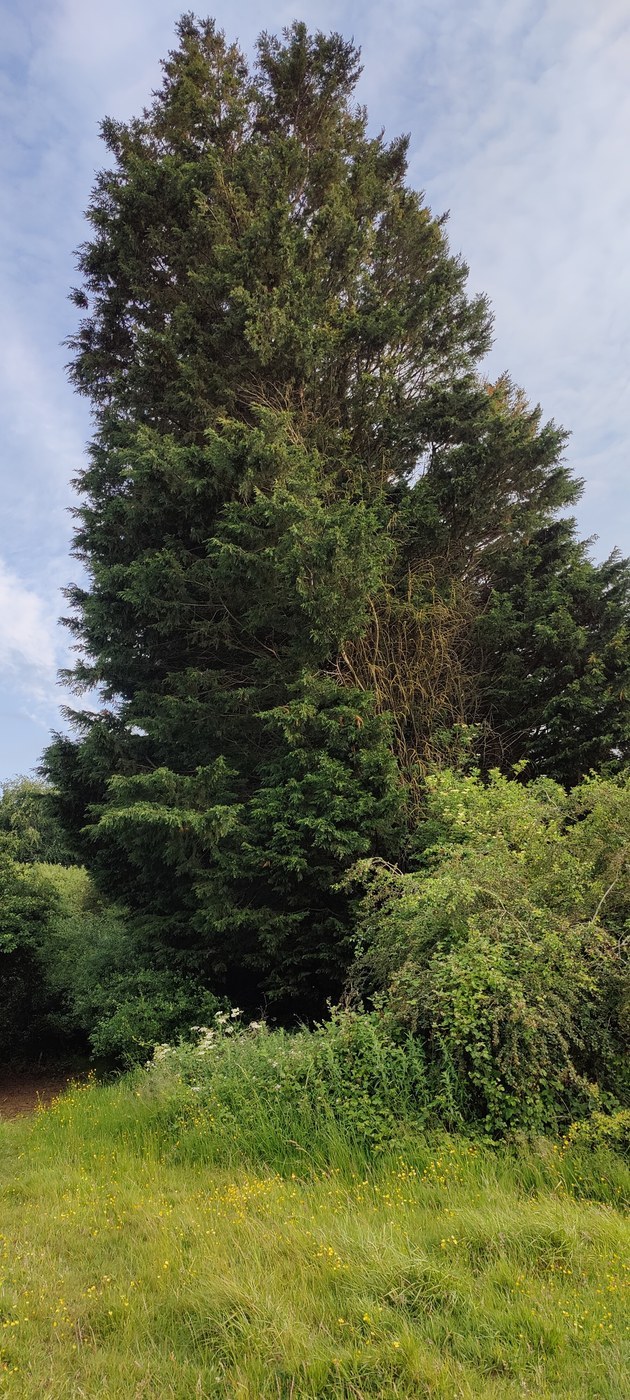
- Habit: Dense, fast-growing, columnar to narrowly conical evergreen
- Cones: Small, rounded woody cones, produced sparingly; the hybrid is largely sterile
- Bark: Reddish-brown, becoming stringy and furrowed with age
- Size: Can reach 20–35 m (65–115 ft) if unpruned; usually kept far smaller as hedging
- Growth: Extremely fast — often 1 m (3 ft) or more per year
Care & growing
Light: Full sun to partial shade; densest growth in full sun.
Water: Water regularly until established; moderately drought-tolerant thereafter, though prolonged drought can cause browning.
Soil: Tolerates a wide range of soils as long as they are reasonably well-drained; dislikes waterlogging.
Temperature: Hardy in USDA zones 6–10; tolerates wind and coastal conditions.
Feeding: Light spring feeding supports dense hedge growth.
Pruning: Essential — trim regularly (typically two or three times a year for hedges) while growth is young, as it does not regenerate well from old, brown wood.
Propagation: From cuttings only, since the hybrid is sterile.
Habitat & origin
Leyland cypress does not occur in the wild; it is a human-cultivated hybrid first noted at Leighton Hall in Wales in the late 19th century, where its two parent species happened to grow together.
Its parent species are native to the Pacific coast of North America — Monterey cypress to a small area of California, and Nootka cypress to the Pacific Northwest. The hybrid is now planted across temperate gardens worldwide, especially in the UK, Europe and the United States, primarily for hedging and screening.
Frequently asked questions
How fast does Leyland cypress grow?
Extremely fast — often 1 m (3 ft) or more per year when young, which is why it is so popular for quick privacy hedges.
How often should I trim a Leyland cypress hedge?
Trim regularly — usually two to three times during the growing season — to keep it dense and within bounds. Avoid cutting back into old brown wood, as it does not regrow from it.
Will Leyland cypress regrow if cut back hard?
No. Unlike yew, it does not reshoot from old, leafless brown wood. Always trim within the green, leafy outer growth to keep the hedge full.
Why is my Leyland cypress turning brown?
Common causes include drought stress, waterlogging, cutting into old wood, or fungal diseases and pests such as cypress aphid. Browned bare wood generally will not recover.
Is Leyland cypress a good choice for a small garden?
Often not — its size and vigor make it hard to contain in small spaces, and it requires frequent pruning. Slower, more compact conifers are usually better for small gardens.
Leyland Cypress guides
In-depth guides for identifying, growing, and caring for Leyland Cypress.
How to Care for Leyland Cypress
Grow a fast, dense evergreen screen with Leyland Cypress: full sun, room to spread, and steady water while young.
Leyland Cypress Identification Guide
Identify Leyland cypress by its dense, fast-growing columnar form, soft feathery sprays of scale foliage, and sparse small round cones. Includes how to tell this hybrid from arborvitae and true cypress.