Olive Tree
Olea europaea
The olive is a long-lived evergreen Mediterranean tree, a fruiting tree cultivated for thousands of years. Gnarled, silvery and remarkably drought-hardy, it is also a popular ornamental and container plant.
- Light
- Full sun
- Water
- Drought-tolerant; water deeply but infrequently
- Difficulty
- Easy
Got a plant like this?
Identify any plant from a photo, free.
Overview
The olive tree is an evergreen tree native to the Mediterranean basin and one of the oldest cultivated plants in human history, with a relationship to people stretching back more than 6,000 years. Some living specimens are believed to be over a thousand years old.
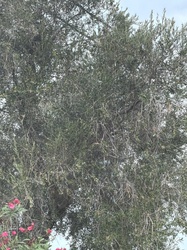
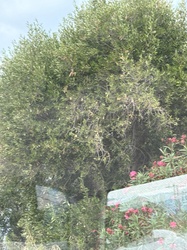
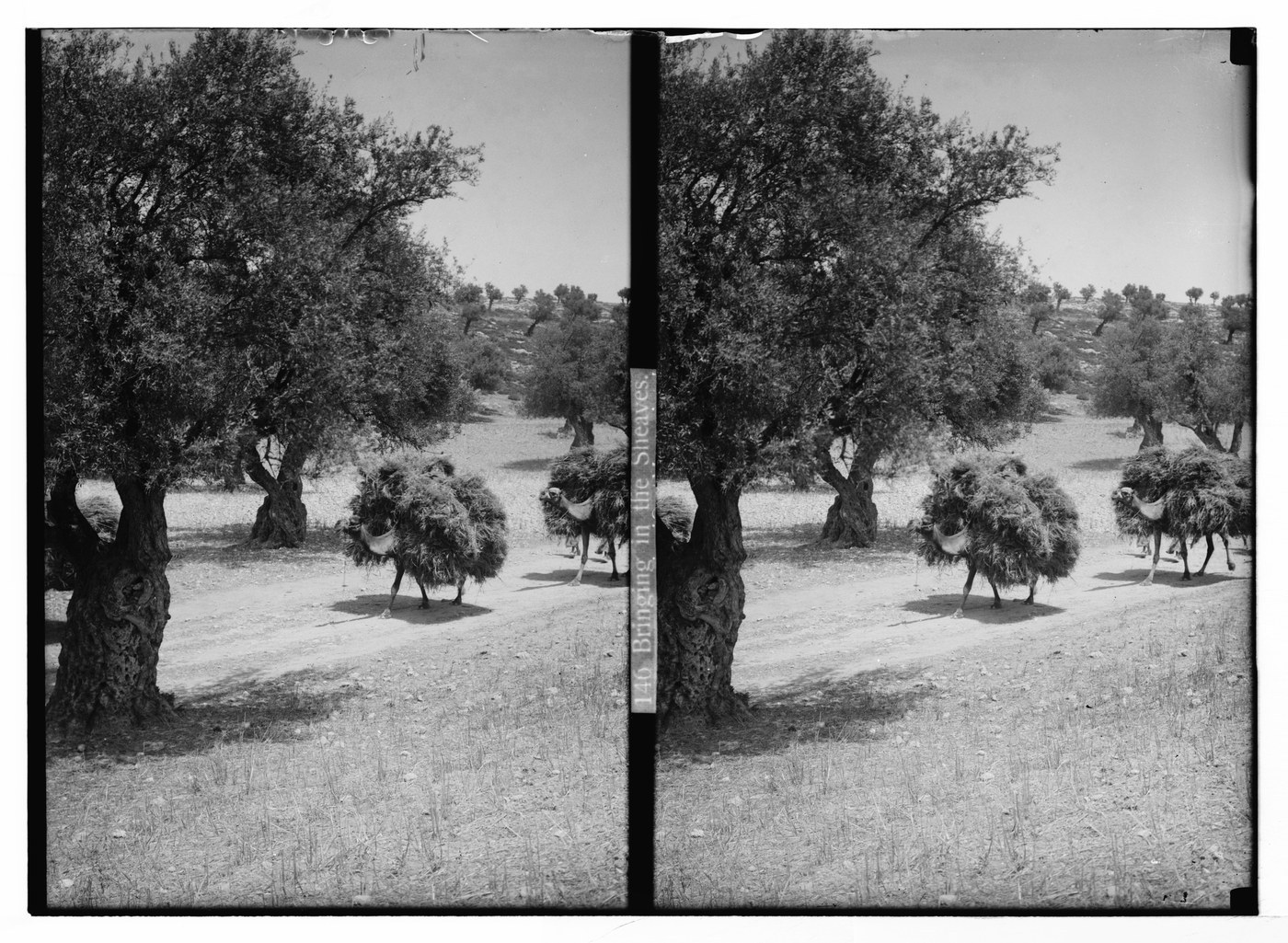
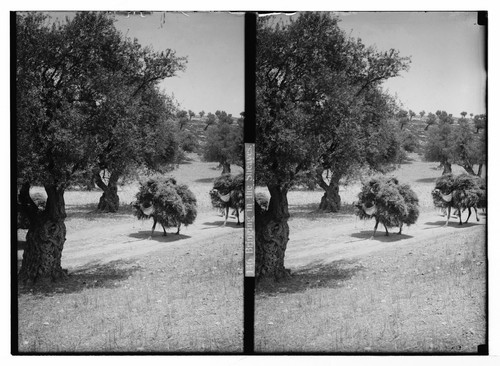
Olives are slow-growing and exceptionally long-lived, developing characteristically twisted, hollow trunks with age. Their narrow grey-green leaves and silvery undersides give olive groves their shimmering appearance.
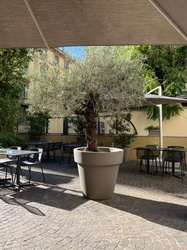
A fruiting Mediterranean tree, it is also widely planted as an ornamental for its sculptural form, evergreen foliage and tolerance of heat and drought.
How to identify it
- Leaves: Narrow, leathery, lance-shaped, dark green above and silvery-grey beneath, arranged in opposite pairs
- Bark: Smooth and grey when young, becoming deeply gnarled, fissured and twisted with age
- Flowers: Small, creamy-white, fragrant flowers borne in clusters in late spring
- Fruit: A small drupe (the olive), green ripening to black or purple, with a single hard pit
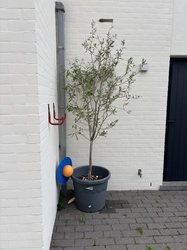
- Size: Typically 8–15 m (25–50 ft) tall, but kept much smaller in cultivation and pots
- Habit: Rounded, often multi-stemmed evergreen with a broad crown
Care & growing
Light: Full sun — at least 6–8 hours daily is needed for good growth and fruiting.
Water: Very drought-tolerant once established. Water deeply but infrequently; avoid constant moisture and soggy roots.
Soil: Free-draining soil is essential. Tolerates poor, rocky and alkaline ground; will not survive waterlogging.
Temperature: Loves heat. Hardy to roughly -7 to -10 °C (15–20 °F) once mature; protect young or potted trees from hard frost. A cool winter period helps trigger flowering.
Feeding: Light feeding in spring with a balanced or nitrogen-rich fertilizer; avoid overfeeding.
Propagation: Commonly from semi-hardwood cuttings or grafting; also from seed, though seedlings are slow and variable.
Habitat & origin
Olea europaea is native to the Mediterranean basin, as well as parts of Africa and Asia. It thrives in the hot, dry summers and mild, wet winters of a Mediterranean climate.
Today olives are grown across the Mediterranean (Spain, Italy, Greece, Turkey), and in California, Australia, South America and other regions with similar climates. As an ornamental, container-grown olives are popular far beyond their hardiness range, brought indoors or sheltered over winter.
Frequently asked questions
Will my potted olive tree produce fruit?
It can, but it needs lots of sun, a cool winter dormancy to trigger flowering, and patience. Many ornamental potted olives are grown for their foliage rather than reliable fruit.
How much water does an olive tree need?
Very little once established — it is highly drought-tolerant. Water deeply but infrequently and ensure excellent drainage; overwatering is the most common cause of decline.
How cold-hardy are olive trees?
Mature trees tolerate brief cold down to about -7 to -10 °C (15–20 °F), but young and potted trees should be protected from hard frost or overwintered indoors in cold climates.
Why isn't my olive tree fruiting?
Common reasons include too little sun, lack of a cool winter rest, young age, or excessive nitrogen feeding that favors leaves over flowers.
Olive Tree guides
In-depth guides for identifying, growing, and caring for Olive Tree.
How to Care for Olive Tree
A hardy Mediterranean evergreen with silvery foliage and a sculptural form that thrives in full sun with infrequent, deep watering.
Olive Tree Identification Guide
Identify the olive tree by its silvery lance-shaped leaves, gnarled trunk, and small green-to-black drupes. Includes tips for separating it from Russian olive and other silver-leaved look-alikes.
Olive Tree identified by the community
Real specimens identified with Plant Identifier.