Pitch Pine
Pinus rigida
Pitch Pine is a rugged, fire-adapted eastern North American conifer known for its twisted form, three-needle bundles, and ability to resprout after fire.
- Light
- Full sun
- Water
- Drought tolerant
- Difficulty
- Easy
Got a plant like this?
Identify any plant from a photo, free.
Overview
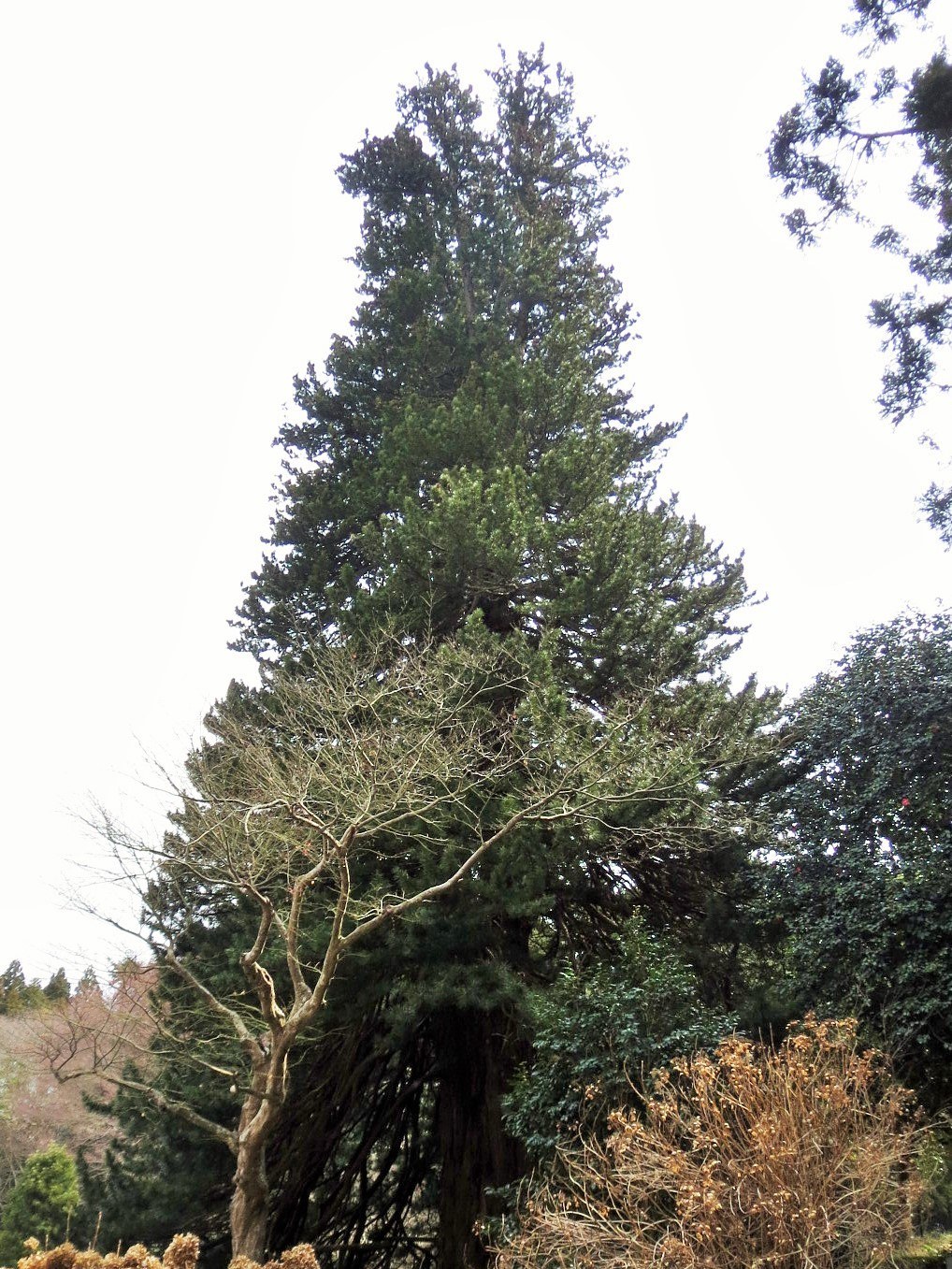
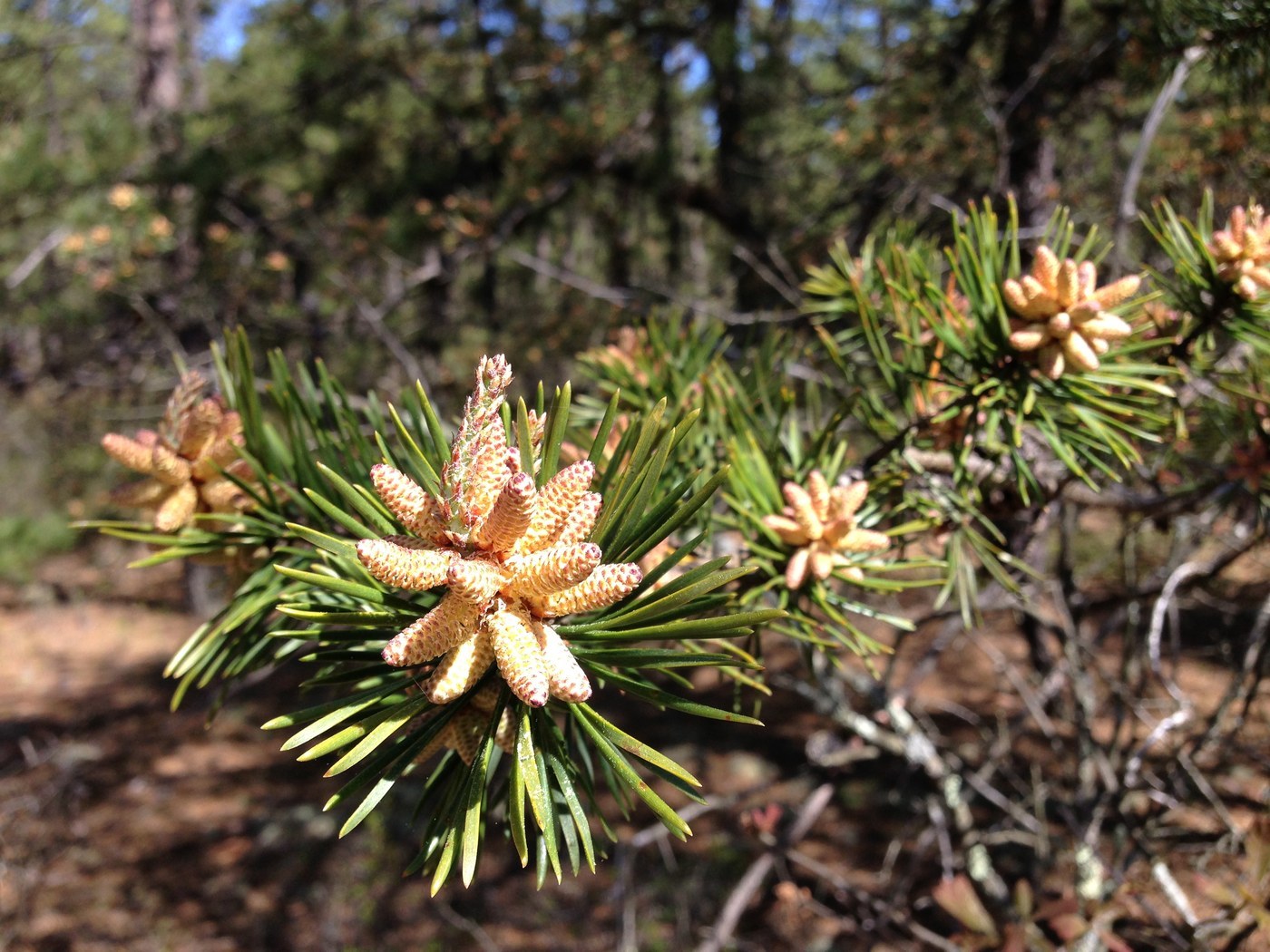
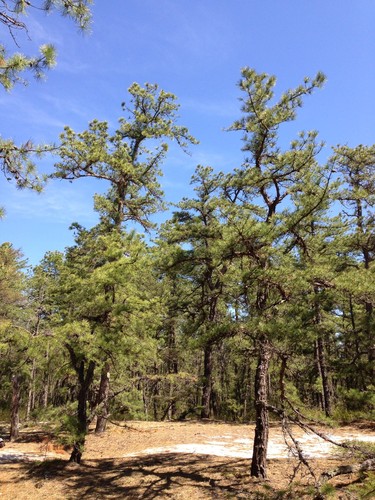
Pitch Pine (Pinus rigida) is a hardy, medium-sized conifer of the eastern United States, famous for thriving on the poorest, sandiest, and most fire-prone soils. It dominates the New Jersey Pine Barrens and similar barrens habitats.
Unusual among pines, it can sprout new growth directly from its trunk and stumps after fire or injury, a survival trait that makes it a keystone of fire-dependent ecosystems.
How to identify it
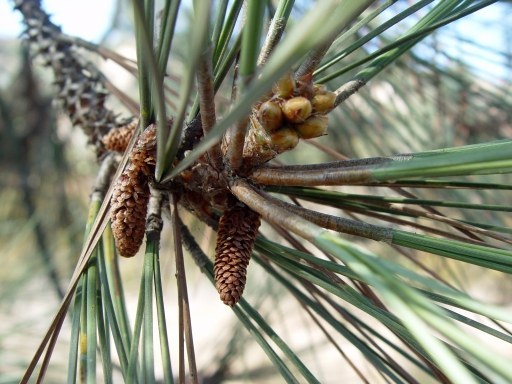
- Needles: Stiff, twisted, 3–5 in long, in bundles of three.
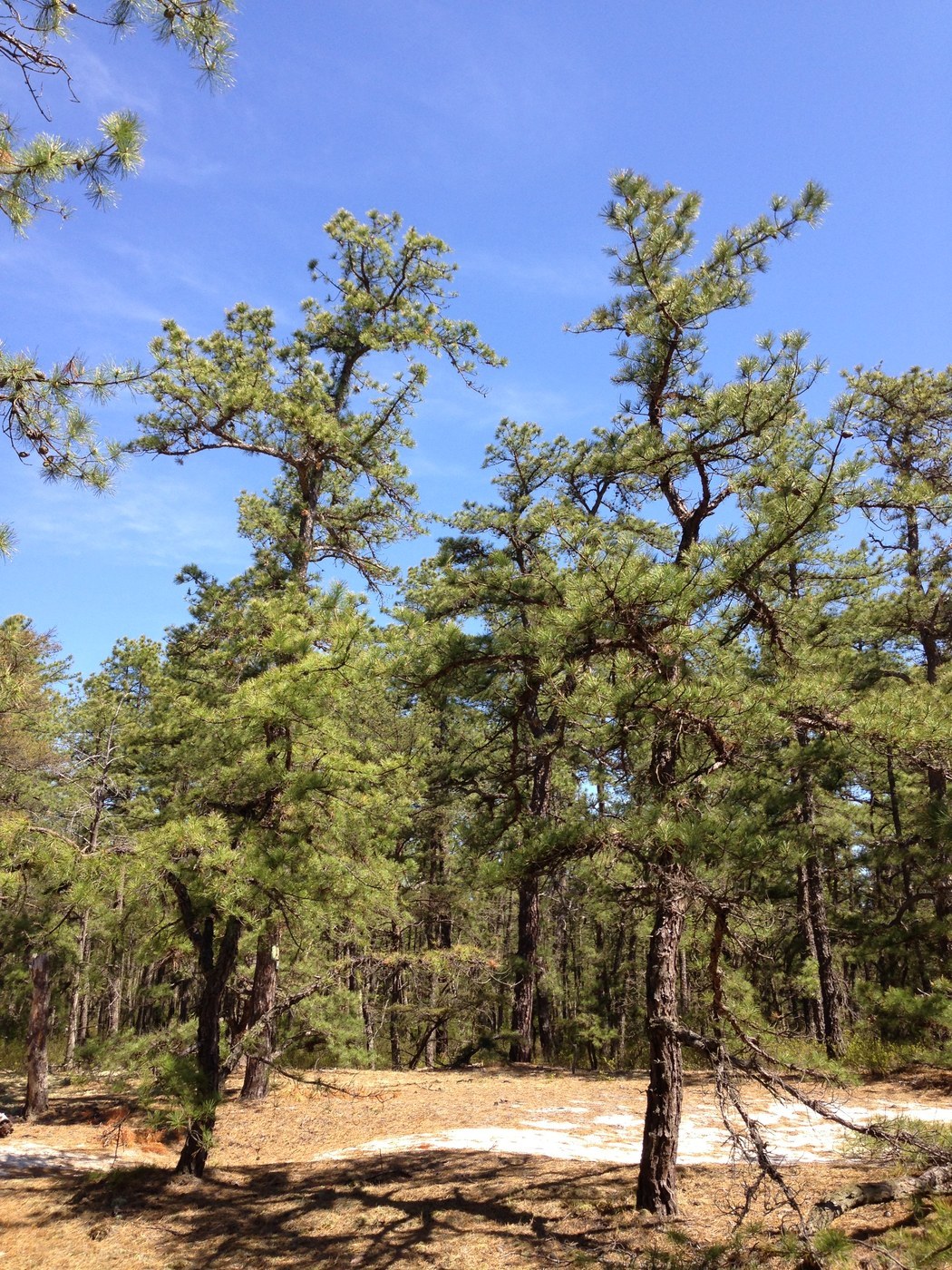
- Habit: Often irregular, gnarled, and crooked, especially on harsh sites.
- Trunk sprouts: Tufts of needles frequently grow directly from the trunk and bark.
- Cones: Egg-shaped, 1.5–3.5 in, with a sharp prickle on each scale; often persistent for years.
- Bark: Thick, dark, irregularly plated for fire protection.
Care & growing
Pitch Pine wants full sun and tolerates dry, acidic, sterile, and sandy soils better than almost any other pine.
- Water: Highly drought tolerant once established.
- Soil: Prefers acidic, sandy, nutrient-poor ground; avoid rich or wet soils.
- Temperature: Hardy in USDA zones 4–7.
- Feeding: Not necessary; it is adapted to lean conditions.
- Propagation: From seed; cones may be serotinous, opening with heat.
Habitat & origin
Native to the eastern U.S., from Maine and Quebec south through the Appalachians to Georgia, and notably the coastal plain barrens.
It is the signature tree of the New Jersey Pine Barrens, growing on sandy, fire-swept flats and rocky ridges where competition is low.
Frequently asked questions
Why is it called Pitch Pine?
Its resinous wood and sap were historically harvested for pitch, tar, and turpentine.
Can Pitch Pine survive fire?
Yes. It has thick bark and can resprout from its trunk and roots, making it highly fire-adapted.
How many needles per bundle?
Three stiff, twisted needles per bundle, which helps separate it from two-needle pines.
Where does Pitch Pine grow best?
On dry, sandy, acidic, nutrient-poor soils where few other trees thrive.
Pitch Pine guides
In-depth guides for identifying, growing, and caring for Pitch Pine.
How to Care for Pitch Pine
Grow the rugged Pitch Pine in full sun and poor, sandy soil; this drought-tolerant native conifer thrives on tough sites where little else will.
Pitch Pine Identification Guide
How to identify Pitch Pine (Pinus rigida) by its stiff three-needle bundles, prickly cones, and the unusual tufts of needles sprouting directly from the trunk. Covers look-alikes and barrens habitat.