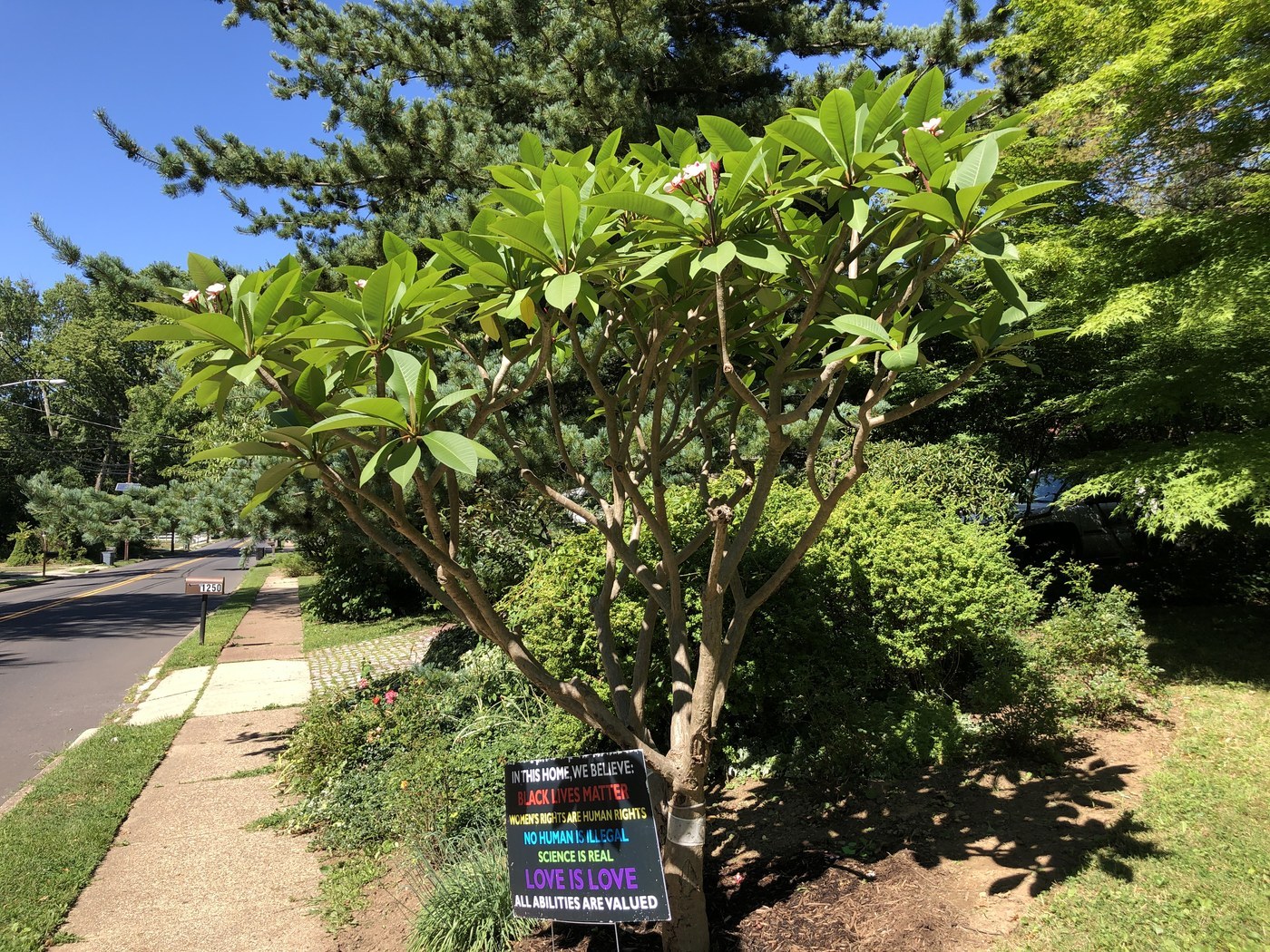
Plumeria Tree
Plumeria rubra
A small tropical tree beloved for its intensely fragrant, waxy flowers used in Hawaiian leis. Plumeria blooms in shades of white, yellow, pink, and red atop thick, sculptural branches.
- Light
- Full sun
- Water
- Moderate in growth; dry in dormancy
- Difficulty
- Moderate
Got a plant like this?
Identify any plant from a photo, free.
Overview
Plumeria, commonly called frangipani, is a small deciduous tropical tree in the dogbane family (Apocynaceae). It is prized worldwide for its five-petaled, pinwheel-shaped flowers and their rich, sweet perfume that intensifies in the evening.
The plant has a distinctive open, candelabra-like branching structure with thick, blunt stems that exude a milky latex when cut. Trees typically reach 10-25 ft (3-7.5 m).
Flowers come in a wide range of colors and bicolors, and the tree is closely associated with tropical gardens, temples, and Hawaiian lei-making.
How to identify it
- Flowers: Waxy, five-petaled, pinwheel-shaped blooms in white, yellow, pink, red, or blends, usually with a yellow center; strongly fragrant
- Leaves: Large, leathery, lance-shaped leaves clustered at branch tips; deciduous in dry or cool seasons
- Branches: Thick, blunt, succulent-looking gray-green stems with an open, forking habit
- Sap: Milky white latex released when stems or leaves are broken
- Size: Small tree or large shrub, 10-25 ft tall
Care & growing
Light: Needs at least 6 hours of full sun daily for good flowering.
Water: Water moderately during active growth and let soil dry between waterings; keep nearly dry during winter dormancy to prevent rot.
Soil: Requires fast-draining soil; a cactus or sandy mix works well in containers.
Temperature: Tropical; hardy in USDA zones 10-12 and best kept above 40 F (4 C).
Feeding: Use a high-phosphorus bloom fertilizer during the growing season to encourage flowers.
Propagation: Very easy from stem cuttings; allow the cut end to callus for a week before planting in dry soil.
Habitat & origin
Plumeria rubra is native to Mexico, Central America, and parts of South America and the Caribbean, where it grows in seasonally dry tropical forests and rocky terrain.
It has been carried throughout the tropics and is now iconic in Hawaii, Southeast Asia, India, and the Pacific Islands. In cooler climates it is grown as a container plant that overwinters indoors.
Frequently asked questions
Why won't my plumeria bloom?
Insufficient sunlight is the most common reason. Plumeria need full sun and a high-phosphorus fertilizer; container plants also bloom better when slightly root-bound.
How do I propagate plumeria?
Take a stem cutting, let the cut end dry and callus for about a week, then plant it in dry, well-draining soil and water sparingly until roots form.
Why did my plumeria drop all its leaves?
This is normal. Plumeria is deciduous and naturally drops its leaves during cool or dry dormancy, regrowing them in spring.
Plumeria Tree guides
In-depth guides for identifying, growing, and caring for Plumeria Tree.
How to Care for Plumeria Tree
Grow plumeria (frangipani) for fragrant tropical blooms. Full sun, lean watering, and a warm dry dormancy are the keys to flowering success.
Plumeria Tree Identification Guide
Recognize plumeria (frangipani) by its thick blunt branches, milky sap, clustered leathery leaves, and intensely fragrant five-petaled pinwheel flowers.