Queen Anne's Lace
Daucus carota
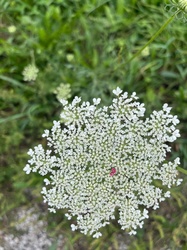
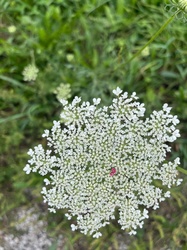
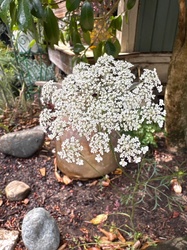
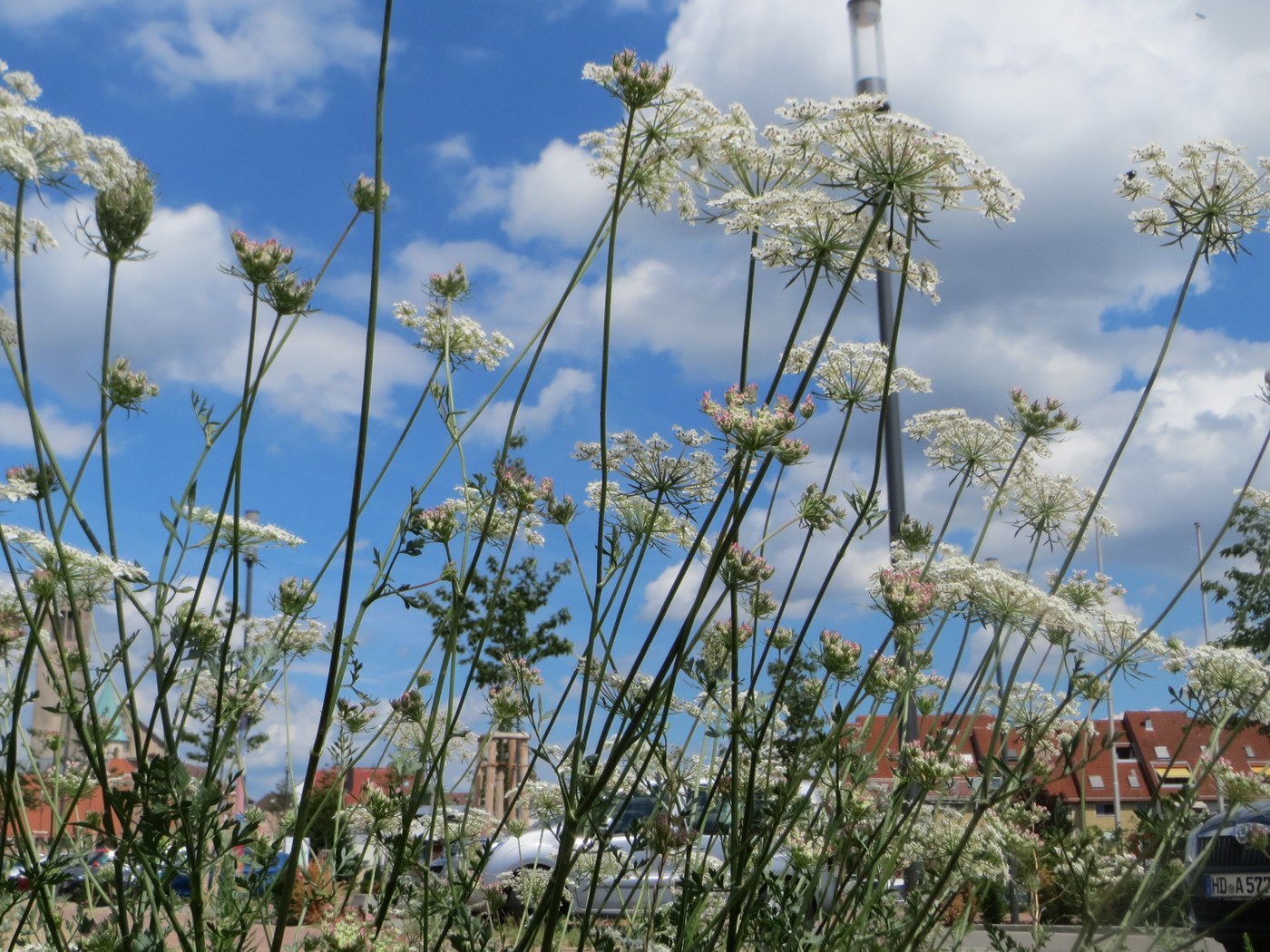
Queen Anne's lace is a biennial wildflower with delicate, flat-topped clusters of tiny white flowers and a single dark floret in the center. It is the wild ancestor of the cultivated carrot.
- Light
- Full sun
- Water
- Drought-tolerant; average soils
- Difficulty
- Easy
Got a plant like this?
Identify any plant from a photo, free.
Overview
Queen Anne's lace (Daucus carota) is a biennial flowering plant native to Europe and southwestern Asia and widely naturalized across North America and other temperate regions. It is the wild progenitor of the domestic carrot, sharing the same species, though its root is thin, pale, and woody rather than the swollen orange root of the cultivated form.
In its first year it forms a low rosette of ferny leaves; in its second year it sends up a tall flowering stalk topped by lacy white flower umbels. The clusters often curl inward into a 'bird's nest' shape as the seeds mature.
It is beloved as a cottage and meadow wildflower, but it is also classified as a noxious weed in some regions because of its vigorous spread.
How to identify it
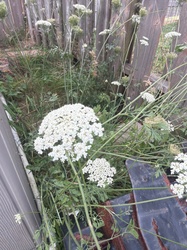
Look for flat, lacy white flower clusters, often with a single dark central floret, atop hairy stems.
- Flowers: Flat-topped compound umbels of tiny white flowers, frequently with one tiny purple-black floret at the center
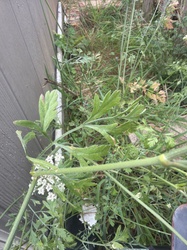
- Leaves: Finely divided, fern-like, carrot-scented when crushed
- Stems: Erect, hairy, 1-4 feet tall (the hairy stem is a key distinguishing trait among similar umbellifers)
- Seed head: Umbels curl up into a concave 'bird's nest' as seeds ripen
- Root: Slender, white, woody taproot
Care & growing
Easy to grow in sunny, open ground; often self-sows freely.
- Light: Full sun
- Soil: Tolerates poor, dry, well-drained soils; not fussy
- Water: Drought-tolerant once established
- Propagation: Grows readily from seed sown in fall or spring; reseeds prolifically
- Caution: Can become weedy; deadhead to limit spread
- Look-alike note: Closely resembles other white-flowered umbellifers; the hairy stem and single dark central floret help distinguish it
Habitat & origin
Native to temperate Europe and southwestern Asia, Queen Anne's lace has naturalized throughout North America, Australia, and other temperate areas.
It thrives in open, sunny, disturbed ground: meadows, fields, roadsides, pastures, and waste places. It tolerates dry, poor soils and is often among the first plants to colonize abandoned land.
Frequently asked questions
Is Queen Anne's lace the same as a carrot?
Yes, it is the same species (Daucus carota) and the wild ancestor of the cultivated carrot, but its root is thin, pale, and woody rather than the swollen orange root of the garden form.
What is the dark spot in the center of the flower?
Many umbels have a single tiny purple-black floret at the center, traditionally said to represent a drop of Queen Anne's blood; it may help attract pollinators.
Is Queen Anne's lace invasive?
It self-sows aggressively and is listed as a noxious weed in some states, so it can spread far beyond where it is planted.
Queen Anne's Lace guides
In-depth guides for identifying, growing, and caring for Queen Anne's Lace.
How to Care for Queen Anne's Lace
Grow Queen Anne's Lace for airy, lace-like white flower umbels; this easy biennial thrives on neglect in full sun.
Queen Anne's Lace Identification Guide
Identify Queen Anne's lace (Daucus carota) by its flat lacy white flower umbels with a central dark floret, ferny carrot-scented leaves, and bird's-nest seed heads.
Queen Anne's Lace identified by the community
Real specimens identified with Plant Identifier.