Sitka Spruce
Picea sitchensis
Sitka Spruce is the largest spruce in the world, a towering conifer of the cool, wet Pacific Northwest coast. Its strong, lightweight wood is prized for aircraft, boats, and musical instruments.
- Light
- Full sun
- Water
- High; prefers consistently moist soil
- Difficulty
- Moderate
Got a plant like this?
Identify any plant from a photo, free.
Overview
Sitka Spruce (Picea sitchensis) is the world's largest spruce species and one of the tallest conifers on Earth, regularly reaching 150 to 200 feet and occasionally over 300 feet. It is named for Sitka, Alaska, near the heart of its range.
It thrives in the cool, foggy, high-rainfall temperate rainforests of the Pacific coast, almost always within a few miles of the ocean where it tolerates salt spray.
The tree is renowned for an exceptional strength-to-weight ratio in its wood, historically vital to early aircraft and still sought for guitar and piano soundboards.
How to identify it
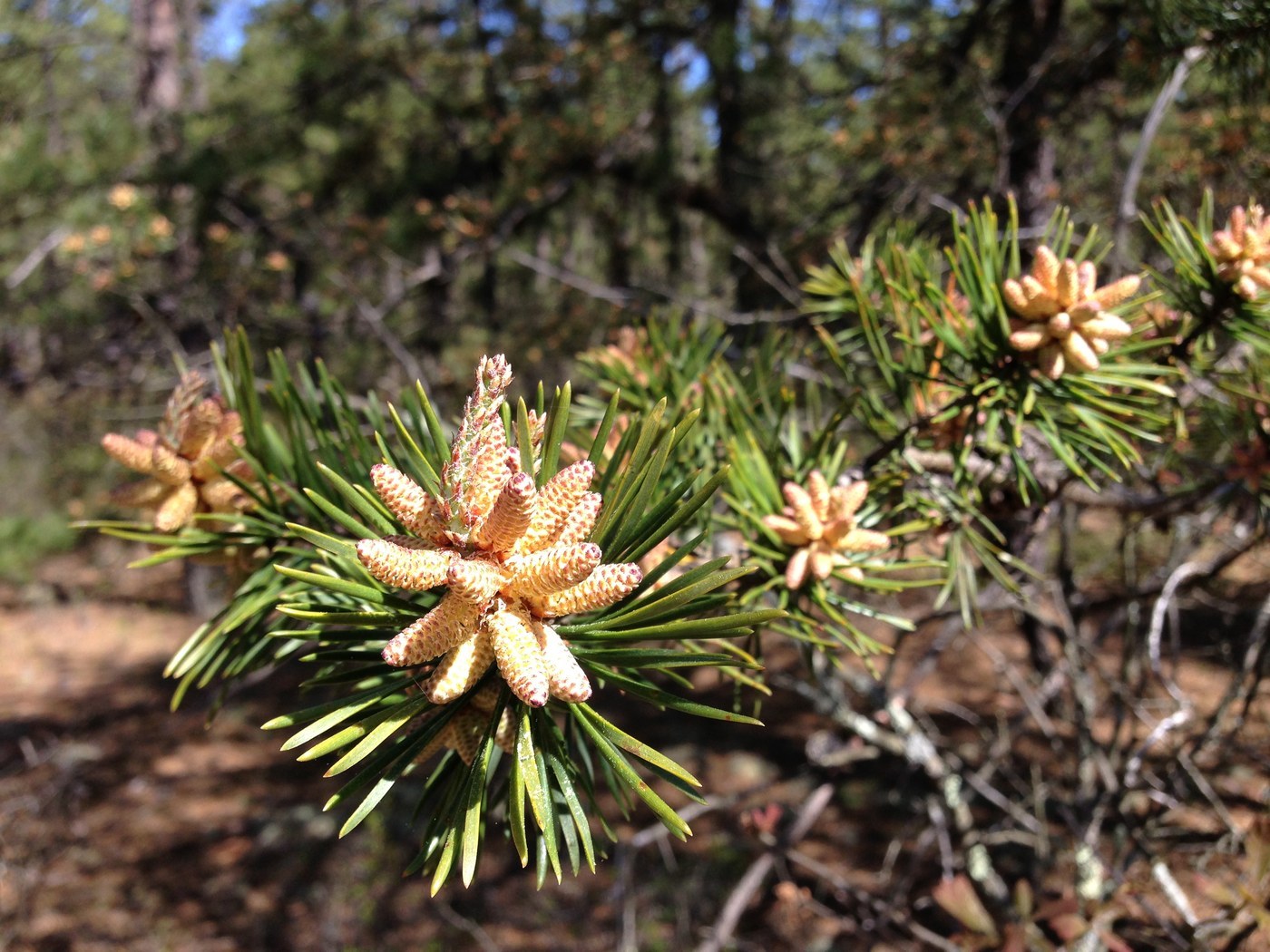
- Needles: Stiff, sharp, flattened needles about 1/2 to 1 inch long, blue-green with white stomatal lines, radiating all around the twig and very prickly to touch
- Cones: Cylindrical, pale yellow-brown hanging cones 2 to 4 inches long with thin, papery, crinkled scales
- Bark: Thin, gray, breaking into loose, scaly purplish plates
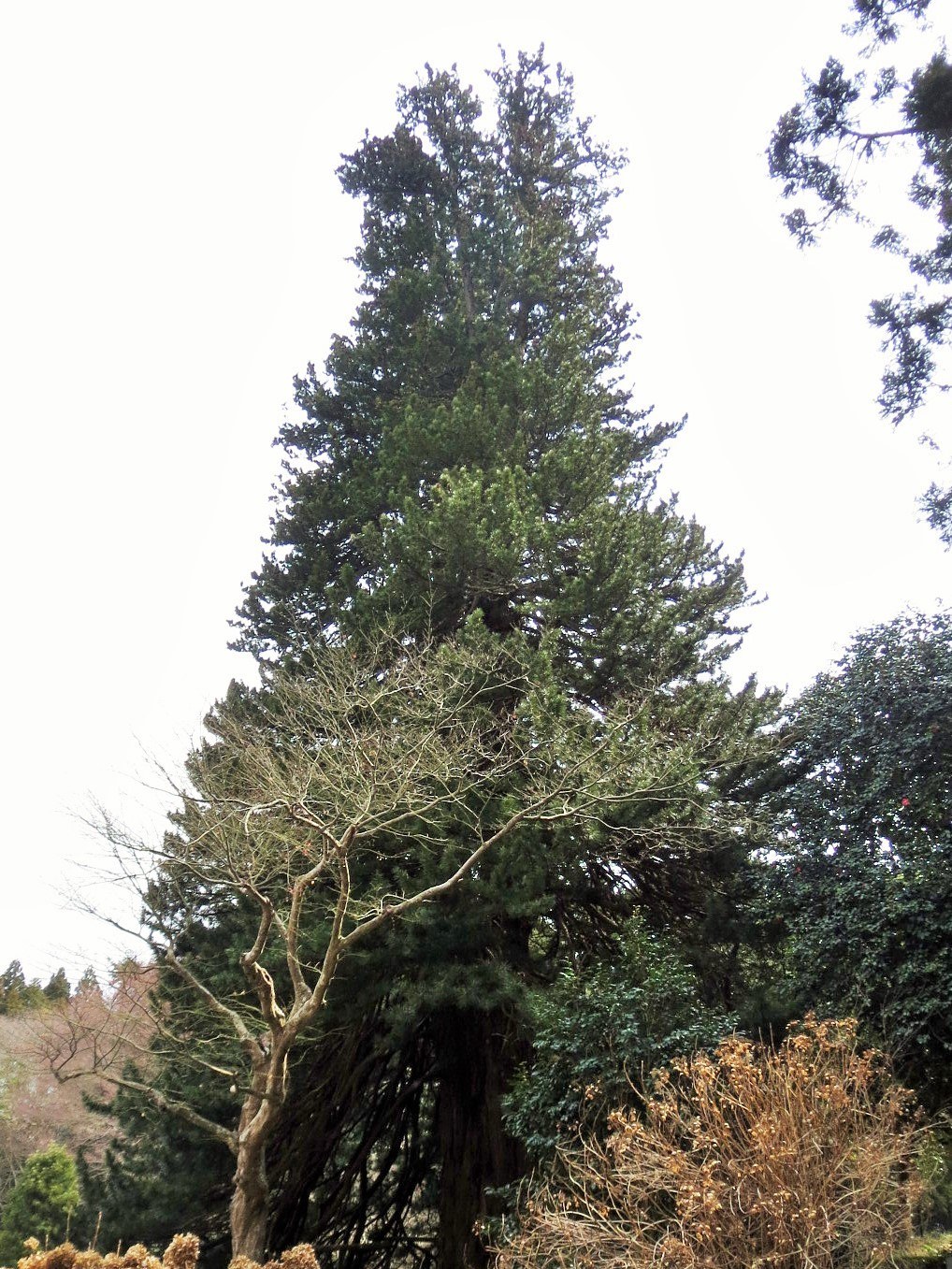
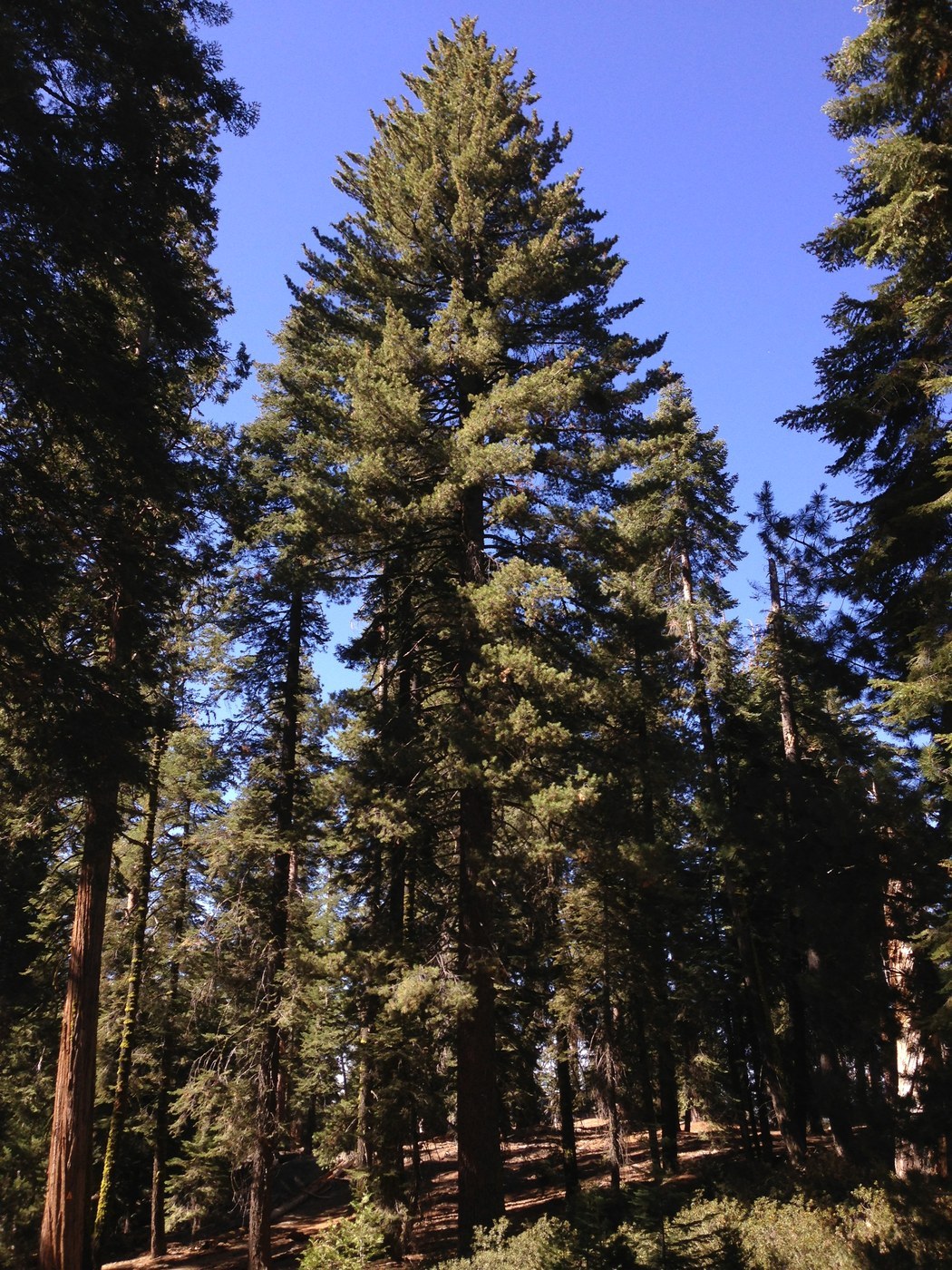
- Habit: Tall, conical to columnar tree with a buttressed base and horizontal branches
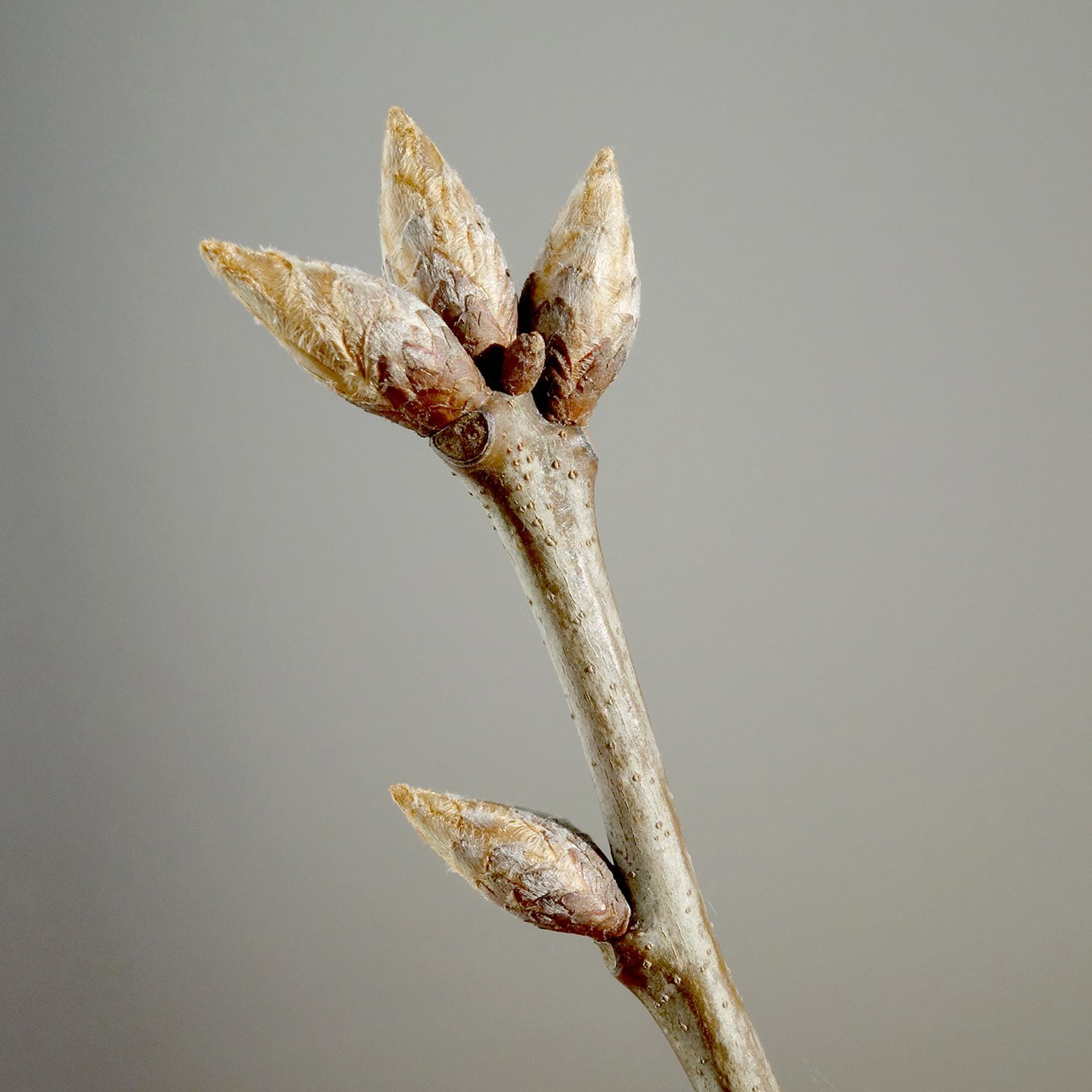
- Twigs: Hairless, with peg-like bases (sterigmata) typical of spruces
Care & growing
Best suited to cool, humid maritime climates; struggles in heat and drought.
- Light: Full sun
- Water: Needs abundant, consistent moisture and high humidity; intolerant of drought
- Soil: Deep, moist, acidic, well-drained soils; tolerates poor drainage and salt spray
- Temperature: Hardy in USDA zones 6 to 8; loves cool oceanic summers
- Feeding: Rarely needed in suitable native conditions
- Propagation: From seed after cold stratification; cuttings are difficult
It is not a tree for hot inland gardens, where heat and dry air cause poor performance.
Habitat & origin
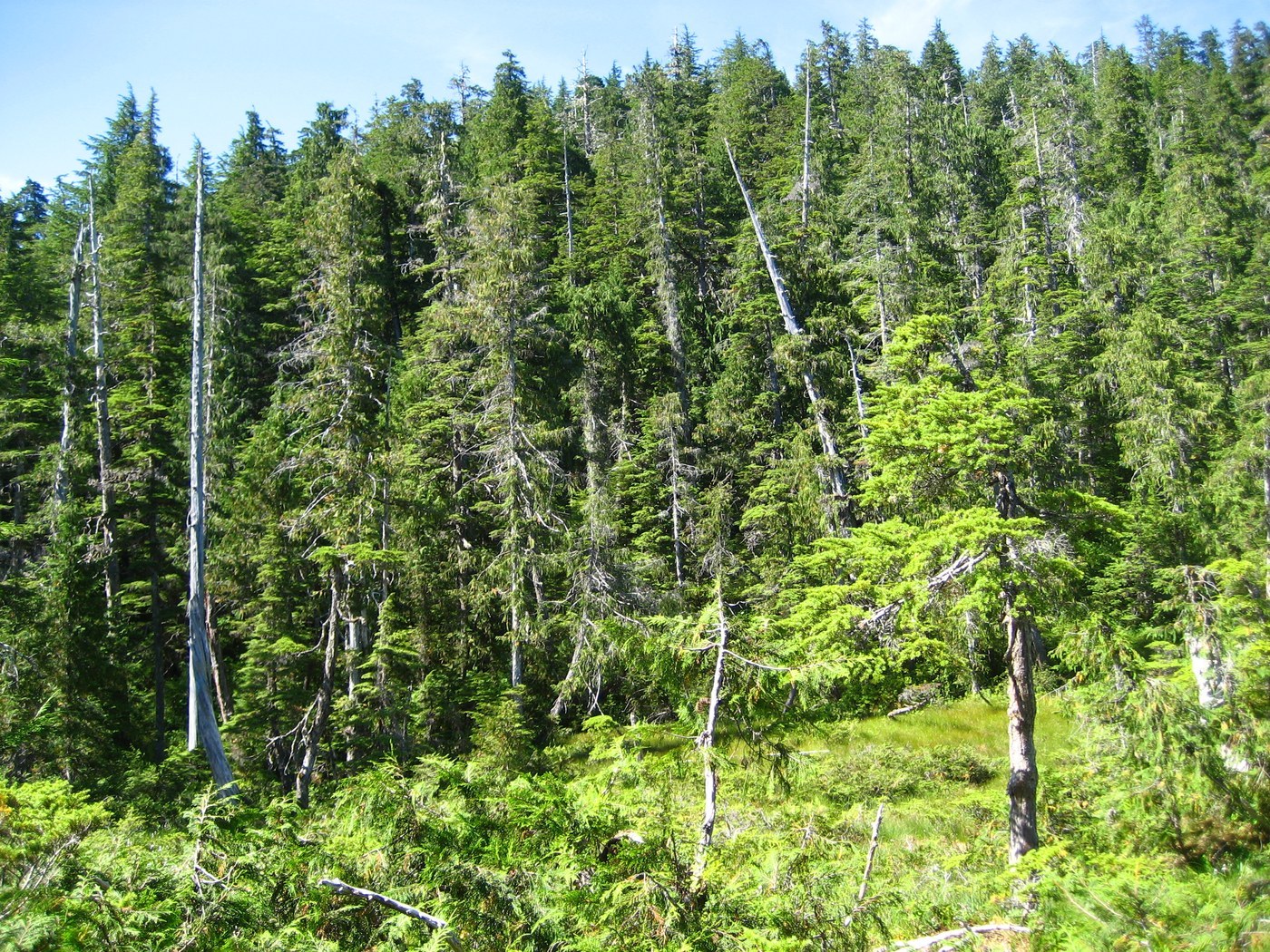
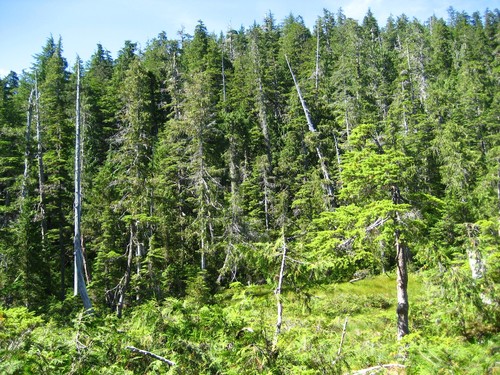
Sitka Spruce grows in a narrow coastal strip from southern Alaska through British Columbia, Washington, and Oregon to northern California, almost always within about 50 miles of the Pacific. It dominates coastal temperate rainforests with high rainfall and persistent fog.
It is widely planted for forestry in cool, wet maritime regions, especially in the British Isles, where it is a major timber species.
Frequently asked questions
How big does Sitka Spruce get?
It is the largest spruce in the world, commonly 150 to 200 feet tall and occasionally exceeding 300 feet, with trunks several feet thick.
Can I grow Sitka Spruce inland?
It is difficult away from the coast. It needs cool, humid, high-rainfall conditions and tolerates poorly the heat, dry air, and drought of inland climates.
Why is Sitka Spruce wood valuable?
Its exceptional strength-to-weight ratio and even grain make it ideal for aircraft, boats, and resonant soundboards for musical instruments.
Are the needles really that prickly?
Yes. Sitka Spruce has notably stiff, sharp needles that radiate around the twig, making the foliage distinctly prickly to handle.
Sitka Spruce guides
In-depth guides for identifying, growing, and caring for Sitka Spruce.
How to Care for Sitka Spruce
Grow Sitka Spruce (Picea sitchensis), a towering moisture-loving conifer, with this full guide to light, water, soil and seasonal care.
Sitka Spruce Identification Guide
Recognize Sitka Spruce (Picea sitchensis) by its sharp, flattened, two-toned needles, papery pendulous cones, and coastal rainforest habitat.