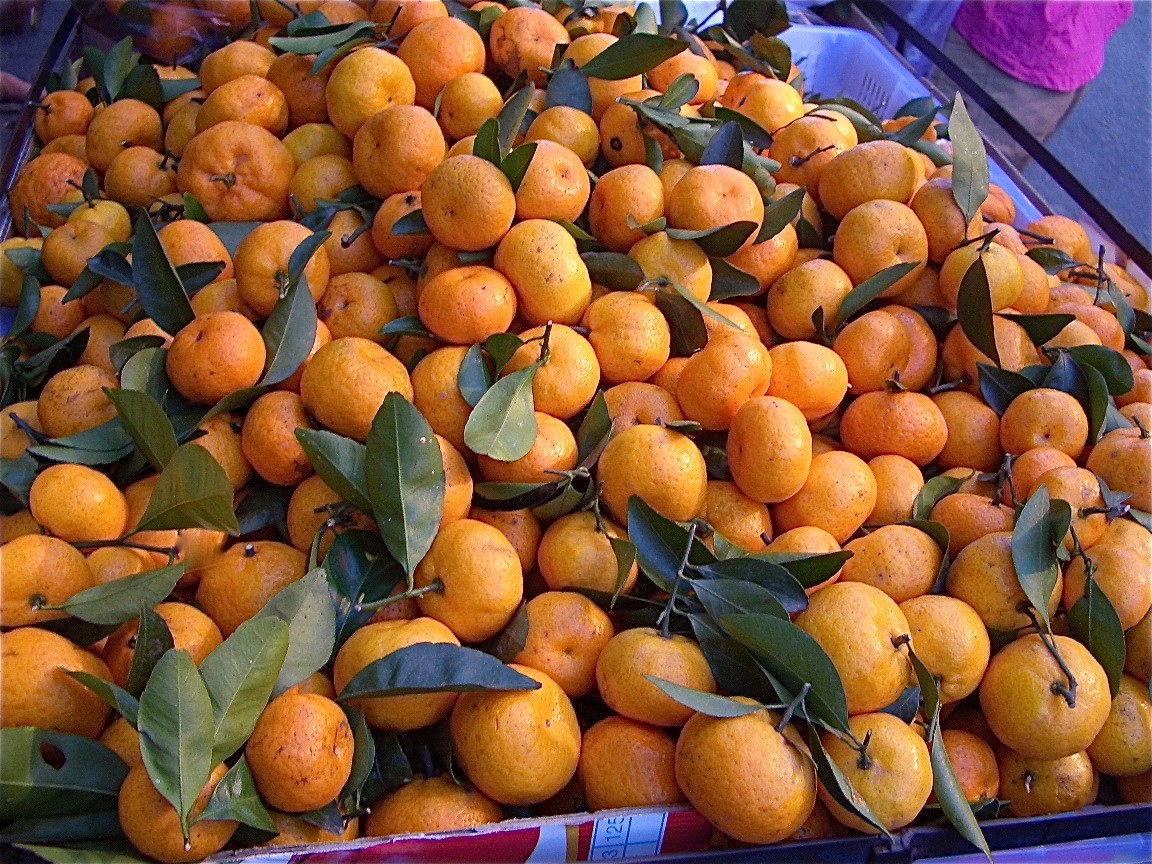
Tangerine Tree
Citrus tangerina
A type of mandarin orange producing small, easy-to-peel fruit with a deep reddish-orange rind. It is a compact, productive citrus tree well suited to home gardens.
- Light
- Full sun
- Water
- Regular; let topsoil dry between waterings
- Difficulty
- Moderate
Got a plant like this?
Identify any plant from a photo, free.
Overview
The tangerine is a group of mandarin oranges (within Citrus reticulata and its hybrids) noted for their deep orange-red, loose, easy-to-peel skin. The name historically refers to mandarins shipped from Tangier, Morocco.
Tangerines are smaller and flatter than common oranges, with segments that separate easily. The trees are moderately sized, attractive, and heavy-bearing.
How to identify it
Identifying features:
- Size & habit: Small to medium evergreen tree, 3-5 m, with a rounded, often somewhat drooping canopy
- Leaves: Glossy, lance-shaped, aromatic, smaller than those of sweet orange
- Flowers: Small, white, very fragrant
- Fruit: Small, slightly flattened, with thin, loose, deep reddish-orange peel that slips off easily
- Distinction: Looser, more colorful skin and a flatter shape than a sweet orange
Care & growing
Light: Full sun for abundant fruit.
Water: Water regularly, allowing the topsoil to dry between waterings; ensure good drainage to prevent root rot.
Soil: Well-drained, slightly acidic soil (pH 6.0-7.0).
Temperature: Somewhat more cold-tolerant than sweet oranges; best in USDA zones 9-11, with some varieties hardy into zone 8.
Feeding: Apply citrus fertilizer during the growing season for healthy foliage and fruit.
Propagation: Propagated by grafting onto suitable rootstock to ensure fruit quality and disease resistance.
Habitat & origin
Tangerines and other mandarins originated in China and Southeast Asia, where mandarins are among the oldest cultivated citrus. The 'tangerine' name reflects their later export through Tangier, Morocco.
They are now grown across the Mediterranean, the southern United States (notably Florida), China, and South America, in warm, frost-free climates.
Frequently asked questions
What is the difference between a tangerine and a mandarin?
Tangerines are a type of mandarin. The term generally refers to mandarins with deeper red-orange, loose skin; 'mandarin' is the broader category.
Why are tangerines easier to peel than oranges?
Their thin, loose-fitting rind separates readily from the flesh, and the segments come apart easily, a hallmark of mandarins.
Are tangerine trees self-pollinating?
Many tangerine varieties are self-fertile, though some set more (and seedier) fruit with cross-pollination.
How long until a tangerine tree bears fruit?
Grafted trees typically begin fruiting within 2-3 years and reach full production by years 4-6.
Tangerine Tree guides
In-depth guides for identifying, growing, and caring for Tangerine Tree.
How to Care for Tangerine Tree
Grow a glossy, fragrant tangerine tree with full sun, deep even watering, and citrus-specific feeding for healthy fruit.
Tangerine Tree Identification Guide
Identify the tangerine (a Citrus reticulata mandarin) by its slender drooping branches, small pointed leaves, white blossoms, and small, flattened, easy-peel orange fruit.