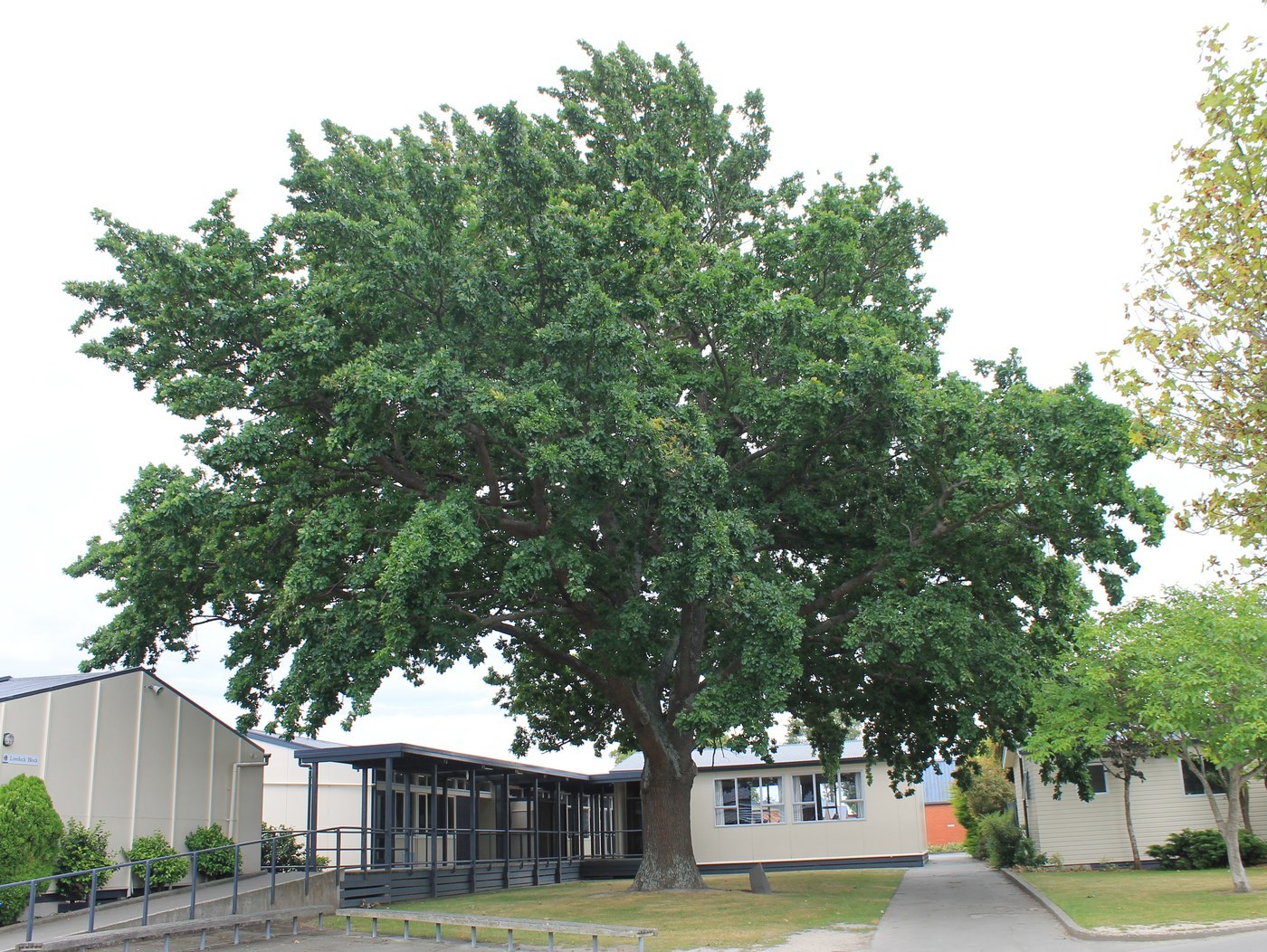
English Oak
Quercus robur
English oak is the iconic, long-lived oak of Europe, with short-stalked lobed leaves and acorns on long stalks. A symbol of strength, it can live for centuries and supports vast biodiversity.
- Light
- Full sun
- Water
- Moderate; prefers deep, moist soil
- Difficulty
- Moderate
Got a plant like this?
Identify any plant from a photo, free.
Overview
English oak (Quercus robur) is a large, long-lived deciduous tree in the white oak group, native to Europe, western Asia, and North Africa. It is the most widespread oak in Europe and a cultural emblem of strength and endurance.
It is called the pedunculate oak because its acorns hang on long stalks (peduncles), in contrast to the sessile oak (Q. petraea), whose acorns are stalkless. The species name robur means "strength" and refers to its famously hard, durable timber.
Veteran English oaks can live 500 to 1,000 years or more, becoming hollow-trunked giants that host hundreds of species of insects, fungi, and lichens.
How to identify it
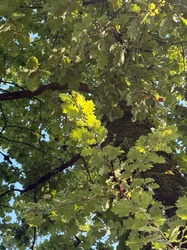
- Leaves: 2.5–5 in long, with 4–7 pairs of rounded lobes; the leaf base has small backward-pointing ear-like lobes (auricles) and a very short stalk.
- Acorns: Borne 1–3 together on long stalks (peduncles); oval with a shallow scaly cap.
- Bark: Gray-brown, deeply fissured into a network of ridges.
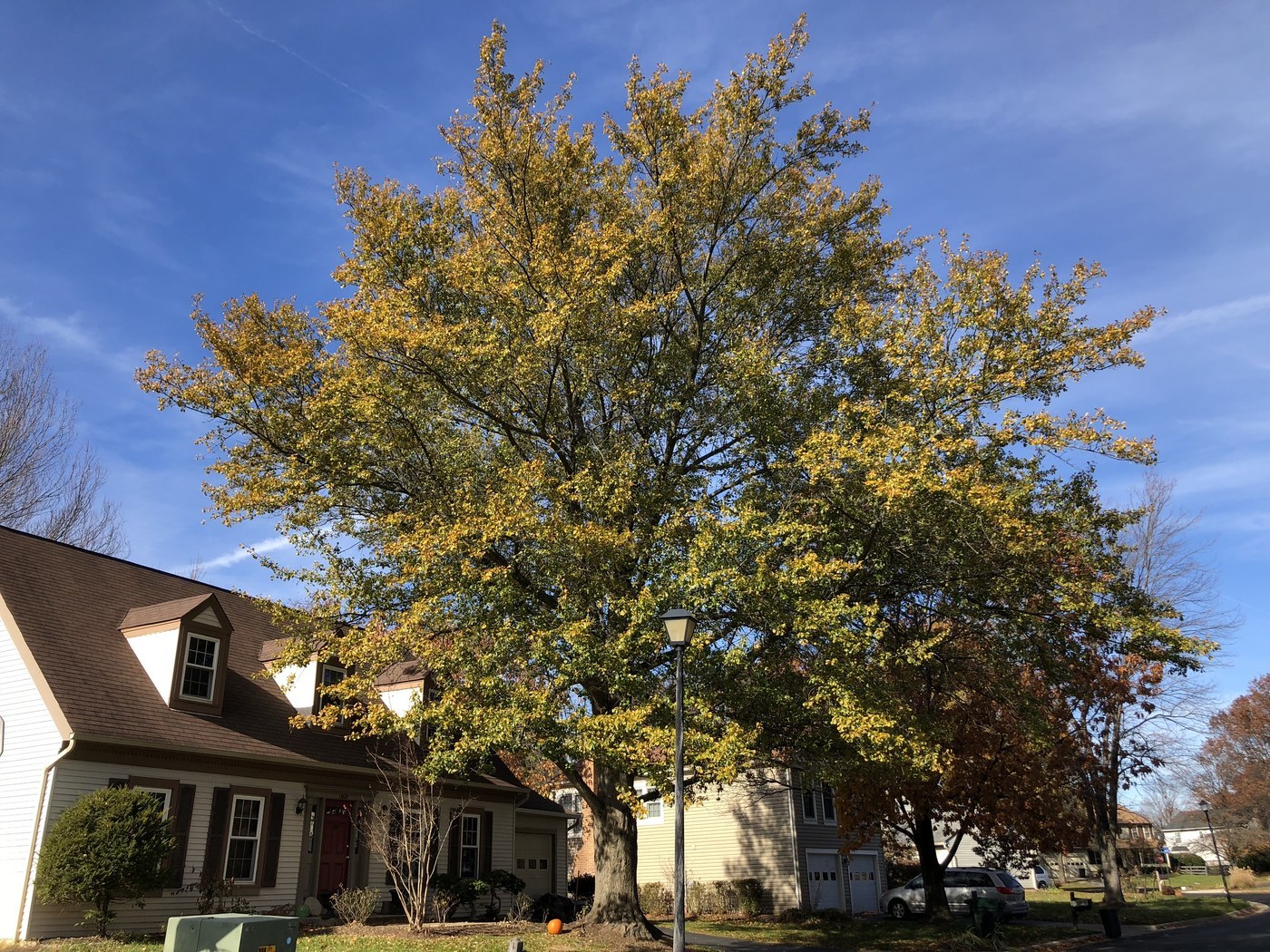
- Habit: Broad, spreading, often massive crown with heavy, twisting limbs.
- Size: Commonly 50–80 ft tall, with very old trees broad and squat.
Care & growing
English oak grows best in full sun and deep, fertile soil.
- Water: Prefers moist, well-drained loams but tolerates a range of conditions once established.
- Soil: Adaptable to clay, loam, and slightly acidic to alkaline soils; tolerates heavy ground.
- Temperature: Hardy in USDA zones 4–8.
- Feeding: Rarely needed in reasonable soil.
- Propagation: From acorns sown fresh in autumn; cultivars such as the narrow 'Fastigiata' are grafted.
Habitat & origin
Native across Europe, from the British Isles and Scandinavia south to the Mediterranean and east into western Asia and the Caucasus, with outliers in North Africa.
It grows in lowland forests, hedgerows, parklands, and wood pastures, often on heavy, fertile soils. Long planted as a specimen and timber tree, it is now widely naturalized in North America and elsewhere.
Frequently asked questions
Why is it called pedunculate oak?
Its acorns are borne on long stalks (peduncles), unlike the closely related sessile oak whose acorns sit directly on the twig.
How long do English oaks live?
They are exceptionally long-lived, commonly reaching several centuries, with some veteran trees surviving 800 to over 1,000 years.
How can I tell English oak from American white oak?
English oak has small ear-like lobes at the leaf base, very short leaf stalks, and long-stalked acorns, whereas American white oak has longer leaf stalks and stalkless or short-stalked acorns.
Is English oak good for wildlife?
Yes. It is one of the most biodiverse trees in Europe, supporting hundreds of species of insects, fungi, lichens, and birds.
English Oak guides
In-depth guides for identifying, growing, and caring for English Oak.
How to Care for English Oak
Grow the majestic English Oak (Quercus robur) with full sun, deep moist soil, and patient care for a long-lived, spreading shade tree.
English Oak Identification Guide
How to identify English Oak (Quercus robur) by its short-stalked leaves with ear-like basal lobes and its acorns borne on long stalks (peduncles).
English Oak identified by the community
Real specimens identified with Plant Identifier.