Seven-Son Flower
Heptacodium miconioides
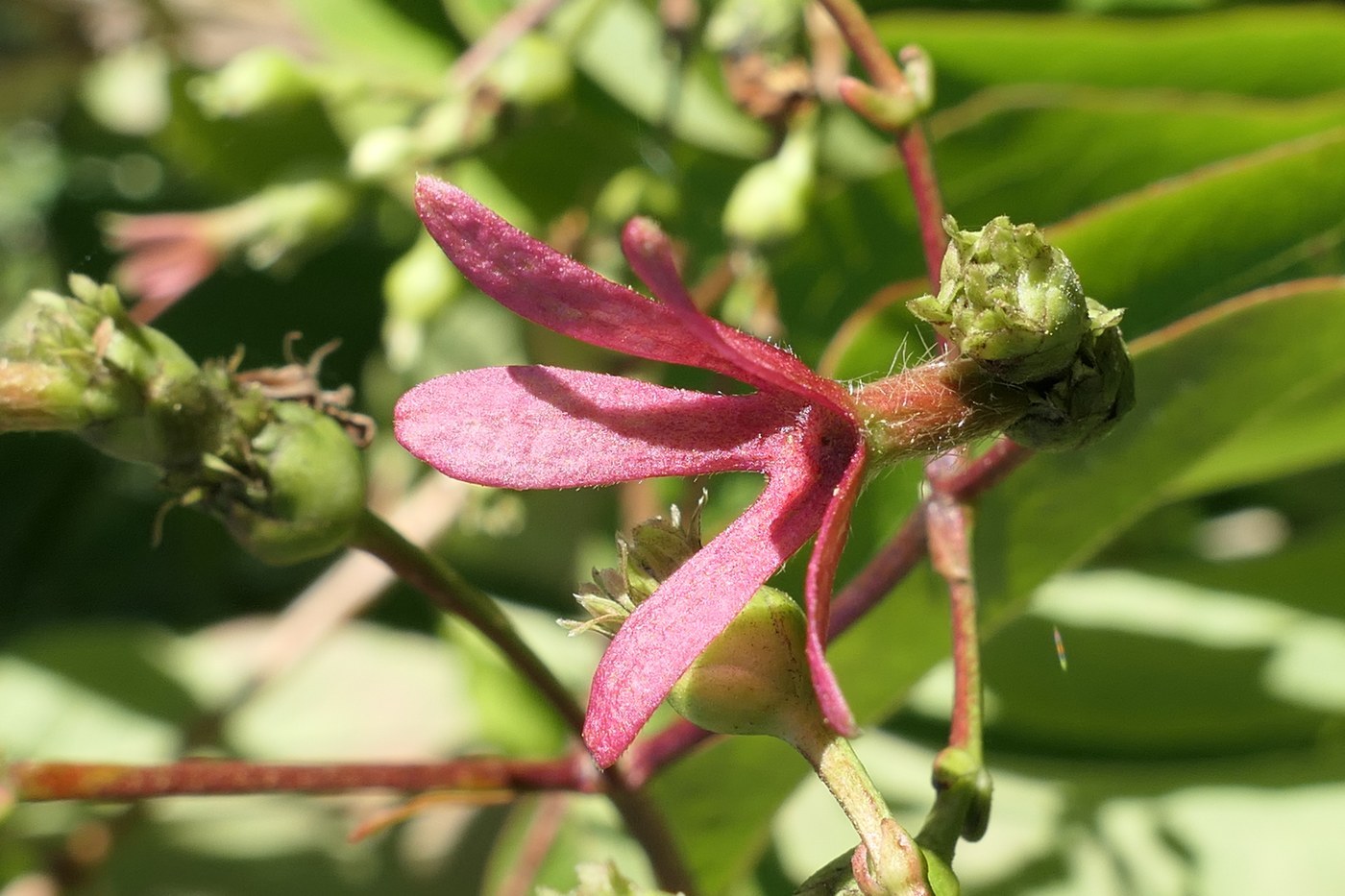
Seven-son flower is a multi-season large shrub or small tree bearing fragrant white late-summer flowers followed by showy rosy-red sepals in fall. Its peeling tan bark adds winter interest.
- Light
- Full sun to part shade
- Water
- Weekly; drought-tolerant once established
- Difficulty
- Easy
Got a plant like this?
Identify any plant from a photo, free.
Overview
Seven-son flower (Heptacodium miconioides) is a deciduous large shrub or small tree in the honeysuckle family, native to China and valued for an unusually long season of interest. Its name refers to the flowers borne in tiered clusters of seven.
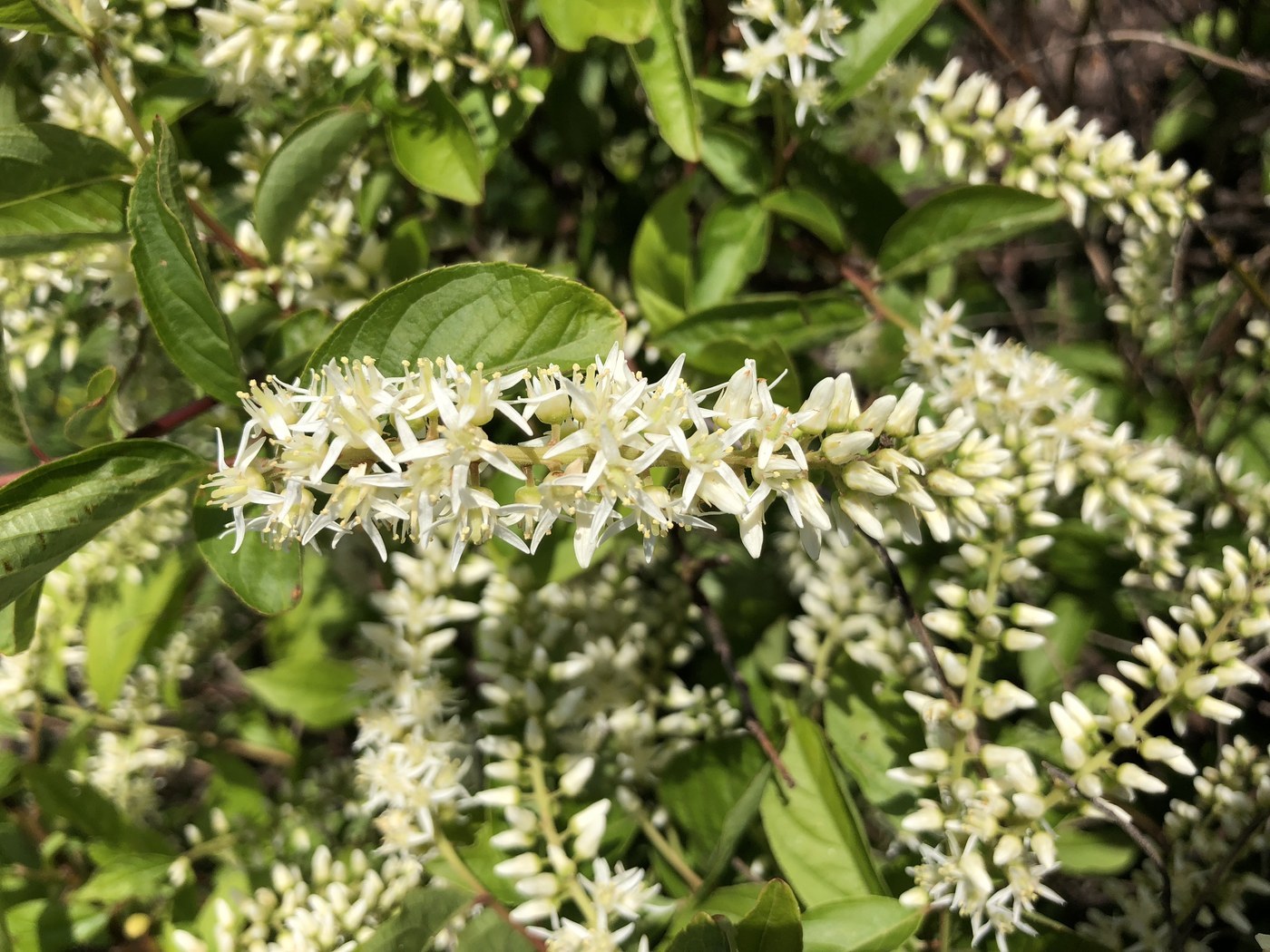
Fragrant creamy-white flowers open in late summer when little else blooms, attracting bees and butterflies. After the petals drop, the persisting sepals (calyces) enlarge and flush bright cherry-rose, creating a second 'bloom.' Exfoliating tan-and-brown bark provides winter appeal. It grows 15-25 ft.
How to identify it
- Habit: Vigorous, multi-stemmed large shrub or small tree, 15-25 ft, upright and somewhat vase-shaped.
- Flowers: Fragrant, small creamy-white flowers in tiered clusters of seven, late summer to early fall.
- Sepals: After bloom, calyces enlarge and turn showy rose-red, lasting weeks into autumn.
- Leaves: Opposite, oval, dark green, deeply veined, 3-6 in.
- Bark: Tan-brown, peeling in long strips to reveal lighter wood; strong winter interest.
Care & growing
Light: Full sun to partial shade; best bloom and bark color in full sun.
Water: Water weekly when establishing; drought-tolerant once mature.
Soil: Adaptable to most well-drained soils across a range of pH.
Temperature: Hardy USDA zones 5-9.
Feeding: Minimal; tolerates lean soils.
Pruning/Propagation: Can be grown as multi-stem shrub or limbed up to a small tree; prune in late winter. Propagated easily from softwood cuttings.
Habitat & origin
Native to China, where it is rare in the wild, growing on rocky wooded slopes and cliffs in Zhejiang province. It was once thought possibly extinct in nature but persists in scattered populations.
Introduced to Western cultivation by the Arnold Arboretum in the 1980s, it is now grown as an ornamental across temperate North America and Europe in zones 5-9.
Frequently asked questions
Why is it called seven-son flower?
Its small white flowers are arranged in branched clusters typically bearing seven blooms each.
Are the red parts in fall flowers?
No. After the white petals fall, the sepals (calyces) enlarge and turn cherry-rose, creating a second showy display.
Is it good for pollinators?
Yes. Its fragrant late-summer flowers are a strong nectar source for bees and butterflies.
Shrub or tree?
Either. It can be left multi-stemmed as a large shrub or pruned up into a small single- or multi-trunk tree.
Seven-Son Flower guides
In-depth guides for identifying, growing, and caring for Seven-Son Flower.
How to Care for Seven-Son Flower
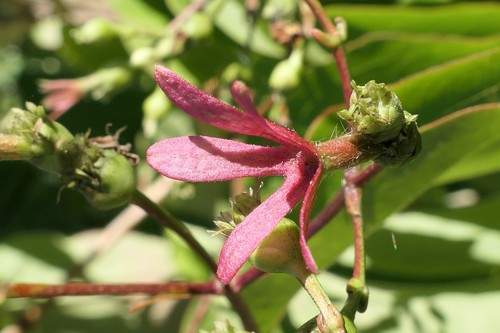
Grow Seven-Son Flower (Heptacodium miconioides), a hardy shrub with late summer blooms, red bracts, and exfoliating bark.
Seven-Son Flower Identification Guide
Identify Heptacodium miconioides by its fragrant white late-summer flower clusters, showy rose-red calyces that follow, peeling tan bark, and distinctive three-veined leaves.