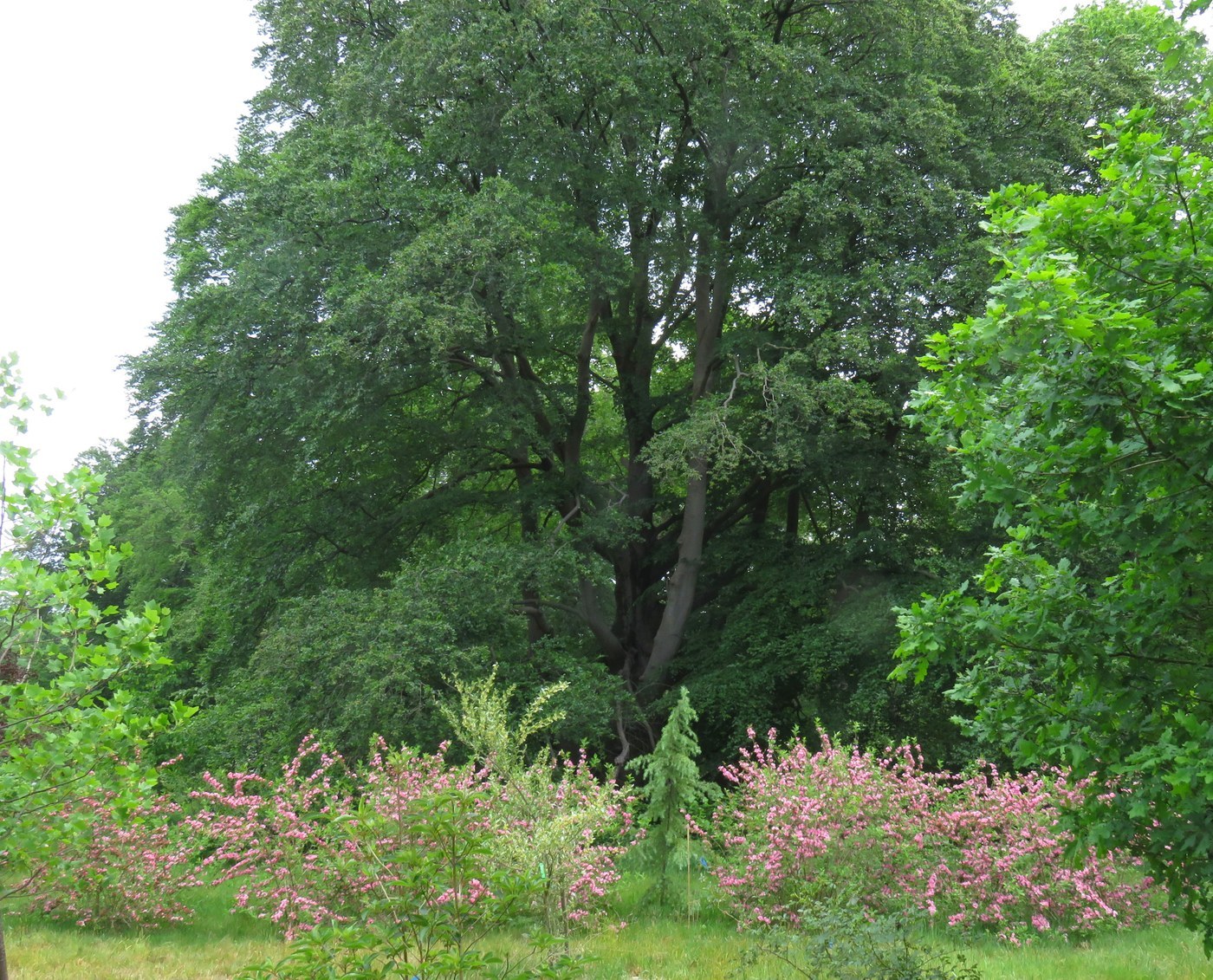
Weigela
Weigela florida
An easy deciduous shrub smothered in trumpet-shaped pink, red or white flowers in late spring that attract hummingbirds and bees. Many cultivars also offer burgundy or variegated foliage for season-long interest.
- Light
- Full sun to part shade
- Water
- Moderate; water during dry spells
- Difficulty
- Easy
Got a plant like this?
Identify any plant from a photo, free.
Overview
Weigela is a hardy deciduous shrub grown for its profuse, funnel-shaped flowers that cover arching branches in late spring, in shades of pink, red and white. The most common garden species is Weigela florida, native to East Asia.
Reliable and low-maintenance, it has enjoyed renewed popularity thanks to modern cultivars with dark burgundy, gold or variegated foliage and compact habits, adding interest well beyond the bloom season.
Its nectar-rich, trumpet-shaped flowers are particularly attractive to hummingbirds and butterflies.
How to identify it
- Flowers: funnel- or trumpet-shaped, ~1 in long, in pink, rose-red or white, abundant in late spring (often a lighter rebloom later)
- Leaves: opposite, elliptic, toothed; green, burgundy, gold or variegated depending on cultivar
- Habit: rounded with arching branches, multi-stemmed
- Size: typically 2–9 ft (0.6–2.7 m) tall depending on cultivar
- No showy fruit; grown mainly for flowers and foliage
Care & growing
Grow in full sun to part shade; best flowering and richest foliage color come in full sun.
- Water: water during dry spells; moderately drought-tolerant once established
- Soil: adaptable to most moist, well-drained soils
- Temperature: hardy roughly USDA zones 4–8
- Pruning: prune right after the spring bloom—it flowers on old wood; remove old canes to renew
- Feeding: a spring feed supports bloom
- Propagation: easily from softwood or hardwood cuttings
Deadheading or light shearing after the main flush can encourage a modest rebloom in many modern cultivars.
Habitat & origin
Weigela is native to eastern Asia, including China, Korea and Japan, where it grows in woodland and on mountain slopes.
It is widely cultivated in temperate gardens around the world as an ornamental flowering shrub, especially valued in mixed borders and as a specimen.
Frequently asked questions
When should I prune weigela?
Right after it finishes flowering in late spring. It blooms on old wood, so pruning later in the season removes next year's flower buds.
Does weigela attract hummingbirds?
Yes—its nectar-rich, trumpet-shaped flowers are a favorite of hummingbirds, as well as butterflies and bees.
Will weigela bloom again after spring?
Many modern cultivars produce a lighter second flush of flowers in summer, especially if you deadhead or lightly shear after the main bloom.
Is weigela easy to grow?
Yes—it is an undemanding, hardy shrub that tolerates a range of soils and needs little care beyond a post-bloom pruning.
Weigela guides
In-depth guides for identifying, growing, and caring for Weigela.
How to Care for Weigela
An easy, tough deciduous shrub prized for arching branches smothered in trumpet-shaped spring flowers.
Weigela Identification Guide
Identify Weigela by its arching stems, opposite toothed leaves, and abundant funnel-shaped pink to red flowers borne along the branches in late spring.