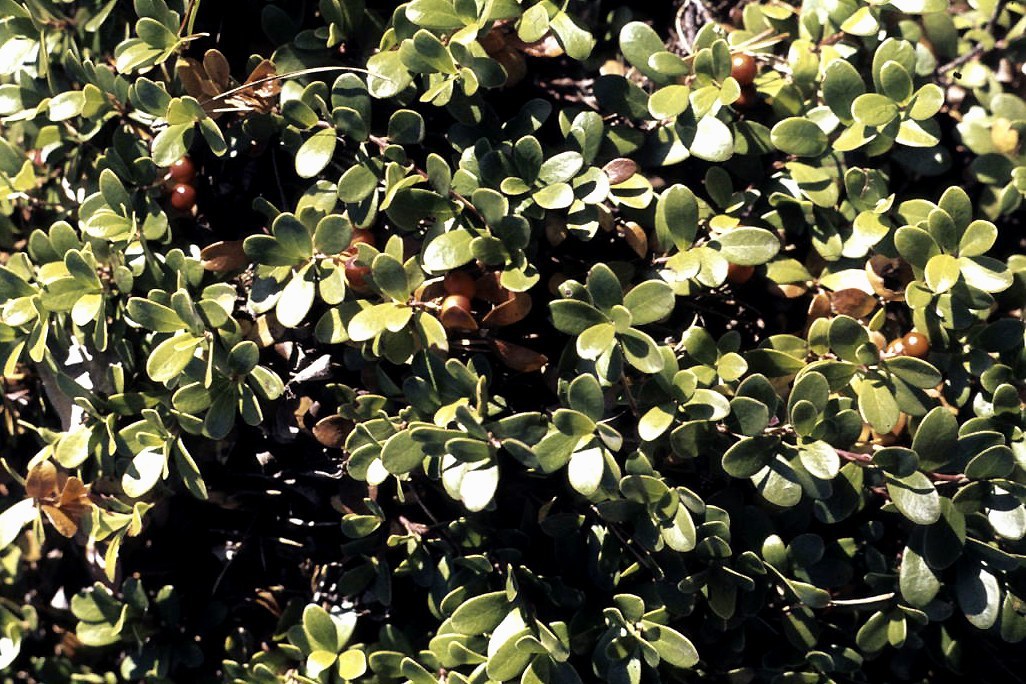
Bearberry
Arctostaphylos uva-ursi
A hardy, mat-forming evergreen groundcover shrub of cold northern regions, with glossy leaves, pink bell flowers, and red berries favored by bears and birds.
- Light
- Full sun to part shade
- Water
- Low; drought-tolerant once established
- Difficulty
- Moderate
Got a plant like this?
Identify any plant from a photo, free.
Overview
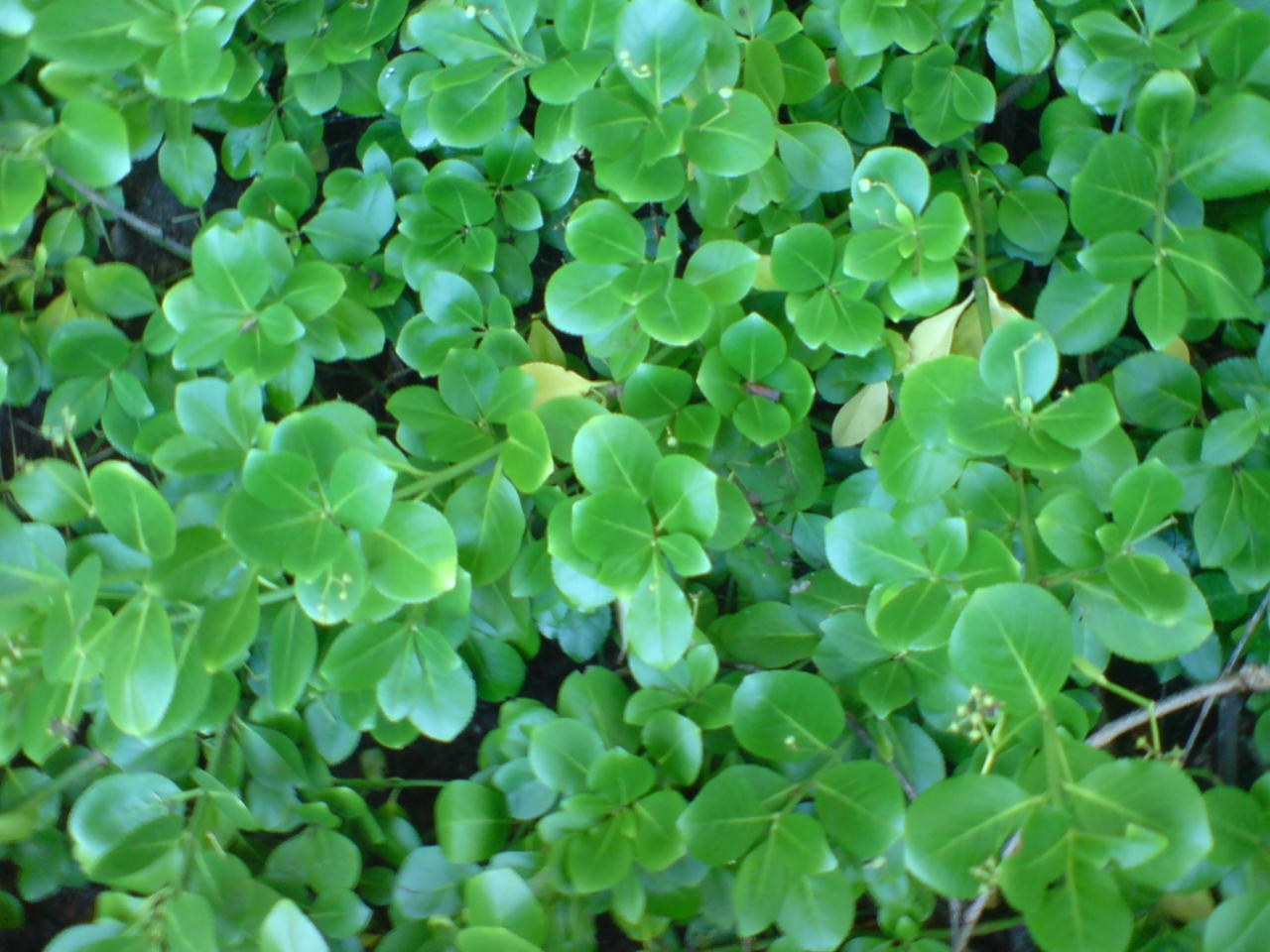
Bearberry is a low, trailing evergreen shrub in the heath family that hugs the ground to form dense, woody mats. Its small, leathery, spoon-shaped leaves stay green year-round, and in spring it produces clusters of dainty, urn-shaped pink-white flowers followed by bright red berries.
Well adapted to cold, exposed, sandy, and rocky sites, it is prized as a tough, drought-tolerant groundcover for poor soils and slopes. Its alternate name, kinnikinnick, comes from an Algonquian word, reflecting its long association with Indigenous peoples.
How to identify it
- Flowers: Small, urn- or bell-shaped, pink to white, in nodding clusters in spring.
- Fruit: Round, bright red, mealy berries persisting into winter.
- Leaves: Small, leathery, glossy, spoon-shaped, evergreen, often bronzing in cold weather.
- Stems: Trailing, woody, rooting along the ground to form mats.
- Height: Very low, 10-15 cm, spreading widely.
- Habit: Prostrate, mat-forming evergreen groundcover.
Care & growing
Light: Full sun to partial shade.
Water: Drought-tolerant once established; dislikes wet, heavy soil.
Soil: Needs well-drained, sandy or rocky, acidic soil; tolerates poor, infertile ground.
Temperature: Extremely cold-hardy; adapted to harsh northern climates.
Feeding: None needed; thrives in lean soils.
Propagation: Best from cuttings or layering, as seed is slow and difficult to germinate. It can be slow to establish but is long-lived once settled.
Habitat & origin
Native to the cold and temperate Northern Hemisphere — across northern North America, Europe, and Asia — bearberry grows in arctic, alpine, and boreal habitats, including sandy dunes, rocky barrens, and open pine woods.
It is widely planted as a groundcover for slopes, dunes, and erosion control in cold-climate landscaping, valued for thriving where little else will.
Frequently asked questions
Why is it called bearberry?
Bears are fond of its red berries, which gave the plant its common name; the Latin uva-ursi also means "bear's grape."
Is bearberry hard to establish?
It can be slow to settle in and is best started from cuttings or layered stems, but once established it is extremely tough and long-lived.
What soil does it need?
It requires well-drained, sandy or rocky, acidic soil and full sun to part shade; it dislikes wet, heavy, or fertile ground.
Bearberry guides
In-depth guides for identifying, growing, and caring for Bearberry.
How to Care for Bearberry
Bearberry is a tough, low, evergreen groundcover shrub for lean, acidic, well-drained soil; drought-tolerant once established with glossy foliage.
Bearberry Identification Guide
Identify Bearberry, a trailing evergreen groundcover, by its small leathery spoon-shaped leaves, pink urn flowers, and bright red berries.