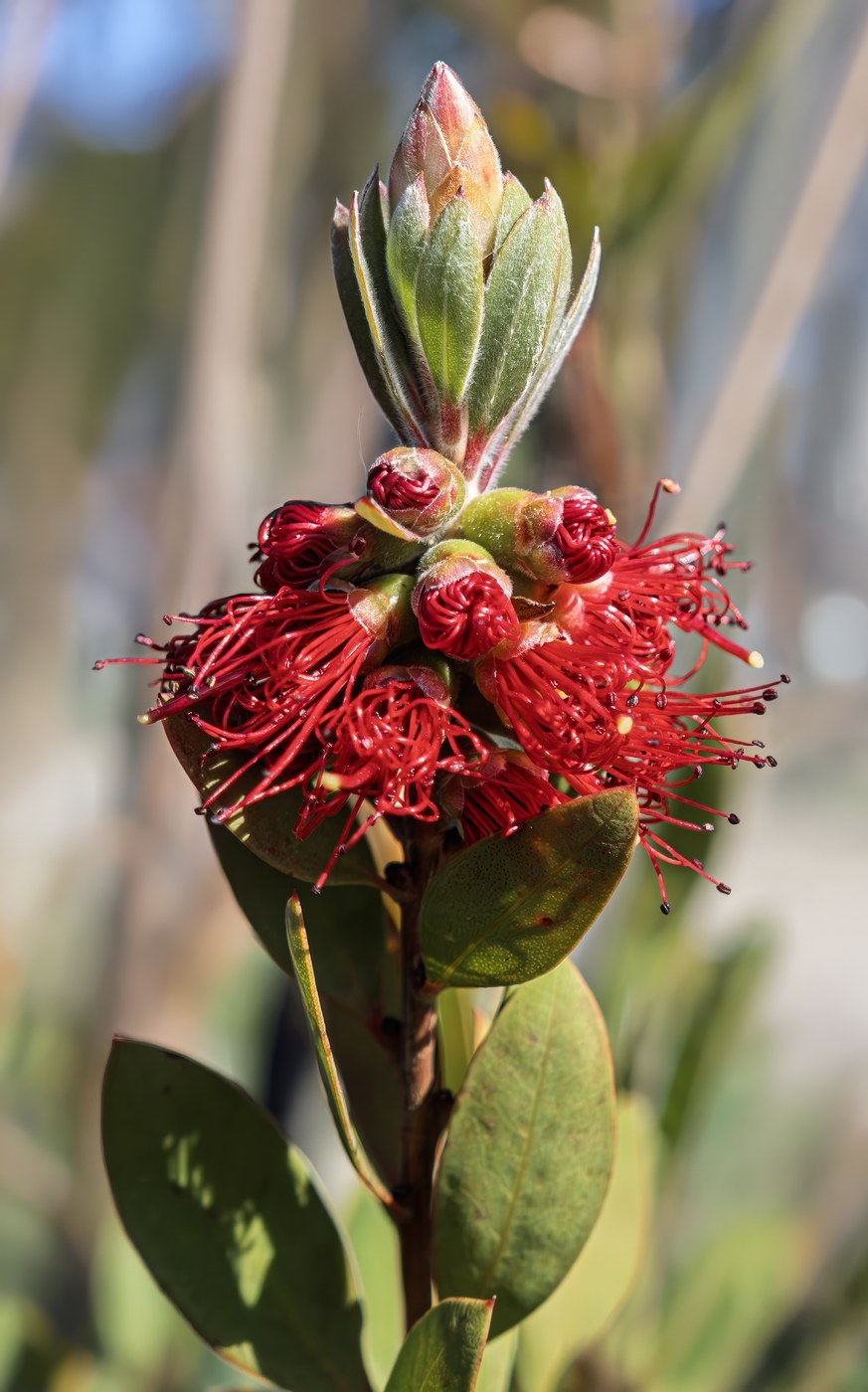
Bottlebrush Tree
Callistemon citrinus
An evergreen Australian shrub or small tree whose cylindrical red flower spikes look exactly like bottle brushes. The nectar-rich blooms draw birds and pollinators.
- Light
- Full sun
- Water
- Moderate; drought-tolerant once established
- Difficulty
- Easy
Got a plant like this?
Identify any plant from a photo, free.
Overview
The bottlebrush, Callistemon citrinus (now often classified as Melaleuca citrina), is an evergreen shrub or small tree in the myrtle family (Myrtaceae), native to Australia. It is instantly recognizable by its dense, cylindrical spikes of bright red flowers resembling a brush for cleaning bottles.
The color of the spike comes mostly from the long, showy stamens rather than the petals. Plants typically grow 6-15 ft (2-4.5 m) tall and bloom heavily in spring and intermittently through the year.
Tough, adaptable, and nectar-rich, bottlebrush is a favorite in warm-climate gardens worldwide.
How to identify it
- Flowers: Dense cylindrical spikes 2-6 in (5-15 cm) long, usually bright red, made of many long stamens; resemble a bottle brush
- Leaves: Narrow, lance-shaped, stiff evergreen leaves that smell lemony when crushed (hence citrinus)
- Habit: Evergreen shrub to small tree, 6-15 ft, often with arching branches
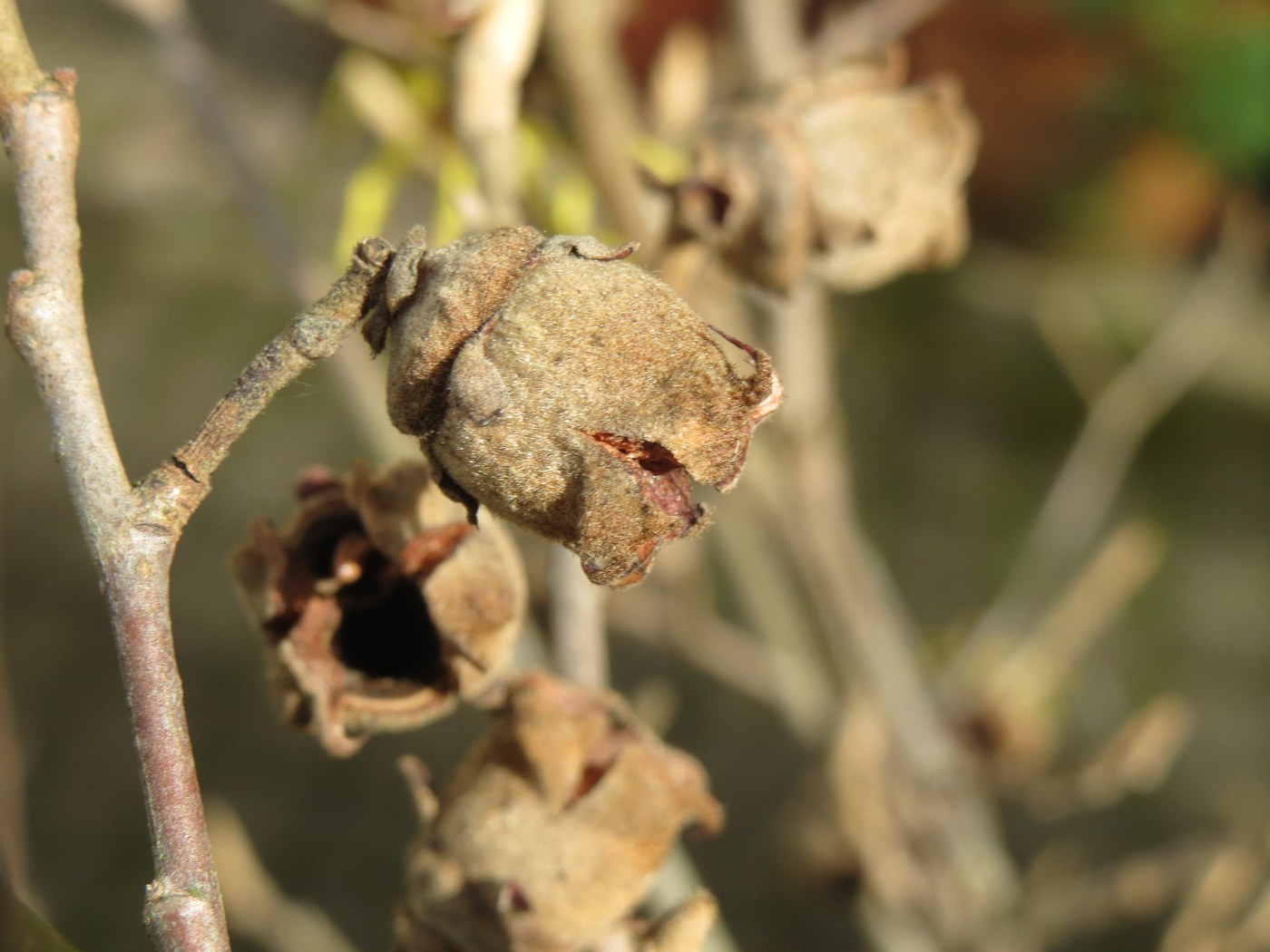
- Fruit: Small woody, cup-shaped seed capsules clustered along the stems, persisting for years
- New growth: Often soft, silky, and pinkish before maturing
Care & growing
Light: Full sun for the most prolific flowering.
Water: Water regularly while establishing; mature plants are quite drought-tolerant but bloom best with some moisture.
Soil: Adaptable to most soils, tolerating poor, wet, and mildly saline conditions; prefers slightly acidic.
Temperature: Hardy in USDA zones 8-11; tolerates light frost when established.
Feeding: Light feeding with a low-phosphorus fertilizer; like many Australian natives it is phosphorus-sensitive.
Pruning & propagation: Prune lightly after flowering to maintain shape and density. Propagate from semi-hardwood cuttings or seed.
Habitat & origin
Callistemon citrinus is native to eastern Australia, where it grows along streams, in damp gullies, and on rocky hillsides, tolerating both periodic flooding and drought.
Thanks to its toughness and showy flowers, it is now widely cultivated in subtropical and warm-temperate regions worldwide, including California, the Mediterranean, and South Africa, as a hedge, screen, or specimen plant.
Frequently asked questions
Why is it called a bottlebrush?
The cylindrical flower spikes are densely packed with long stamens that radiate outward, looking just like a brush used to clean bottles.
Does bottlebrush attract wildlife?
Yes, the nectar-rich flowers are highly attractive to birds (including hummingbirds), bees, and butterflies.
How do I get more flowers on my bottlebrush?
Grow it in full sun, prune lightly right after flowering, and avoid high-phosphorus fertilizers, which this plant dislikes.
Bottlebrush Tree guides
In-depth guides for identifying, growing, and caring for Bottlebrush Tree.
How to Care for Bottlebrush Tree
Grow the vivid Callistemon citrinus with full sun, sharp drainage, and light pruning for its signature crimson brush-like flower spikes.
Bottlebrush Tree Identification Guide
Recognize the bottlebrush (Callistemon/Melaleuca) by its cylindrical bristly red flower spikes, narrow aromatic leaves, and woody seed capsules clustered along the stems.