Heather
Calluna vulgaris
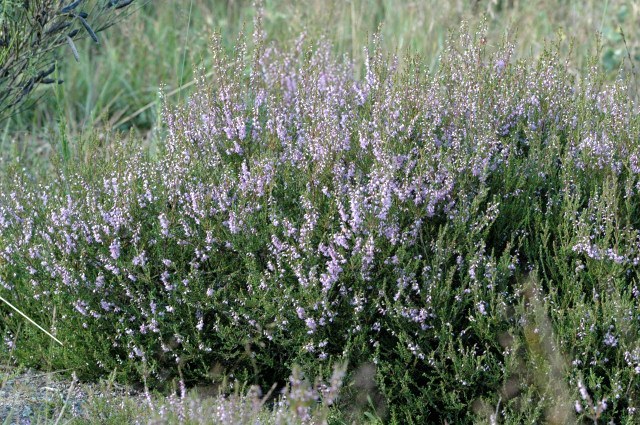
Heather is a low, evergreen shrub that blankets moorlands with a haze of tiny pink, purple or white flowers in late summer. It needs acidic soil and is prized for ground cover and year-round foliage color.
- Light
- Full sun
- Water
- Moderate; acidic, moist but well-drained soil
- Difficulty
- Moderate
Got a plant like this?
Identify any plant from a photo, free.
Overview
Heather (Calluna vulgaris), also called ling, is a low, spreading evergreen shrub in the heath family. It carpets acidic heathlands and moors, especially in Britain and northern Europe, with a sea of tiny bell-shaped flowers from mid- to late summer.
It is closely associated with, but distinct from, the related heaths (Erica), which together extend the heather-garden season nearly year-round. Many cultivars are grown as much for golden, bronze, red or silver foliage as for their bloom.
How to identify it
Tiny scale-like leaves and a low, twiggy habit identify true heather.
- Flowers: very small, urn- or bell-shaped, in dense spikes; pink, purple, mauve or white, mainly late summer to autumn
- Leaves: minute, scale-like, overlapping along wiry stems; evergreen, often colored gold, bronze, red or grey in cultivars
- Habit: low, mounding, spreading shrub usually 6-24 in tall
- Distinction from Erica: Calluna has tiny scale leaves and blooms late summer; Erica has needle-like leaves and many bloom winter to spring
Care & growing
Acidic soil and good drainage are essential.
- Light: full sun for best flowering and foliage color
- Water: keep moist but never waterlogged; water with rainwater where tap water is hard
- Soil: acidic (ericaceous), lean, well-drained soil; will not thrive in alkaline soil
- Temperature: very hardy; tolerates cold and wind
- Feeding: little needed; use ericaceous feed sparingly if any
- Maintenance: shear lightly after flowering to keep plants compact and prevent legginess
- Propagation: cuttings or layering
Habitat & origin
Calluna vulgaris is native to Europe and Asia Minor, dominating the heathlands, moors and bogs of Britain, Scandinavia and the wider region, often on poor, acidic, peaty soils.
It is the defining plant of the moorland landscape and is widely grown in heather gardens, rockeries and as ground cover in regions with suitably acidic soil.
Frequently asked questions
Why is my heather struggling in my garden?
Heather needs acidic, free-draining soil. In alkaline or heavy soils it declines. Test your soil and grow it in ericaceous conditions or containers of acid mix.
When should I trim heather?
Shear it lightly right after flowering, cutting just below the spent blooms. This keeps plants compact and prevents woody legginess.
What's the difference between heather and heath?
True heather (Calluna) has tiny scale-like leaves and flowers in late summer; heaths (Erica) have needle-like leaves and many flower in winter and spring.
Is heather good for pollinators?
Yes. Its late-summer flowers are an important nectar source for bees and other pollinators.
Heather guides
In-depth guides for identifying, growing, and caring for Heather.
How to Care for Heather
Grow Heather in full sun and moist, acidic, well-drained soil for a carpet of tiny blooms and evergreen foliage.
Heather Identification Guide
Identify heather by its low evergreen shrub form, tiny scale-like or needle leaves, and dense spikes of small bell or urn-shaped flowers.