Hydrangea Tree
Hydrangea paniculata
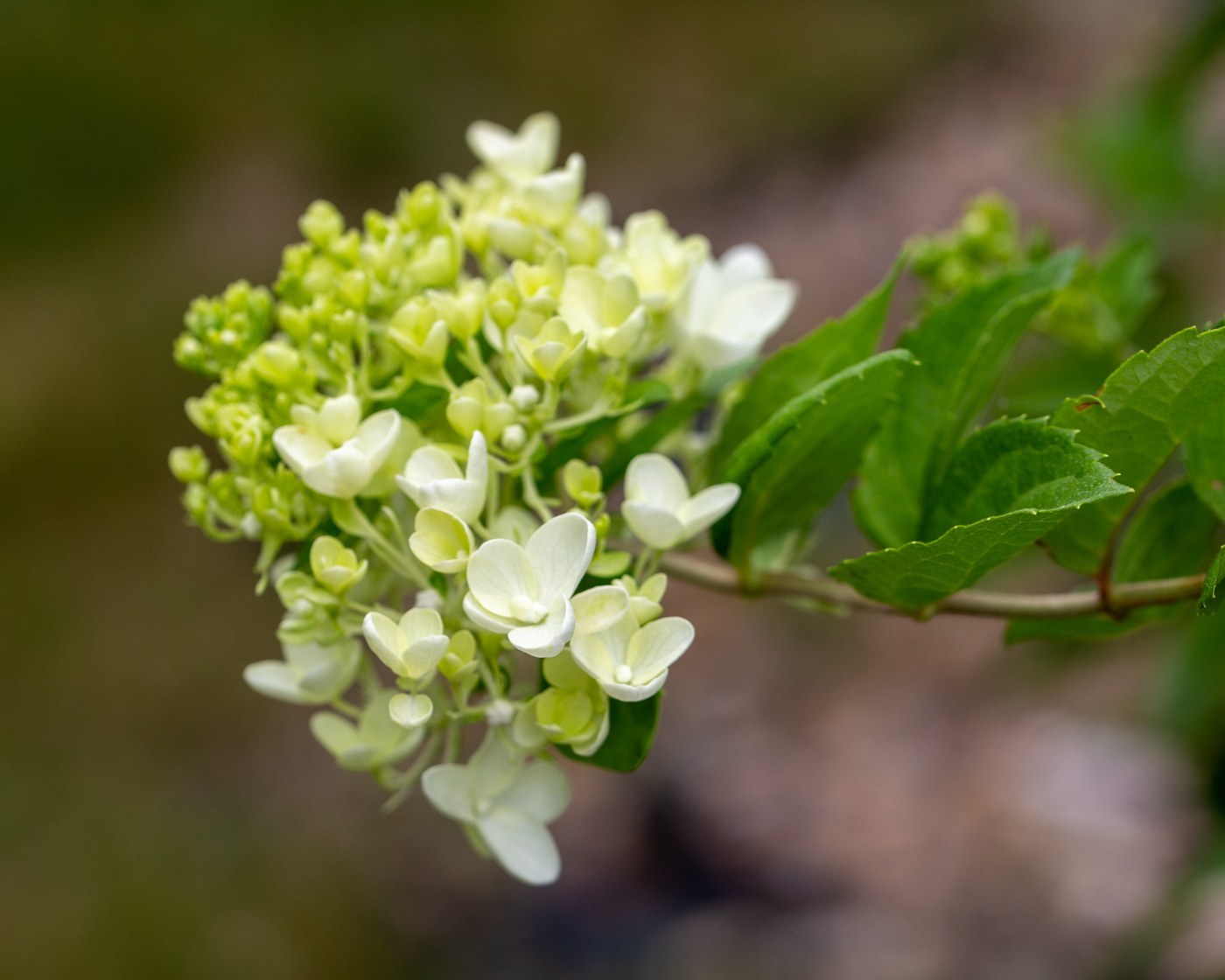
The hydrangea tree is a panicle hydrangea trained to a single trunk, topped with large cone-shaped clusters of white flowers that age to pink in late summer. It is the hardiest and most sun-tolerant of the hydrangeas.
- Light
- Full sun to part shade
- Water
- Keep evenly moist; deep weekly soak
- Difficulty
- Easy
Got a plant like this?
Identify any plant from a photo, free.
Overview
The "hydrangea tree" is not a distinct species but Hydrangea paniculata grown as a standard, with a clear single stem and a rounded crown of bloom. Cultivars such as 'Grandiflora' (PeeGee), 'Limelight' and 'Vanilla Strawberry' are the most common.
Unlike the moisture-loving bigleaf hydrangeas, panicle hydrangea is tough, cold-hardy to USDA zone 3, and flowers reliably because it blooms on new wood. The huge conical panicles open creamy white or lime green and flush rose, burgundy or strawberry-pink as nights cool.
Its tree form makes a dramatic small accent for lawns, entries and mixed borders, and the dried flower heads persist into winter.
How to identify it
- Flowers: large cone-shaped (panicle) clusters, 6-18 in long, opening white or lime and aging pink to red
- Leaves: oval, toothed, dark green, in opposite pairs or whorls of three, turning yellow in fall
- Habit: when trained as a tree, a single woody trunk topped by a 6-10 ft rounded crown; as a shrub, multi-stemmed and 8-15 ft
- Bark: tan, exfoliating in thin strips on older stems
- Bloom time: mid to late summer, persisting as tan dried heads into winter
Care & growing
Light: flowers best in full sun in cool climates; afternoon shade helps in hot regions.
Water: keep the root zone evenly moist, especially the first two years; a deep weekly soak in summer prevents wilting.
Soil: adaptable to most well-drained soils; unlike bigleaf hydrangeas, flower color is not affected by pH.
Feeding: a single spring application of balanced or rose fertilizer is plenty; avoid excess nitrogen which causes floppy stems.
Pruning: blooms on new wood, so prune hard in late winter or early spring to shape the crown and encourage large panicles.
Propagation: softwood or hardwood cuttings root readily.
Habitat & origin
Hydrangea paniculata is native to China, Korea, Japan and Russia's Sakhalin region, where it grows in open woodland and on sunny slopes.
It is one of the most widely planted ornamental shrubs in temperate gardens worldwide, valued for cold hardiness (USDA zones 3-8) and dependable bloom even in northern climates where other hydrangeas fail.
Frequently asked questions
Why are my hydrangea tree flowers white instead of pink?
Panicle hydrangeas open white or lime and naturally flush pink as nights turn cool in late summer; their color is not affected by soil pH like bigleaf types.
When should I prune a hydrangea tree?
Prune in late winter or early spring. It blooms on new wood, so hard pruning encourages strong stems and larger flower heads.
How much sun does it need?
At least 4-6 hours of sun for good bloom. In hot climates give it afternoon shade, but in cool regions full sun produces the best flowering.
Hydrangea Tree guides
In-depth guides for identifying, growing, and caring for Hydrangea Tree.
How to Care for Hydrangea Tree
Grow panicle hydrangea as a tree-form shrub with sun, evenly moist soil, and easy spring pruning for big cone blooms.
Hydrangea Tree Identification Guide
How to recognize the tree-form panicle hydrangea (Hydrangea paniculata), including its cone-shaped flower clusters, single trunk, and seasonal color shifts.
Hydrangea Tree identified by the community
Real specimens identified with Plant Identifier.