Lantana
Lantana camara
Lantana is a tough, heat- and drought-tolerant flowering shrub whose rounded clusters of tiny blooms often shift color as they age. It is a magnet for butterflies but is invasive in many warm regions.
- Light
- Full sun
- Water
- Drought-tolerant; water moderately
- Difficulty
- Easy
Got a plant like this?
Identify any plant from a photo, free.
Overview
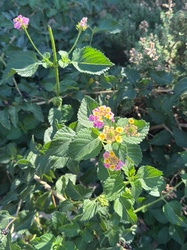
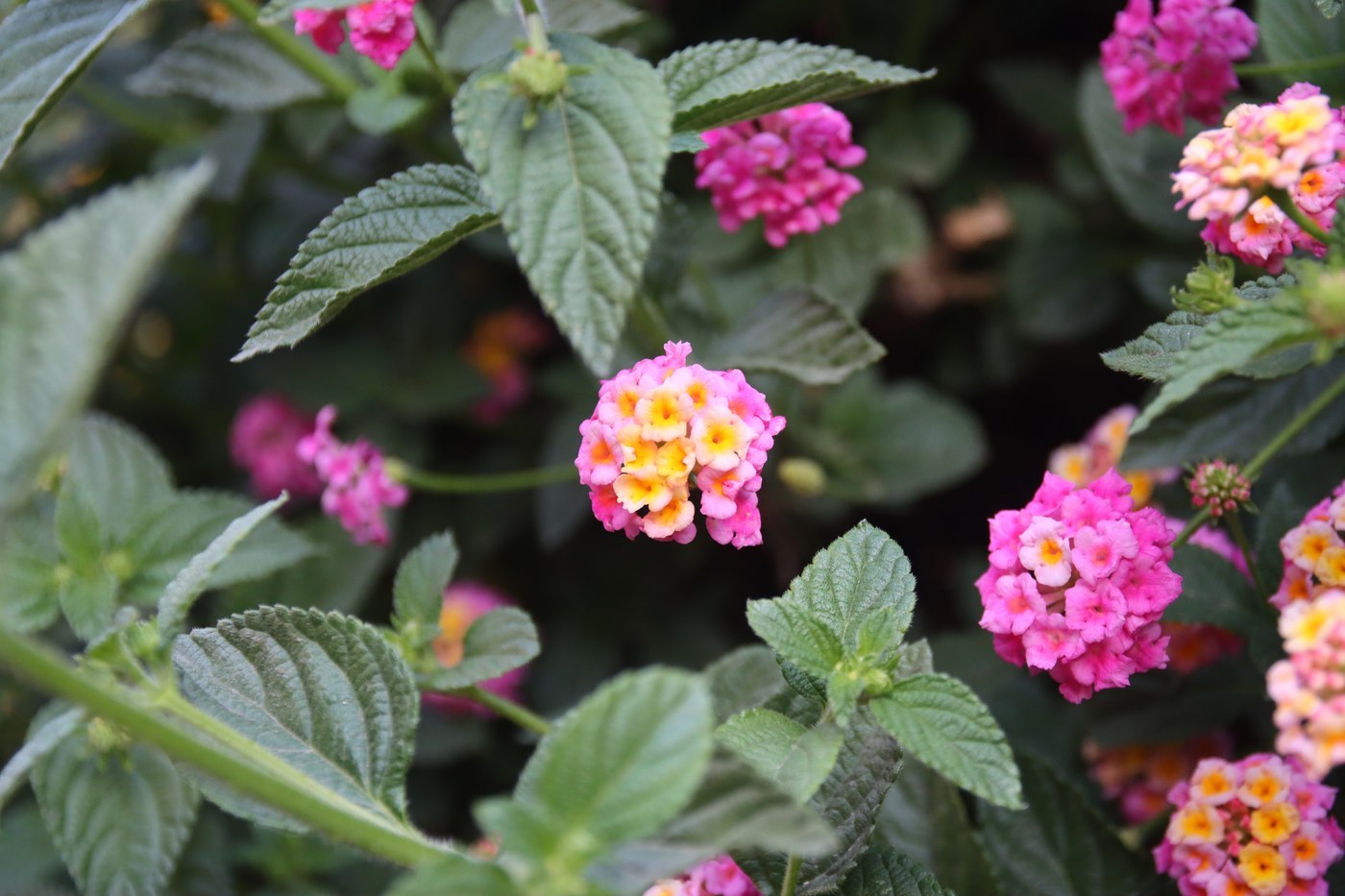
Lantana is a genus of flowering shrubs in the verbena family (Verbenaceae), with Lantana camara the most widely grown ornamental. It is famous for dense, dome-shaped flower clusters in which individual florets change color as they mature, giving multicolored “changeable” heads of yellow, orange, pink, and red.
Valued for blooming relentlessly through summer heat and drought, lantana is a staple of warm-climate gardens and containers, and a powerful butterfly attractant. In cold regions it is grown as an annual or tender container plant.
Despite its garden virtues, Lantana camara is a serious invasive weed in many tropical and subtropical areas.
How to identify it
Lantana is recognized by its rounded, multicolored flower clusters and aromatic foliage.
- Flowers: Small tubular florets packed into flat-topped or domed clusters (umbels), often two or three colors per head
- Color change: Individual flowers commonly shift color with age, creating the trademark multicolor effect
- Leaves: Opposite, oval, toothed, rough-textured, and strongly aromatic when crushed
- Habit: Bushy, mounding to sprawling shrub, 2-6 ft; some trailing types
- Fruit: Small berry-like drupes ripening from green to blue-black
Care & growing
Lantana thrives on heat and neglect once established.
- Light: Full sun is essential for heavy flowering
- Water: Drought-tolerant when established; water moderately and let soil dry between, avoiding soggy roots
- Soil: Well-drained soil of average fertility; tolerates poor and sandy soils
- Temperature: Heat-loving; perennial in USDA zones 9-11, grown as an annual elsewhere
- Feeding: Light feeding only — too much nitrogen reduces flowering
- Propagation: Easy from softwood cuttings; seed is possible but slower
Deadheading or shearing encourages more bloom and limits seed set. Wear gloves, as the foliage can irritate skin.
Habitat & origin
Lantana camara is native to the tropical Americas, particularly Central and South America and the Caribbean. It grows naturally in open, sunny, disturbed habitats, scrub, and forest margins.
It has been introduced across the world's tropics and subtropics, where it has become one of the most widespread and damaging invasive species, forming dense thickets in Australia, Africa, India, and the Pacific. In cooler climates it is a well-behaved warm-season ornamental.
Frequently asked questions
Does lantana come back every year?
In warm climates (roughly USDA zones 9-11) it is a perennial shrub that returns each year; in colder areas it is grown as an annual or overwintered indoors.
Why isn't my lantana blooming?
Insufficient sun or too much fertilizer are the usual culprits; lantana needs full sun and lean conditions to flower heavily.
Is lantana invasive?
Yes, Lantana camara is a serious invasive weed in many tropical and subtropical regions, so check local guidance and consider sterile or less aggressive cultivars.
Why do lantana flower heads have several colors?
Each rounded cluster is packed with tiny tubular florets that change color as they age, so a single head can show yellow, orange, pink, and red at once.
Lantana guides
In-depth guides for identifying, growing, and caring for Lantana.
How to Care for Lantana
Growing guide for lantana (Lantana camara), a heat-loving, drought-tolerant shrub prized for clustered multicolor blooms all season.
Lantana Identification Guide
Identify lantana by its dome-shaped clusters of tiny multicolored flowers that change color with age, rough aromatic leaves, and dark berry clusters.
Lantana identified by the community
Real specimens identified with Plant Identifier.