Oleander
Nerium oleander
Oleander is a heat- and drought-loving evergreen shrub with showy clusters of pink, white, or red flowers all summer. Beautiful and tough, it is a mainstay of warm-climate landscapes.
- Light
- Full sun
- Water
- Low; very drought-tolerant once established
- Difficulty
- Easy
Got a plant like this?
Identify any plant from a photo, free.
Overview
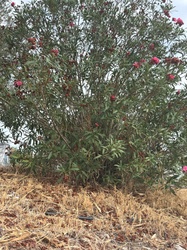
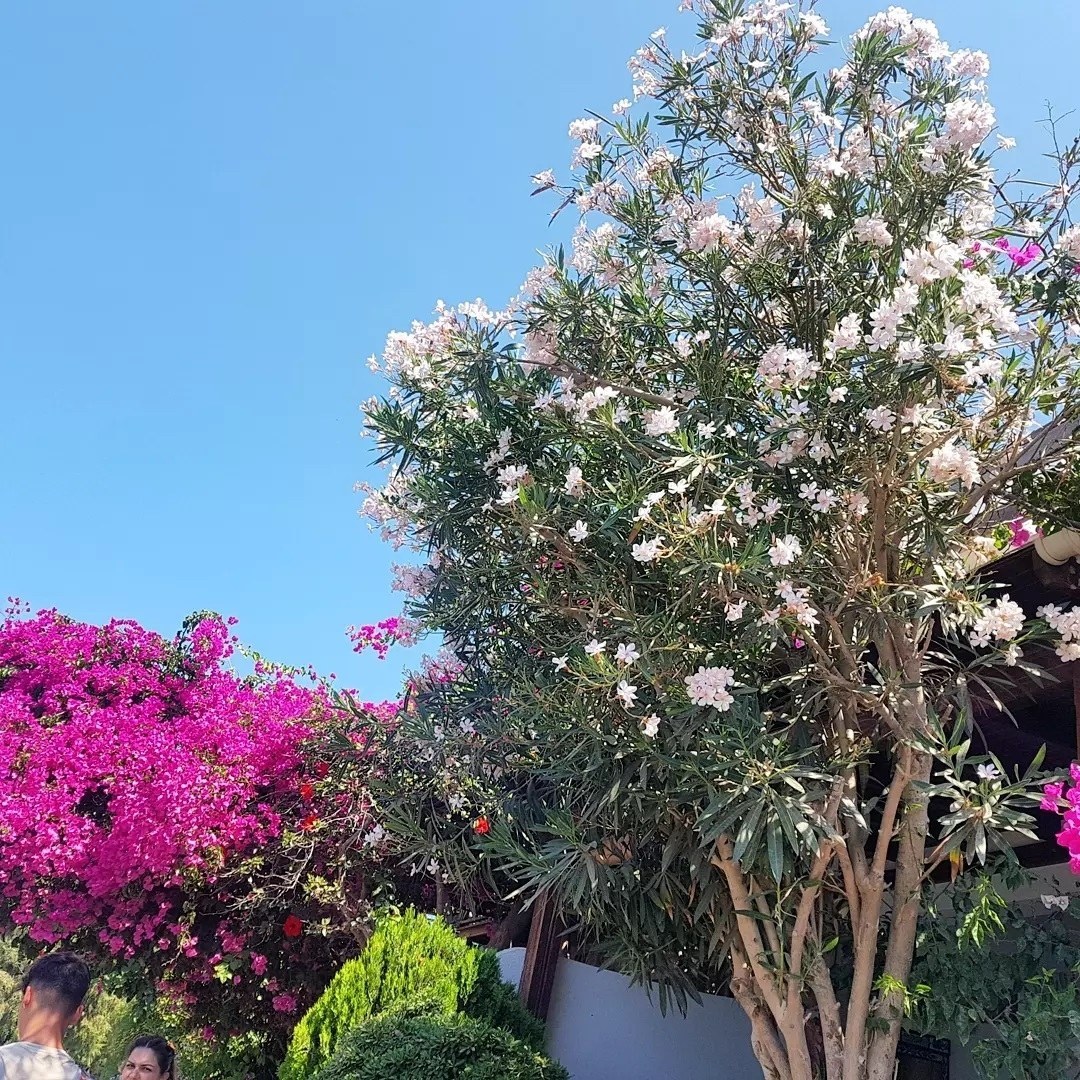
Oleander (Nerium oleander) is a vigorous evergreen shrub famed for its long, lavish summer display of fragrant flowers in shades of pink, white, red, salmon, and yellow. Its narrow leathery leaves and rounded form give it a clean, Mediterranean look.
Exceptionally tolerant of heat, drought, salt, and poor soil, oleander is a mainstay of highway medians, coastal gardens, and warm-climate landscapes worldwide. It can be grown as a large shrub, screen, or small multi-stemmed tree.
How to identify it
A large, upright, multi-stemmed evergreen shrub.
- Flowers: showy clusters of 5-petaled (often pinwheel) blooms in pink, white, red, or salmon; single or double; summer to fall
- Leaves: narrow, leathery, lance-shaped, dark green, in whorls of three
- Habit: dense, upright to rounded, 6–12 ft tall (dwarf forms smaller)
- Sap: milky when stems are cut
- Fruit: long, slender seed pods that split to release silky-tufted seeds
Care & growing
About as tough as ornamental shrubs come.
- Light: full sun for best bloom
- Water: very drought-tolerant once established; tolerates occasional flooding too
- Soil: thrives in poor, sandy, or saline soils with good drainage
- Temperature: hardy in USDA zones 8–11; tender to hard frost
- Feeding: minimal
- Pruning: prune in late winter or after bloom to shape; wear gloves and dispose of clippings rather than burning them
- Propagation: stem cuttings root very easily
Habitat & origin
Nerium oleander is native to the Mediterranean region and across to southwestern Asia, where it grows along seasonal streambeds and dry ravines that flood briefly then bake.
This adaptation explains its tolerance of both drought and occasional inundation. It is now planted throughout warm regions worldwide—roadsides, coasts, and gardens—as a heat- and salt-proof flowering shrub.
Frequently asked questions
How much water does oleander need?
Very little once established. It is one of the most drought- and heat-tolerant flowering shrubs, though it blooms more with occasional water.
Why isn't my oleander flowering?
Insufficient sun is the usual reason—oleander needs full sun. Cold damage and heavy pruning at the wrong time can also reduce bloom.
When should I prune oleander?
Prune in late winter or just after the main flush of bloom to shape the shrub and control its size; it tolerates hard pruning and regrows vigorously.
How do I identify oleander?
Look for a large upright evergreen with narrow, leathery, lance-shaped leaves in whorls of three and showy clusters of five-petaled pinwheel flowers in pink, white, red, or salmon through summer.
Oleander guides
In-depth guides for identifying, growing, and caring for Oleander.
How to Care for Oleander
Grow Nerium oleander in full sun with lean, well-drained soil for a heat-loving, drought-tolerant shrub covered in showy summer flowers.
Oleander Identification Guide
Identify Oleander (Nerium oleander) by its narrow leathery whorled leaves, showy clusters of five-petaled flowers, and milky sap.
Oleander identified by the community
Real specimens identified with Plant Identifier.