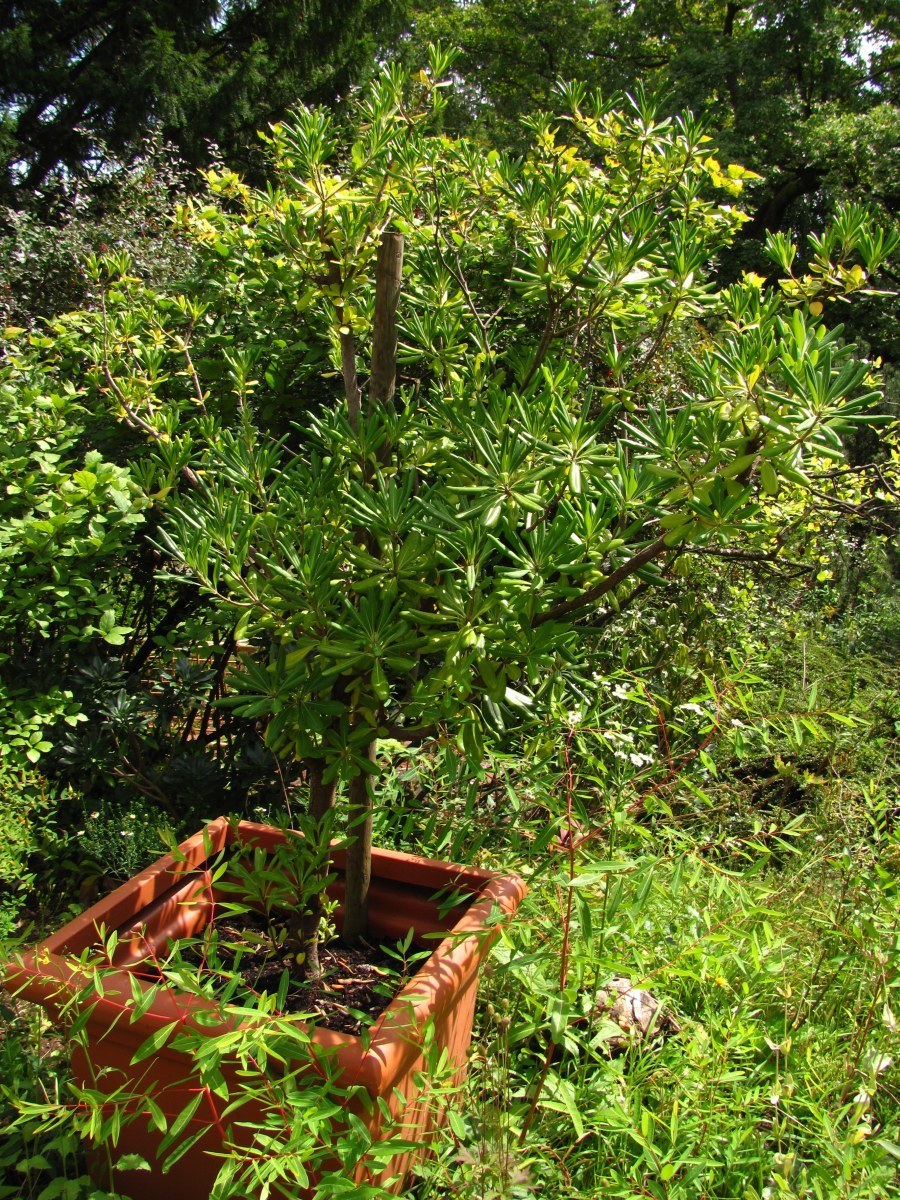
Pittosporum
Pittosporum tobira
Pittosporum is a versatile evergreen shrub with whorled glossy leaves and clusters of intensely orange-blossom-scented spring flowers. It makes an excellent hedge or screen in mild climates.
- Light
- Full sun to part shade
- Water
- Moderate; drought-tolerant once established
- Difficulty
- Easy
Got a plant like this?
Identify any plant from a photo, free.
Overview
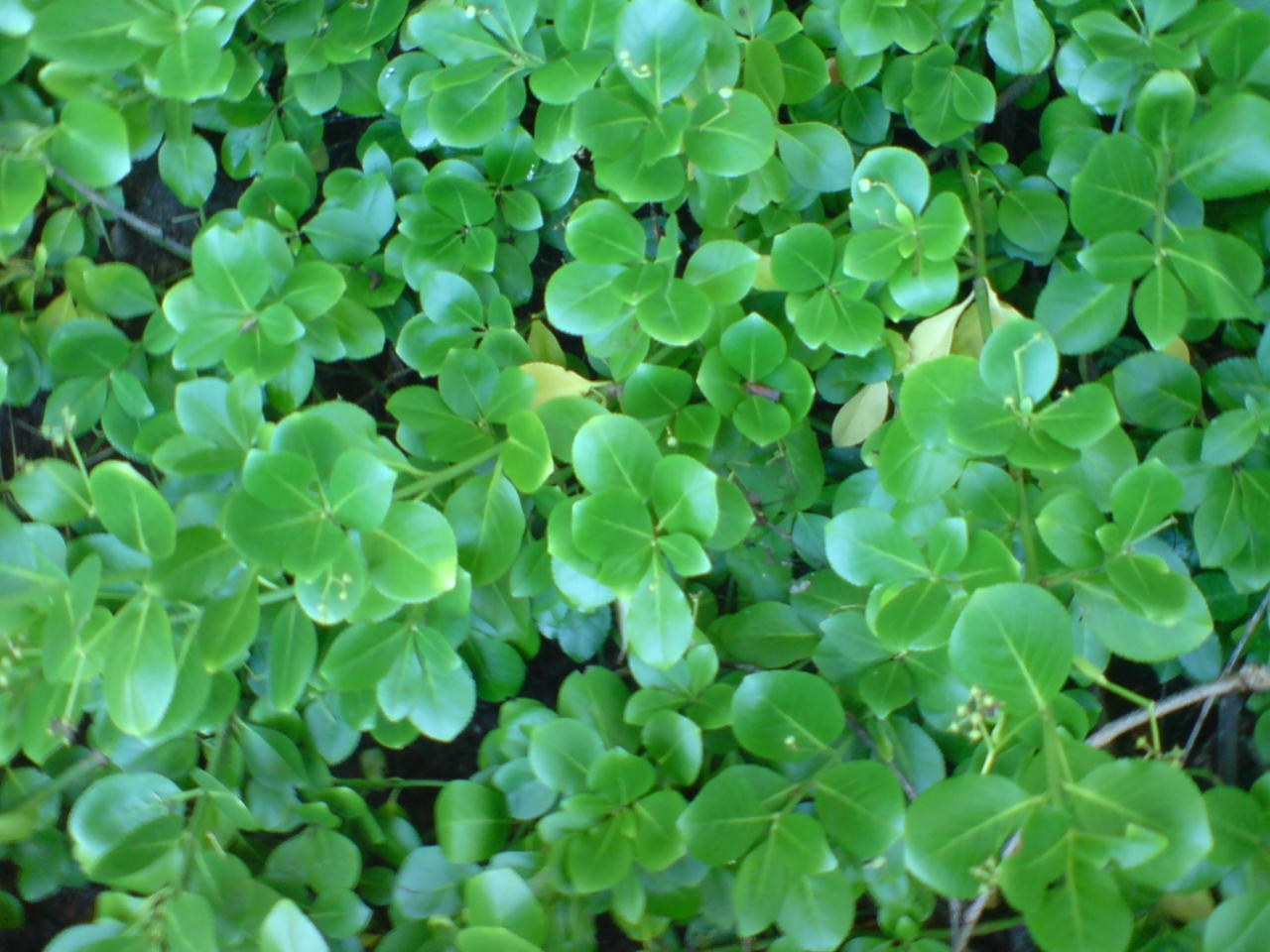
Pittosporum tobira, often called Japanese mock orange or tobira, is a dense evergreen shrub valued for handsome foliage, sweet fragrance, and toughness. Leathery dark-green leaves are arranged in neat whorls at the branch tips, giving a tidy, layered look.
In late spring, clusters of small creamy-white flowers release a powerful orange-blossom scent that perfumes the surrounding area. Variegated forms like 'Variegata' and compact 'Wheeler's Dwarf' are especially popular.
Adaptable to sun or shade, salt, drought, and shearing, pittosporum is a workhorse hedge and screening shrub in warm, coastal, and Mediterranean climates.
How to identify it
A dense, mounded to upright evergreen shrub.
- Leaves: leathery, glossy, obovate, dark green (or cream-edged in variegated forms), arranged in rosette-like whorls
- Flowers: small, 5-petaled, creamy white aging to yellow, in terminal clusters; intensely orange-scented
- Habit: dense and rounded, 3–12 ft tall depending on cultivar and pruning
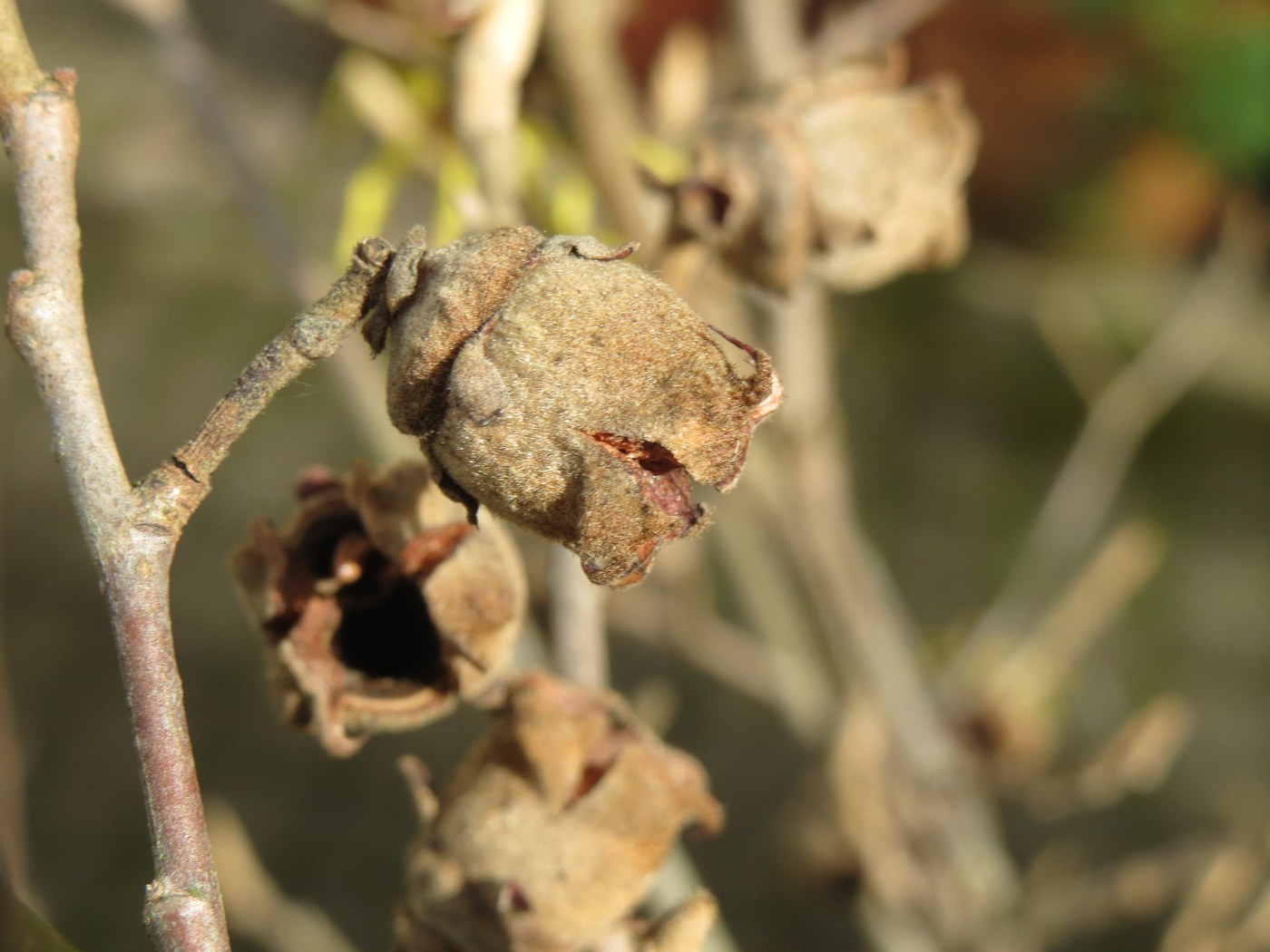
- Fruit: woody capsules that split to reveal sticky orange seeds
- Bloom time: late spring
Care & growing
Tough and adaptable.
- Light: full sun to part shade; variegated forms appreciate some shade
- Water: moderate while establishing; quite drought-tolerant afterward
- Soil: adaptable; needs good drainage; tolerates sandy, salty soils
- Temperature: hardy in USDA zones 8–11; tender to hard frost
- Feeding: light spring feeding
- Pruning: tolerates shearing well—ideal for formal hedges; prune after flowering
- Propagation: semi-hardwood cuttings; watch for aphids, scale, and sooty mold
Habitat & origin
Pittosporum tobira is native to Japan, Korea, and coastal China, where it grows in warm-temperate coastal thickets and woodlands, tolerating salt-laden wind.
Thanks to that coastal toughness, it is widely planted in California, the southern U.S., the Mediterranean, and other mild regions as a hedge, screen, foundation, and seaside shrub.
Frequently asked questions
Why is pittosporum called mock orange?
Its creamy spring flowers smell strongly of orange blossom, earning it the common name 'mock orange,' though it is unrelated to true orange or Philadelphus.
Can pittosporum be used as a hedge?
Yes, it is one of the best evergreen hedge shrubs for mild climates—dense, tolerant of shearing, and salt-resistant.
Is pittosporum cold hardy?
It is hardy in USDA zones 8–11 and can be damaged or killed by hard freezes, so it suits warm and coastal regions.
Pittosporum guides
In-depth guides for identifying, growing, and caring for Pittosporum.
How to Care for Pittosporum
Grow pittosporum (Pittosporum tobira), a tough evergreen shrub with glossy whorled leaves and fragrant cream blooms for hedges and pots.
Pittosporum Identification Guide
Identify Pittosporum by its whorled, glossy, wavy-edged evergreen leaves, intensely orange-blossom-scented flowers, and sticky-seeded woody capsules.