Rose of Sharon
Hibiscus syriacus
A hardy deciduous hibiscus that blooms profusely in late summer with showy, often two-toned flowers. Upright and easy to grow, it brings tropical-looking color to temperate gardens when little else is flowering.
- Light
- Full sun to part shade
- Water
- Moderate; water during dry spells
- Difficulty
- Easy
Got a plant like this?
Identify any plant from a photo, free.
Overview
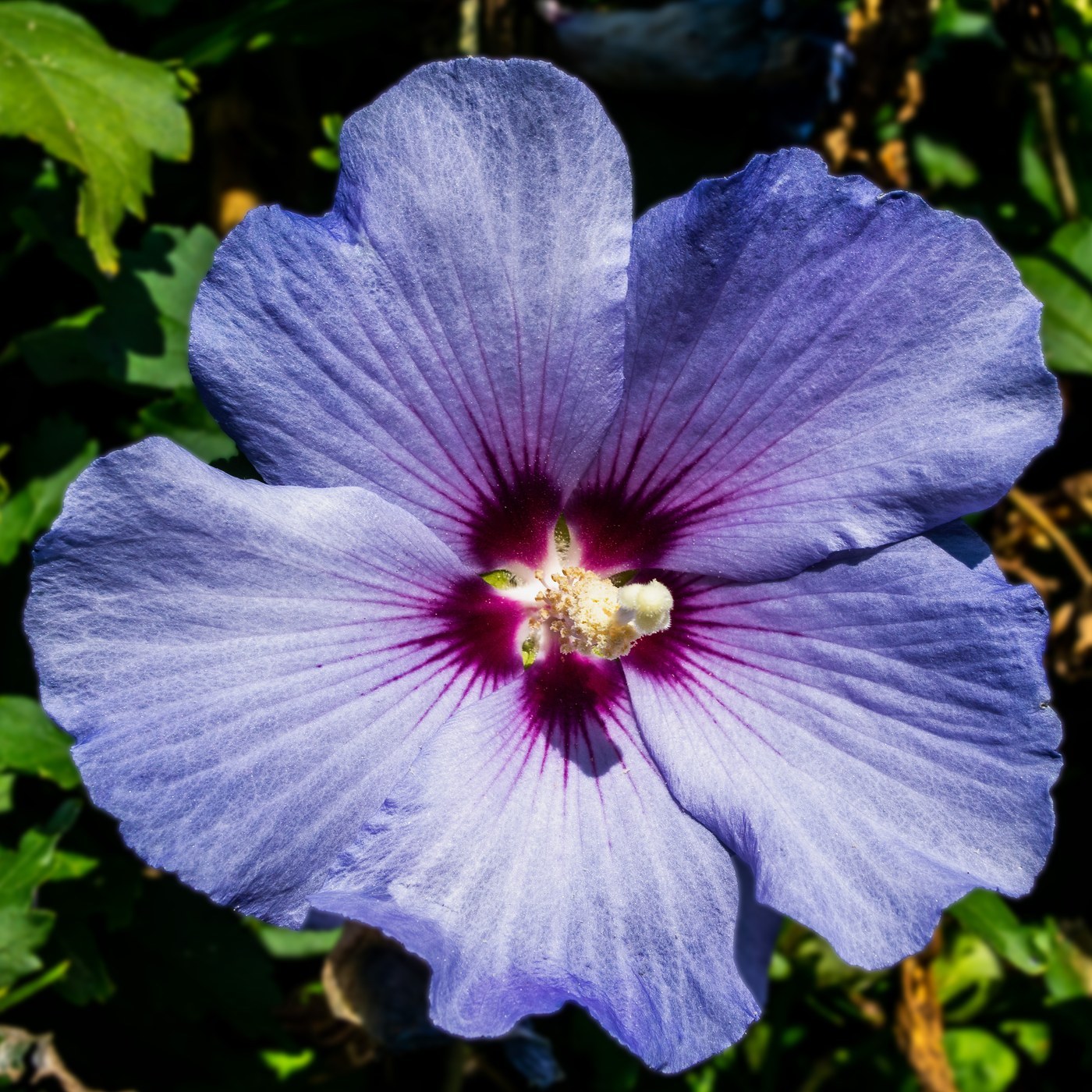
Rose of Sharon is a hardy, deciduous flowering shrub in the mallow family, grown for its abundant late-summer blooms in shades of white, pink, lavender, blue and red, often with a contrasting throat. Despite the species name syriacus, it is native to eastern Asia.
Its upright, vase-shaped habit and long bloom season make it a popular choice for hedges, screens and mixed borders, flowering when many other shrubs have finished.
It is tough and adaptable, tolerating heat, humidity and a range of soils, though it can self-seed freely.
How to identify it
- Flowers: large (2–4 in), funnel-shaped, single or double, white/pink/lavender/blue/red, often with a darker throat; prominent central staminal column
- Bloom time: mid- to late summer into early fall
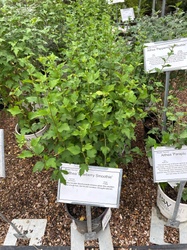
- Leaves: alternate, three-lobed, coarsely toothed, medium green, appearing late in spring
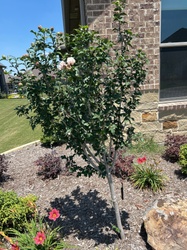
- Habit: upright, multi-stemmed, vase-shaped
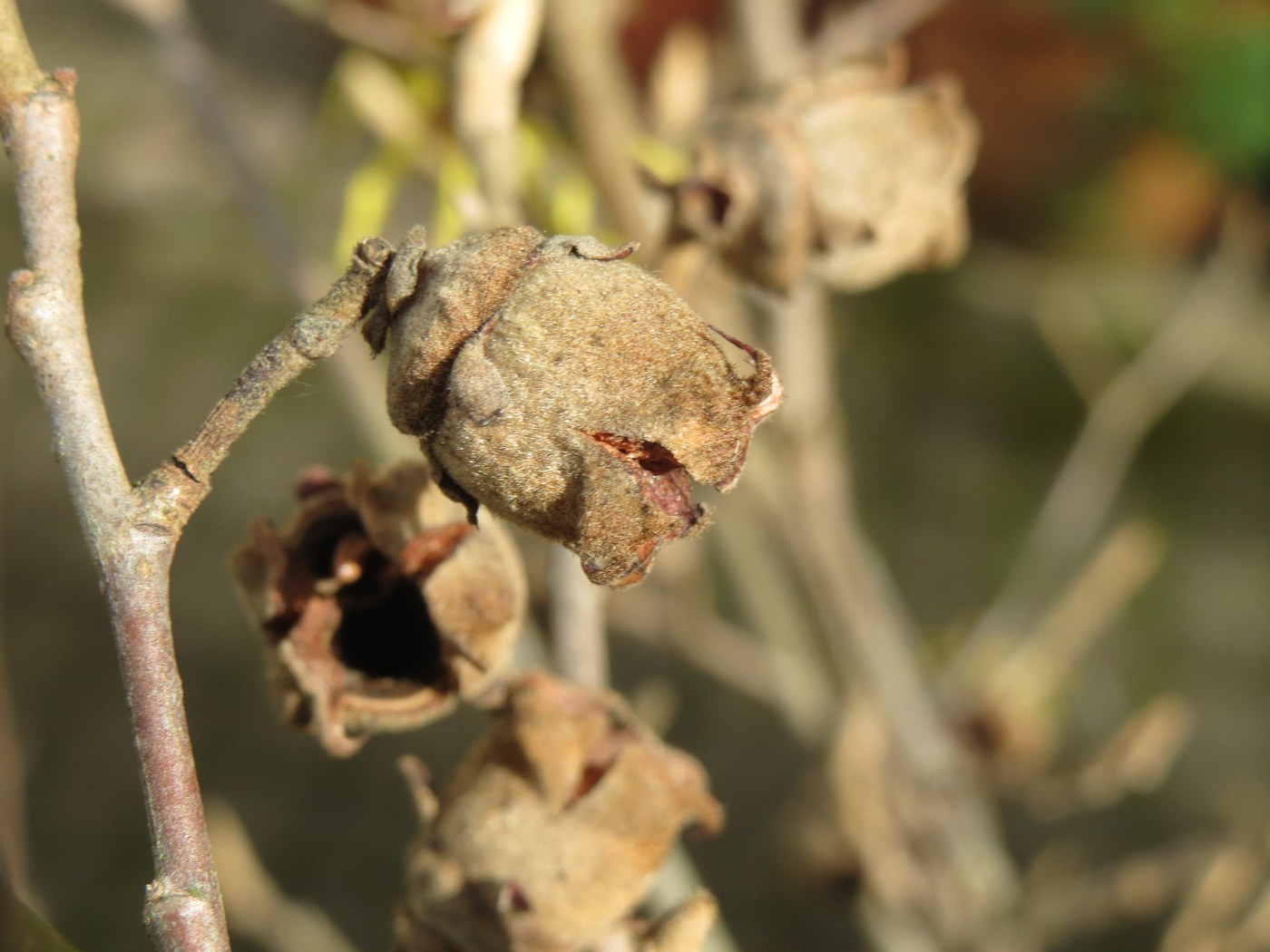
- Seed pods: persistent brown capsules in winter
- Size: typically 8–12 ft (2.4–3.7 m) tall
Care & growing
Grow in full sun to part shade in moist, well-drained soil; best flowering is in full sun.
- Water: water during dry spells, especially when young; established plants are fairly drought-tolerant
- Soil: adaptable to most well-drained soils
- Temperature: hardy roughly USDA zones 5–9
- Pruning: prune in late winter/early spring; it blooms on new wood, so hard pruning encourages larger flowers
- Feeding: a spring feed supports bloom
- Propagation: from softwood/hardwood cuttings or seed (seedlings vary)
Deadhead or choose sterile cultivars to limit prolific self-seeding.
Habitat & origin
Native to east Asia (China and India region), Rose of Sharon has been cultivated for centuries and is now grown throughout temperate regions worldwide.
It is widely planted in gardens for hedging and borders and has naturalized in parts of North America and elsewhere. It is the national flower of South Korea.
Frequently asked questions
When does Rose of Sharon bloom?
From mid- to late summer into early fall, providing color when many other shrubs have finished flowering.
How and when should I prune it?
Prune in late winter or early spring. Because it flowers on new wood, hard pruning produces fewer but larger blooms and keeps the plant tidy.
Why does it produce so many seedlings?
It self-seeds readily. Deadheading spent flowers or planting sterile cultivars reduces unwanted seedlings.
Is it the same as tropical hibiscus?
No—it is a related but hardy, deciduous hibiscus (Hibiscus syriacus) that survives cold winters, unlike the tender tropical Hibiscus rosa-sinensis.
Rose of Sharon guides
In-depth guides for identifying, growing, and caring for Rose of Sharon.
How to Care for Rose of Sharon
Grow Rose of Sharon (Hibiscus syriacus), an easy late-summer flowering shrub, with this full guide to light, water, pruning and bloom care.
Rose of Sharon Identification Guide
Identify Rose of Sharon (Hibiscus syriacus) by its upright shrubby form, three-lobed toothed leaves, and large late-summer hibiscus flowers with a prominent staminal column.
Rose of Sharon identified by the community
Real specimens identified with Plant Identifier.