Black-Eyed Susan
Rudbeckia hirta
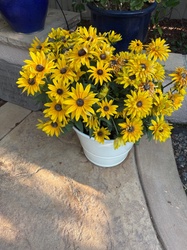
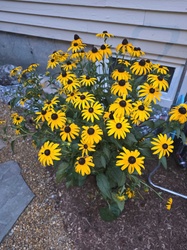
Black-eyed Susan is a cheerful North American wildflower with golden-yellow petals around a dark brown center, blooming abundantly from summer into fall.
- Light
- Full sun
- Water
- Low to moderate; drought-tolerant once established
- Difficulty
- Easy
Got a plant like this?
Identify any plant from a photo, free.
Overview
Black-eyed Susan is a hardy, sun-loving member of the daisy family native to North America. Grown as an annual, biennial, or short-lived perennial, it delivers masses of golden flowers with little effort.
Its long bloom season, drought tolerance, and value to pollinators make it a mainstay of meadows, prairies, and low-maintenance borders. It self-seeds freely to form drifts.
How to identify it
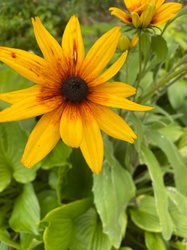
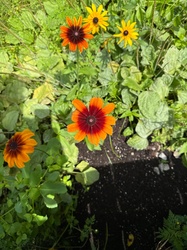
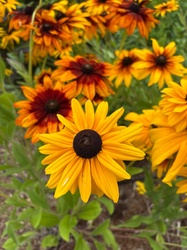
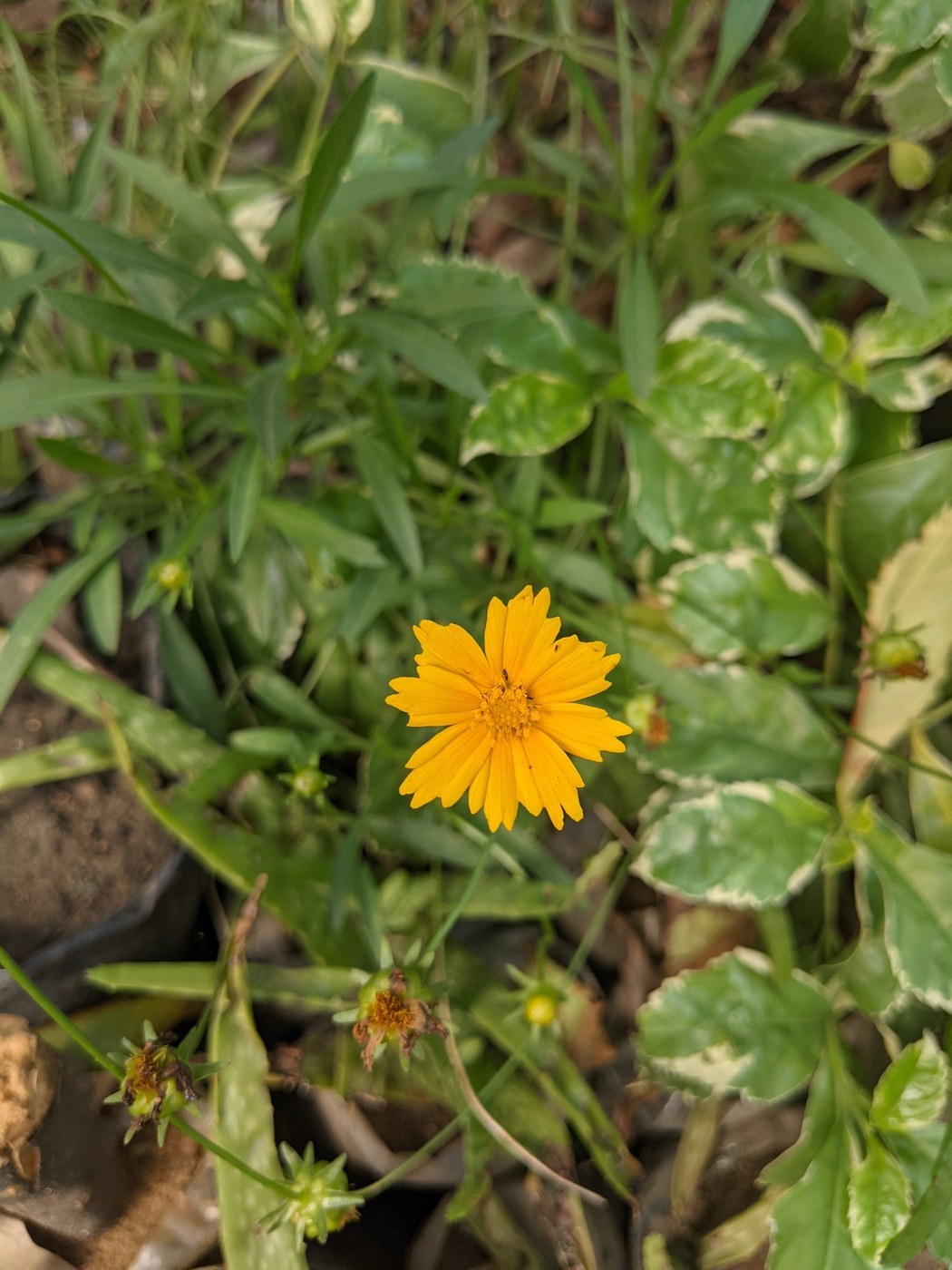
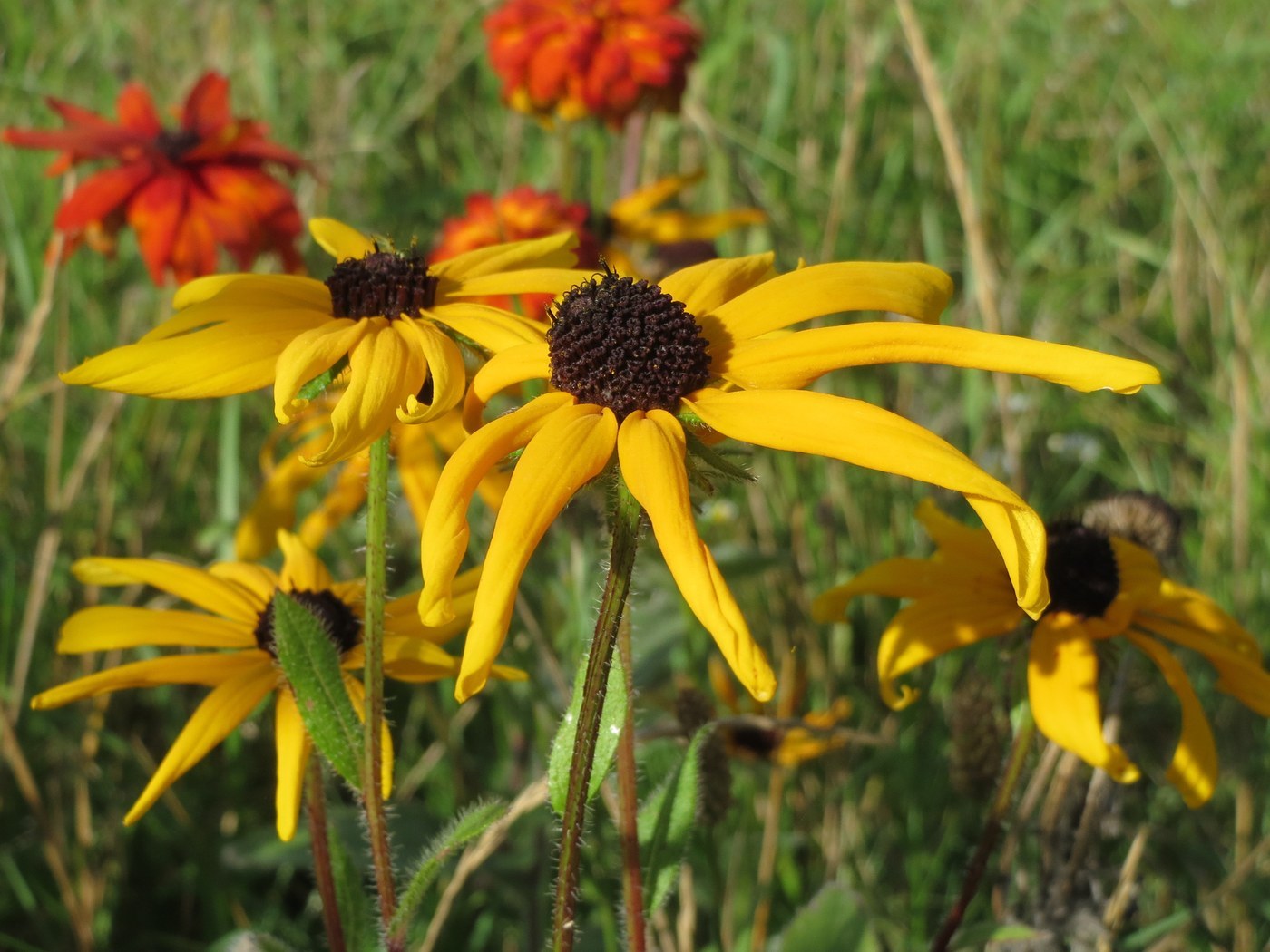
Easily recognized by golden rays around a dark central dome.
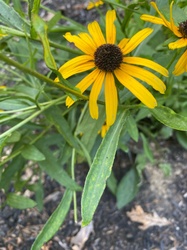
- Flowers: daisy-like, 5-8 cm wide, with bright yellow-gold ray petals and a domed dark brown to black center
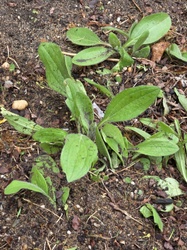
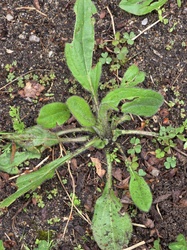
- Leaves: rough, hairy, lance-shaped, alternate
- Stems: bristly, branching, 30-100 cm tall
- Habit: clumping, free-flowering, self-seeding
Care & growing
Tough and undemanding in sunny sites.
- Light: full sun for best flowering
- Water: drought-tolerant once established; water young plants
- Soil: average, well-drained; tolerates clay and poor soil
- Feeding: little needed
- Propagation: sow seed or divide perennial clumps; deadhead for more blooms or leave seed heads for birds
Habitat & origin
Native to meadows, prairies, roadsides, and open woods across much of North America.
Adapted to full sun and a wide range of soils, it is highly drought-tolerant. It is grown worldwide as a reliable garden perennial and is the state flower of Maryland.
Frequently asked questions
Is black-eyed Susan a perennial?
Rudbeckia hirta is usually a short-lived perennial or biennial, but it self-seeds so reliably it behaves like a permanent fixture.
Does black-eyed Susan attract pollinators?
Yes, the flowers are excellent for bees and butterflies, and birds eat the seeds in fall and winter.
Should I deadhead black-eyed Susans?
Deadheading extends bloom, but leaving late seed heads provides food for birds and self-seeding.
Will black-eyed Susan grow in poor soil?
Yes, it tolerates poor, dry soils and is quite drought-tolerant once established.
Black-Eyed Susan guides
In-depth guides for identifying, growing, and caring for Black-Eyed Susan.
How to Care for Black-Eyed Susan
Growing guide for Black-Eyed Susan (Rudbeckia hirta), a cheerful, drought-tolerant sun perennial with golden daisy-like blooms.
Black-Eyed Susan Identification Guide
Identify black-eyed Susan (Rudbeckia) by its golden-yellow daisy petals around a dark domed brown-black center and its rough, bristly hairy leaves and stems.
Black-Eyed Susan identified by the community
Real specimens identified with Plant Identifier.