Buddhist Pine
Podocarpus macrophyllus
Buddhist Pine is a versatile evergreen conifer with long, soft, strap-like leaves, widely grown as a hedge, container plant, houseplant, and bonsai. Native to East Asia, it tolerates pruning and shade well.
- Light
- Full sun to part shade
- Water
- Moderate; let topsoil dry slightly
- Difficulty
- Easy
Got a plant like this?
Identify any plant from a photo, free.
Overview
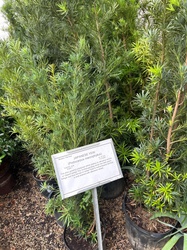
Buddhist Pine (Podocarpus macrophyllus), also called yew plum pine or kusamaki, is an evergreen conifer native to southern Japan and southern China. Despite the name it is not a true pine; it belongs to the southern-hemisphere-centered podocarp family.
Its dense, dark green, strap-shaped leaves and tolerance of shade, pruning, and container life make it one of the most popular conifers for hedging, topiary, indoor culture, and bonsai in warm-temperate and subtropical regions.
How to identify it
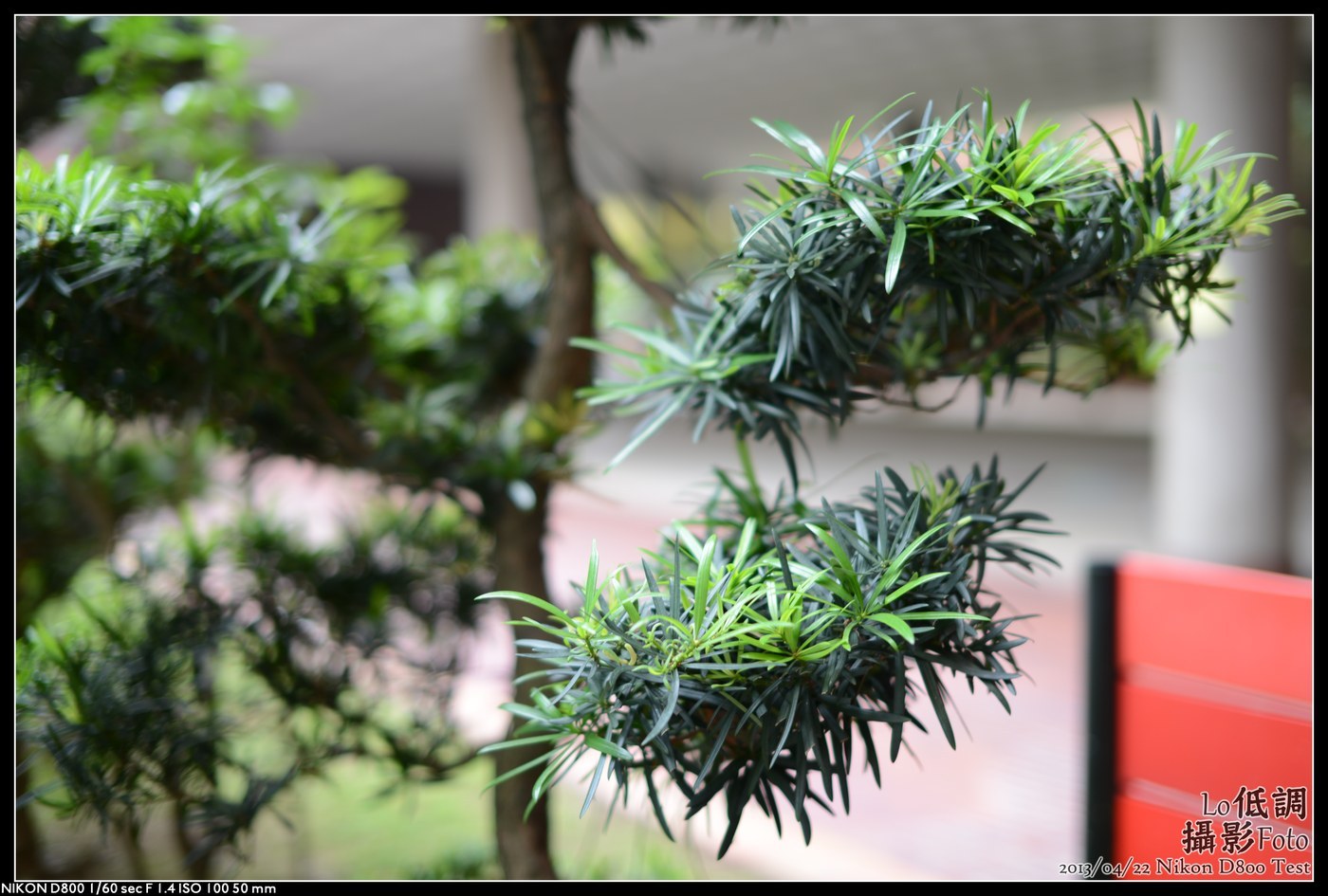
- Leaves: Linear-lanceolate, leathery, 7-12 cm long, spirally arranged but appearing two-ranked, dark glossy green above, much larger than typical conifer needles
- Seeds: Single seed sitting atop a swollen fleshy receptacle that ripens purplish-red, resembling a tiny berry (plants are dioecious)
- Habit: Slow-growing upright shrub or small tree, 5-15 m, easily kept smaller by pruning
- Bark: Grey-brown, shallowly fissured
- The long, strap-like leaves and berry-like fleshy seeds are key identifiers
Care & growing
Light: Full sun to part shade; tolerates fairly low light indoors.
Water: Water moderately and let the topsoil dry slightly between waterings; dislikes soggy roots.
Soil: Well-drained, fertile soil or quality potting mix.
Temperature: Hardy to USDA zone 8-9; not frost-hardy, so grown as a houseplant or under cover in cooler regions.
Feeding: Balanced fertilizer in the growing season.
Propagation: From cuttings or seed; responds very well to pruning and shaping.
Habitat & origin
Native to southern Japan, southern and eastern China, and Taiwan, growing in warm-temperate to subtropical forests and on hillsides.
It is extensively cultivated throughout warm regions worldwide as a landscape plant and is a familiar indoor and patio container plant in cooler climates, as well as a traditional bonsai subject in East Asia.
Frequently asked questions
Is Buddhist Pine a real pine?
No. It is a podocarp (Podocarpus), not a true pine; the name reflects its appearance, not its botanical family.
Can it be grown indoors?
Yes. It tolerates lower light and pruning well, making it a popular houseplant and indoor bonsai in cool climates.
Why is it good for bonsai and hedges?
It is slow-growing, shade-tolerant, and responds well to repeated pruning, allowing it to be shaped into hedges, topiary, or bonsai.
Buddhist Pine guides
In-depth guides for identifying, growing, and caring for Buddhist Pine.
How to Care for Buddhist Pine
Buddhist Pine is an easygoing evergreen with soft needle-like foliage — give it sun to part shade and let topsoil dry slightly.
Buddhist Pine Identification Guide
How to identify Buddhist pine (Podocarpus macrophyllus) by its long, strap-shaped leaves spirally crowded on the shoots and fleshy purple receptacles bearing green seeds. Covers leaves, fruit, and look-alikes.
Buddhist Pine identified by the community
Real specimens identified with Plant Identifier.